
Full Floor Prebuilt Office for Lease at 56 Broadway


Commercial Loft
$ 41,000 /month
10,250 SF
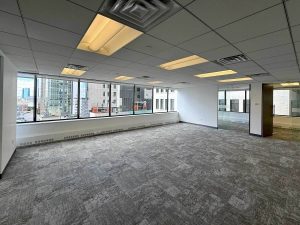
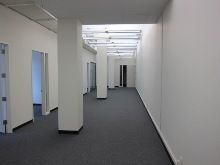
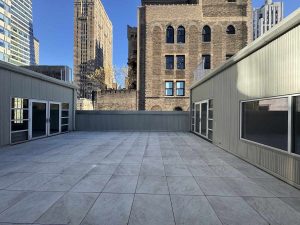
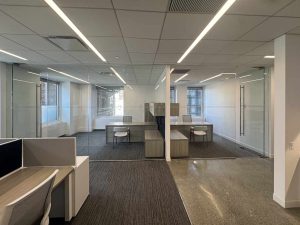
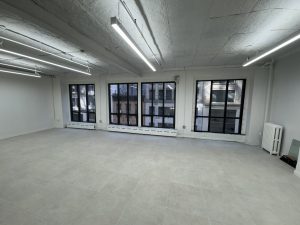
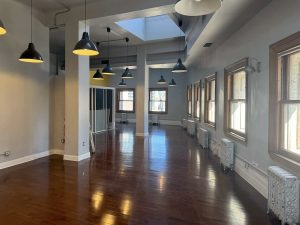
Entire 10,250SF 19th-floor office for lease in Class A building in the heart of Manhattan’s Financial District. Windows on 4 sides. Spectacular Hudson River views. Contemporary style build-out with polished concrete floors, open ceilings, and pendant lighting fixtures. Large bullpen, full glass conference room, wet pantry, 4 rear offices. The existing layout can be modified to accommodate the needs of the new tenant.
Asking rent $62/SF ($52,958/month). Sub-metered electricity. Landlord seeking a 5-10 year lease term. Fully renovated lobby. Convenient location near New York Stock Exchange and major subway lines.
For further details, call Alan Rosinsky at (212) 444-2241.
Location
Nearby Public Transportation
Property Details
Listing 58733
| Size: | 10,250 SF | Rent/SF: | $ 48.00 |
| Monthly Rent: | $ 41,000 | Lease Type: | Direct |
| Available: | 04/01/2025 | Lease Term: | 5-10 years |
| Suite/Floor: | 19th | Address: | 56 Broadway |
Features
| Class A Building | Conference Room |
| Prebuilt | Renovated Lobby |
Listings are presented for illustrative purposes only; they may no longer be available and are provided merely as an exemplary representation of the types of spaces in a given neighborhood for a given price.

The Financial District is the oldest office market in New York and known as the home to Wall Street, the New York Stock Exchange, and the Federal Reserve. It holds roughly 40 million SF of office space, about half of all of Downtown Manhattan. What sets it apart right now, though, is that its weakest towers are being converted to apartments by the thousand. That pulls obsolete space off the market and tightens what remains, and it is steadily changing FiDi’s reputation as the place you go only for cheap space. In Q1 2026, Downtown posted 2.9 million SF of leasing, its second-highest quarterly total on record (Cushman & Wakefield, April 2026). Availability slipped to 16.8% with positive net absorption of 660,000 SF (Colliers, Q1 2026). Overall asking rent rose for the sixth straight quarter to $56.67/SF, and Class A reached $61.77/SF (Cushman & Wakefield, April 2026), the widest gap between the two classes in two years. This also means that where you land in FiDi matters more than it once did. FiDi has long been seen as the place where you trade prestige for a lower rent. But while that was a fair description five years ago, it becomes less true with each quarter, as the cheapest and weakest office stock gets pulled out of the market for residential conversion and the remaining supply tightens. The numbers bear this out. It depends on the building, the class, and the block, so a single “FiDi rent” tells you very little. Start with the Downtown benchmarks. The overall asking rent was $56.67/SF in Q1 2026, and Class A averaged $61.77/SF (Cushman & Wakefield, April 2026). CBRE put the Lower Manhattan monthly average in the high $50s through the spring (CBRE, March and April 2026). The Financial District holds the older, more Class B-heavy half of Downtown’s inventory, so FiDi space generally prices at or below that average, while a handful of repositioned and trophy-adjacent buildings run higher (Metro Manhattan internal research, May 2026). The first question to settle is whether you actually need a Class A address. Client-facing finance, fintech, and law usually do. Most other tenants do not. The Class A premium over Class B is 25.5% (Cushman & Wakefield, April 2026), which puts Class B asking rents in the high $40s/SF (derived from the published premium; Metro Manhattan internal research, May 2026), for the same neighborhood and the same trains. Before touring, run your headcount through our Office Space Calculator so you are shopping for the right size. Most of FiDi’s Class A inventory is being renovated rather than newly built. The clearest example is 60 Wall Street, the 1.6 million SF tower Deutsche Bank vacated in 2021, now in a full repositioning by Paramount Group and GIC with a KPF redesign of the lobby, atrium, and base. It’s a LEED Gold building being rebuilt to draw media, tech, creative, law, and finance tenants. Nearby, 28 Liberty Street (the Gordon Bunshaft and SOM landmark formerly known as One Chase Manhattan Plaza, owned by Fosun) anchors the William Street side with its Noguchi sunken garden. One Liberty Plaza (Brookfield) recently landed Cleary Gottlieb’s 475,000 SF. 120 Broadway, the landmarked Equitable Building owned by Silverstein Properties, and 195 Broadway, L&L Holding’s former AT&T headquarters, round out the prewar Class A core. True trophy product sits just west, at Brookfield Place and the World Trade Center towers in the WTC / World Financial Center submarket, which is the top of the Downtown market. For more on what separates genuine trophy buildings from standard Class A, see our piece on how trophy buildings set themselves apart in NYC. Class B is the heart of FiDi and where most of its leases get signed. It’s a deep pool of prewar towers, many of them genuinely good after a decade of lobby and elevator upgrades. The cluster runs along Broadway and the Wall Street side streets: Many of these landlords have built prebuilt spec suites in the 2,000 to 6,000 SF range, so a small or midsize tenant can sign and move in quickly. Some of these floors feel like loft space once you are inside, with big windows and high ceilings, which is why FiDi draws some of the same tenants who shop the loft markets in SoHo and Chelsea over in Midtown South, at lower rents. One thing to expect in this tier: two Class B buildings a couple blocks apart can quote very different numbers, depending on each landlord’s vacancy and how they read your credit. This is where touring beats relying on averages, and where negotiation pays off. The deepest discounts in FiDi sit in the oldest prewar elevator buildings, mostly along Water Street, the Seaport edge, and the insurance side streets near Maiden Lane and John Street. These work for small businesses, early-stage startups, back-office operations, medical and dental practices, and nonprofits. One caveat, though, makes FiDi unusual: this is the same stock being pulled into residential conversion, so the cheapest office space in the neighborhood is steadily disappearing, and the value window is closing faster here than elsewhere Downtown. Brokerages also rarely publish a Class C average for the area, so treat any single Class C figure with caution. Concessions are where many tenants under-negotiate. They push on the face rent, win a few dollars, and sign, without pressing on free rent or the tenant improvement allowance, which is where much of the value sits in Downtown deals. FiDi concessions are among the most tenant-favorable in Manhattan right now, with real availability still on the market and landlords competing for credit tenants. The ranges below are typical-market figures from recent deals (Metro Manhattan internal research, May 2026), assuming a 5 or 10-year term. Shorter terms get smaller packages, and 12 to 15-year deals can pull richer ones. If weighing term length, our breakdown of 3-year, 5-year, or 10-year lease terms covers the trade-offs. Two things are worth understanding before you sign. Second, a TI allowance is only as useful as the build-out it funds, so it helps to know who pays for an office build-out before you negotiate. First, the net effective rent on a Class B FiDi deal usually lands well below the face rent quoted; our concessions explainer walks through the math. Industries cluster here for the usual reasons: clients, talent, and peers are already nearby. Finance and law have anchored FiDi for more than a century, with fintech, insurance, government, and a growing set of value-seeking tech and creative tenants filling in around them. Matching your industry, headcount, and budget to the right part of the district saves weeks of touring the wrong buildings. The table below maps it out. FiDi is no longer the after-hours ghost town it once was. The conversions reshaped the neighborhood: thousands of new apartments brought restaurants, gyms, grocery stores, and nightlife, and the office buildings answered by upgrading lobbies, adding tenant amenity floors, and modernizing systems. It is a live-work neighborhood now, and the amenity gap with Midtown has narrowed considerably. Three tiers to expect: Trophy tier (Brookfield Place and the WTC towers, just west in the WTC submarket): Tenant-only amenity floors, conferencing, lounges, fitness, waterfront dining and retail, LEED certification, smart-building infrastructure, and direct PATH and subway access. Repositioned and modern Class A (60 Wall reborn, 28 Liberty, One Liberty Plaza, 120 Broadway, 195 Broadway): Renovated lobbies and atriums, on-site fitness and conferencing, modernized mechanicals, ground-floor retail and dining, and walking-distance transit. Several added or upgraded amenity floors in the recent capital cycle. Prewar Class B value (80 Broad, 50 Broad, 111 Broadway, 44 Wall, 17 Battery, 110 William): Prewar character, big windows, high ceilings, attended lobbies, and a growing supply of fully built-out spec suites with furniture and IT so smaller tenants can move in fast. See all Downtown buildings or filter active listings by size and price. Who owns your building matters as much as which building you choose, because every major Downtown landlord negotiates differently. For instance, Brookfield holds the institutional Class A inventory at One Liberty Plaza and Brookfield Place. Silverstein owns the World Trade Center towers and the Equitable Building. Paramount and GIC are funding the large-scale repositioning of 60 Wall. Fosun owns 28 Liberty. A set of conversion specialists, among them GFP Real Estate, Metro Loft, and Silverstein, are driving the neighborhood’s residential projects. A good broker knows which owners fund build-outs and which ones hold out on terms, so for background, see our overview of the biggest commercial real estate landlords in NYC. Transit access is one of FiDi’s strongest selling points. The district sits at the convergence of more than a dozen subway lines, several commuter and intercity options through nearby hubs, PATH service to New Jersey, and ferries on both rivers. For much of the metro area it is a one-seat ride, and from Brooklyn, Staten Island, and Jersey City it is genuinely quick. Use our Commute Calculator to check specific addresses.
Learn more about Financial DistrictNearby Office Rentals



Featured Listings


Choose a convenient date for your tour and we will contact you shortly!