


Market data: Q2 2026 (Union Square / Flatiron asking; Midtown South) · Q1 2026 (availability) · Last reviewed July 2026
$86.96/SF Union Sq / Flatiron asking
$81.14/SF Midtown South asking
13.9% Submarket availability
$52 to $130/SF Building asking range
6 Active listings
Union Square / Flatiron average asking rent ($86.96/SF, Q2 2026) from Newmark, reported by Commercial Observer, July 8, 2026. Midtown South overall asking rent ($81.14/SF) and Class A asking rent ($104.50/SF) from Cushman & Wakefield, Manhattan Office MarketBeat Q2 2026 (July 13, 2026). Flatiron / Union Square availability (13.9%) from Newmark, Manhattan Office Market Report 1Q26 (April 15, 2026); the Union Square Partnership tracked district office availability at 10.9% in its 2025 Commercial Market Report, the lowest in Manhattan at the time. Building asking range reflects marketed quotes from $52/SF at 39 West 14th Street to $130/SF at 838 Broadway (public listings; Commercial Observer, 2025 to 2026). Manhattan overall was $72.83/SF with 19.3% vacancy (Cushman & Wakefield, Q2 2026).

Everybody in New York already knows how to get to Union Square. That sounds like a small thing until you’re the one signing a ten-year lease.

Eight subway lines stop under the park. Your Brooklyn engineers are one stop out on the L, Wall Street’s ten minutes down the 4, and nobody on your team has to look up directions or leave early. No other office address in Manhattan can say that.

Which turned out to be a problem, because everybody worked that out at once.

The AI companies moved first. Perplexity, Legora, Profound, Phia, and Ledger all signed inside eighteen months, mostly on the six blocks of Broadway below the park. They’d been priced out of Park Avenue South and came looking for the same trains under cheaper floors.

They found them, and then the floors stopped being cheap. Walk Broadway today and nearly every good building’s full: 817, 799, 841, plus 100 Fifth a block west. Zero Irving, the biggest thing built here in a generation, leased up in two years.

The average now is $86.96 a foot, a few bucks over Midtown South, and that number won’t help you much. A penthouse on 18th asks $125. A loft on West 14th asks $52. They’re an eight-minute walk apart, on the same eight trains.

Knowing which block is which is the whole job, and it’s what we do all day. If you’d rather just see what’s open, start with the live listings.

Union Square Office Market Overview

Two things hit this neighborhood at once, and both of them pushed rent the same way.

First, it ran out of room before anybody else did. The local business improvement district put office availability at 10.9% in 2025, the lowest number in Manhattan, back when the borough sat near 17% and landlords elsewhere were still throwing a year of free rent at anybody who asked.

Newmark measures it differently and lands close: 13.9% for its Flatiron and Union Square grouping this spring, against 16.9% for Midtown South. Pick either yardstick. You’re looking at the tightest pocket of a tight market.

Second, the AI companies showed up, and they showed up funded. They took roughly a third of all Manhattan tech demand in the first quarter of 2026, and a real slice of it landed on six blocks of Broadway. Not much of that space was sitting empty to begin with.

So the landlords quit negotiating like it’s 2023. Nearly every decent building filled inside eighteen months, and the few with space left got numbers this neighborhood had never seen. That’s what you’re walking into, and it’s worth knowing before you walk in.

Four Forces to Monitor

  • The good buildings are gone, and we’re not saying that to rush you. 817 Broadway, 799 Broadway, 841 Broadway, 100 Fifth Avenue, and Zero Irving all report 100% leased. If you want a renovated full floor facing the park, you’re waiting on a sublease or on somebody giving space back. Start looking earlier than feels reasonable, because the clock here doesn’t run at Manhattan speed.
  • AI reset the ceiling, and you’ll hear about it across the table. Legora signed at 838 Broadway on a $110 ask, Ledger took a small floor at 817 Broadway at $120, and Phia paid up for the penthouse at 37 East 18th at $125. Those are Union Square numbers now, not Madison Avenue numbers, and every landlord down here has them memorized.
  • The cheap space is real, and it’s going fast. Listings on 14th Street and the side streets still quote in the fifties and sixties, about thirty dollars under the average, mostly because nobody’s renovated those buildings yet. Several are next. Manhattan sublet supply also fell to 12.1 million SF in Q2 2026, its lowest since 2020, so that escape hatch is closing too.
  • The trains are doing the work, and you’re paying for them. Daily ridership at 14th Street-Union Square climbed 12% in a year, roughly 7,000 more people a day, and the M14 added another 15%. Monthly worker visits hit a post-pandemic high of 444,000. If getting your team back in the office is costing you real money, eight lines under the lobby is cheap by comparison.

What Does Office Space in Union Square Actually Cost?

Anybody who answers that with one number hasn’t walked the neighborhood.

The published figure is $86.96 a foot. It’s accurate and it won’t help you, because it’s an average stretched over an eighty-dollar range. Where you land in that range will do more to your budget than anything else you decide here.

The honest version goes like this. Zero Irving and the rebuilt Broadway buildings clear $100, with 838 Broadway quoting as high as $130 and the penthouse at 37 East 18th asking $125. Around the park, the prewar buildings come in near the seventies and eighties. Out on 14th Street you’re still starting at $52.

So the question isn’t what Union Square costs. It’s which Union Square you’re buying. A renovated Broadway floor gets you a recruiting story and a landlord who knows what he’s got. A loft two blocks west gets you the same eight trains and the same lunch for forty percent less.

We’ll tell you which one you actually need, and plenty of the time it isn’t the expensive one. Before you tour anything, run your headcount through our office space calculator so you’re shopping the right size instead of falling for the prettiest floor.

Area Class A Profile Class B / C Coverage Availability Typical SF for New Leases Tier
Broadway spine (11th to 14th) Renovated and boutique Class A (799, 817, 838), $85 to $130/SF Class B loft at 841 and 853 Broadway Near 0% direct (799, 817, 841 all fully leased) 3,000 to 30,000 SF Trophy / A
14th Street and Irving Place Zero Irving, the city-commissioned tech tower, above $100/SF Older Class B on Irving and 14th About 8 to 12% 5,000 to 25,000 SF Trophy / A
Union Square Park frontage Boutique Class A (44 Union Square East, 37 East 18th), $75 to $125/SF Deep prewar loft (Spingler, Decker, Zeckendorf) About 10 to 14% 2,000 to 30,000 SF Class A / B
Fifth Avenue edge (west of the park) 100 Fifth Avenue and boutique prewar towers Class B loft running toward Chelsea About 12 to 16% 1,500 to 20,000 SF Class A / B
14th Street and the side streets Minimal Class B and C loft dominates, $52 to $60/SF About 14 to 18% 500 to 10,000 SF Value
Union Square / Flatiron average (context) $86.96 total asking n/a 13.9% (Newmark, Q1 2026) Varies Mixed

Union Square / Flatiron average asking rent ($86.96/SF) from Newmark, Q2 2026, via Commercial Observer, July 8, 2026. Flatiron / Union Square availability (13.9%) from Newmark, 1Q26. Midtown South overall ($81.14/SF) and Class A ($104.50/SF) from Cushman & Wakefield, Q2 2026. Building-level quotes are marketed asking rents reported by Commercial Observer and public listings, 2025 to 2026: 838 Broadway ($100 to $130), 37 East 18th ($125 penthouse, $98 full floor), 817 Broadway ($120), Legora at 838 Broadway ($110), 841 Broadway (about $80), 5-9 Union Square West ($75), 37 Union Square West ($60), 9 East 19th Street ($58), 39 West 14th Street ($52). Area-level profiles, coverage descriptors, and availability ranges are Metro Manhattan internal research (July 2026); the approved firms publish Midtown South and a combined Flatiron / Union Square figure, but not these per-area breakouts. Rents are asking rents, before concessions.

Class A and the Buildings Everyone Wants

Union Square spent a century as a Class B neighborhood, and anybody who leases here will tell you the letter never counted for much. What changed is that somebody finally built something.

Zero Irving is the biggest thing to go up on these blocks in a generation, and it exists because the city asked for it, not because a developer ran the numbers. RAL and JRE won a city competition, put up 270,000 square feet across 21 floors in 2022, and watched it lease out by summer 2024.

The trade inside it is the interesting part. Melio, Sigma Computing, Sequoia, Laurel Road, and Senator Investment Group all pay north of $100 upstairs, and that rent covers Civic Hall’s 85,000-square-foot training center downstairs on a 25-year lease. Your rent teaches somebody to code, which isn’t a bad thing to tell a recruit.

Nobody skimped on the rest of it. There’s a 6,300-square-foot lounge on the roof over the park, an Urbanspace food hall on the ground floor, a gym, double-height floors every other level, and LEED Gold on the certificate.

The other Class A here is boutique, and 817 Broadway is the one people talk about. Taconic, Nuveen, and Squire spent roughly $40 million on George B. Post’s 1895 building, put a roof terrace on top, and accidentally built the venture capital clubhouse of New York.

Union Square Ventures moved in, then Inspired Capital, then 25madison, Avenir, Netflix, and Unity. Ledger took the last floor in March on a $120 ask and the building hit 100%. If you want in now you’re waiting for somebody to leave, and nobody’s leaving.

A block south, Savanna’s 799 Broadway went up in 2022 and filled this July with Lightspeed and Wellington. Around the corner, ZG Capital gutted 838 Broadway, an 1876 landmark, and rents furnished full floors at $100 to $130. Both are terrific buildings. Neither one has room for you.

If you’re trying to tell a real Class A building from one that just charges like it, our guide to what actually separates trophy buildings is worth twenty minutes before you sign anything, and our rundown of the best Class A towers in Midtown shows what the letter buys you a mile north.

Class B and Loft Space, Where Most Union Square Deals Happen

The class system gets this neighborhood wrong, so let’s be plain about it. The prewar buildings around the park aren’t the consolation prize. They’re the neighborhood, and they’re where you’ll probably end up.

The Spingler Building at 5-9 Union Square West went up around 1900, and it’s where Profound just took two full floors on a $75 ask, in space David Rockwell’s studio gave up. Next door is the Decker Building, the cast-iron one where Warhol ran the Factory. You can’t buy that address in Midtown at any price.

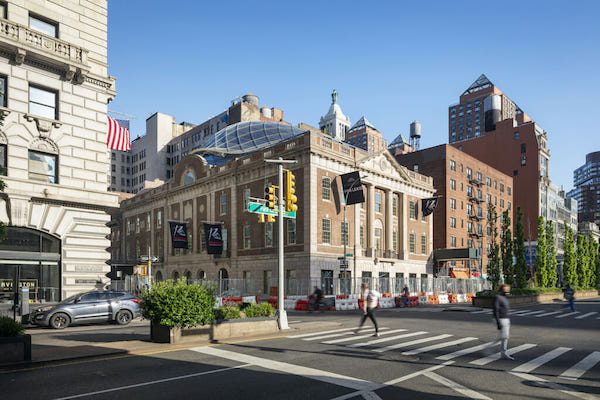
On the northeast corner, 44 Union Square East is the old Tammany Hall, gutted to the brick and topped with a glass turtle-shell dome BKSK modeled on a Lenape creation story. At the foot of the park, 853 Broadway is Emery Roth’s Art Deco tower behind a new five-story glass entry.

None of those show up on a Class A list, and every one of them will out-ask a Class A tower in half of Manhattan. Nobody down here is paying for a letter an appraiser typed into a spreadsheet. They’re paying for ceiling height, light, a floor plate you can actually use, and the park.

It’s the same loft stock that pulls creative tenants into SoHo and Chelsea, usually at similar money. If that’s the space you want, this is an honest place to look for it, and the trains beat both.

Class C and Value Space

The real bargains sit west of the park on 14th Street and scattered down the side streets, where quotes still run $52 to $60 a foot. That’s thirty dollars under the average for the same eight trains and the same walk to the Greenmarket, which is about as close to free money as this neighborhood gets.

Two warnings before you get excited. Nobody publishes a clean Class C number for a submarket this small, so when a landlord hands you one precise figure like it’s settled fact, ask him what it’s based on.

The second one’s harder. This space is disappearing, because the blocks got valuable faster than the buildings did and owners are renovating their way out of the discount as fast as they can pull permits. The window that’s open today is narrower than the one open two years ago.

Concessions, Where the Real Money Hides

This is where tenants leave the most on the table. They grind on the asking rent, claw back three dollars, feel like they won, and never touch the two levers that actually move the math: the free rent and the build-out check.

Union Square’s tighter than the rest of Midtown South, so the giveaways are thinner than they were two years ago. There’s still real room to work with, and noticeably more of it the second you step off the Broadway spine.

Roughly what recent deals have looked like on a five or ten-year term, keeping in mind that shorter terms earn less and longer terms earn more:

Building class Free rent (typical) TI allowance (typical) Notes
Ground-up and renovated Class A (Zero Irving, 799, 817, 838 Broadway) 6 to 10 months free Solid improvement dollars Thinnest concessions in the submarket, because there's almost nothing left to give.
Park-front and boutique Class A (44 Union Square East, 37 East 18th, 100 Fifth) 8 to 12 months free Healthy allowances This is where a well-run negotiation pays for itself twice over.
Class B loft 12 to 16 months free Prebuilt suites common Prebuilt suites all over the place, and a 10-year term is your leverage.
Class C and value 12 to 18 months free Often already built out Much of it already built out and ready to move into.

Two things to get straight before you sit down. Your effective rent almost always lands well under the face rent once you count the free months, which our breakdown of rising concessions walks through in full.

The other is that a build-out check is only worth what it actually builds. Settle who’s covering the build-out and read our notes on build-out agreements and work letters before anybody trades numbers, because that’s the conversation people lose without noticing they lost it.

Term length is the last lever, and our guide to three, five, and ten-year leases lays out the tradeoffs. If you’re young or thinly capitalized, expect to discuss a security deposit and a Good Guy Guarantee before anybody gets generous, and price in electricity and liability insurance now instead of in month two.

Who Leases Here, and Where You’ll Fit

Down here the building picks the tenant about as often as the other way around. Broadway pulls AI, venture money, and fintech. Zero Irving pulls whoever just raised. The lofts around the park pull creative shops, media, and design. The 14th Street stock pulls small firms and nonprofits who want the trains without the invoice.

Find your row below and you’ve narrowed the search before you’ve toured a thing.

Industry Best-Fit Areas Class Fit Example Buildings
Artificial Intelligence / SaaS Broadway spine, park frontage Trophy / A 841 and 853 Broadway (Perplexity), 838 Broadway (Legora), 5-9 Union Square West (Profound), 37 East 18th (Phia)
Technology / Software 14th and Irving, Broadway spine Trophy / A Zero Irving (Sigma Computing), 817 Broadway (Unity), 100 Fifth Avenue (Adobe)
Venture Capital / Private Equity Broadway spine, 14th and Irving Class A 817 Broadway (Union Square Ventures, Inspired Capital), 799 Broadway (Lightspeed, Wellington), Zero Irving (Sequoia)
Financial Services / Fintech 14th and Irving, Broadway spine Trophy / A Zero Irving (Melio, Laurel Road, Senator), 817 Broadway (Ledger), 799 Broadway (SDC Capital)
Media / Advertising / Publishing Park frontage, loft blocks Class B 853 Broadway, 200 and 215 Park Avenue South, Zeckendorf Towers
Design / Creative / Architecture Park frontage, Fifth Avenue edge Class B 5-9 and 33 Union Square West, lower Fifth Avenue lofts
Nonprofits / Associations Broadway spine, side streets Class B 841 Broadway (Robin Hood), prewar side-street buildings
Law Firms (boutique and midsize) Fifth Avenue edge, park frontage Class A / B 100 Fifth Avenue, 44 Union Square East, 41 Union Square West
Medical / Healthcare Irving Place, side streets east Class B / C Older buildings toward Gramercy and Third Avenue
Startups / Small Business (under 20) 14th Street, side streets Class B / C 39 West 14th, 37-39 West 14th, 9 East 19th
Coworking / Flex 14th and Irving, park frontage Class A / B Zero Irving (flexible floors), 113 University Place

Industry and class fits are Metro Manhattan internal research (July 2026). Vertical landing pages: Financial Services, Law Firm Offices, Startup & Tech Space, Medical & Healthcare Offices, Retail/Stores, Coworking Space. Tenant names are from Commercial Observer, The Real Deal, JLL, and landlord announcements, 2024 to 2026.

Running a small team? Union Square isn’t the cheapest corner of Manhattan, and we won’t insult you by pretending otherwise.

But the blocks west of the park and the quiet side streets are a lot more reachable than the AI headlines make it sound, and nowhere else in this city puts eight trains under your feet. The day you’re trying to hire somebody who lives in Brooklyn, that beats a nicer lobby.

If you’re still weighing neighborhoods, our guide to the best NYC areas for small businesses is a good place to start. If you’re finally trading a coworking membership for your own front door, we wrote up how to make that jump without regretting it.

The Buildings, and What You Actually Get

Two things Union Square gives you that Midtown can’t sell at any price: eight subway lines, and a park that’s busy at eight in the morning and eight at night. The Greenmarket runs four days a week, ninety feet from some of these lobbies. Everything else in these buildings is negotiable.

The stock sorts into three honest tiers.

New construction, Zero Irving and 799 Broadway. Both went up in 2022, and Zero Irving’s the one with the amenities: rooftop lounge over the park, food hall downstairs, gym, double-height floors, terraces, LEED Gold. They’re also both completely full, which is the tier’s defining feature.

Renovated boutique Class A, 817 and 838 Broadway, 37 East 18th, and 100 Fifth. Restored facades, new lobbies and mechanicals, roof terraces, and furnished full floors you can move into in weeks instead of months. This is where the AI leases got signed.

Prewar loft and park frontage, 5-9 and 33 Union Square West, 44 Union Square East, 853 Broadway, and 200 and 215 Park Avenue South. Landmark character, high ceilings, big windows, attended lobbies, and more prebuilt suites every quarter, most of them looking straight at the park.

Buildings Worth Knowing

  • Zero Irving (124 East 14th Street): RAL and JRE’s 21-story, 270,000-square-foot tech tower, built out of a city RFP and 100% leased, home to Melio, Sigma Computing, Sequoia, Laurel Road, and Civic Hall. (Add a building profile if one exists.)
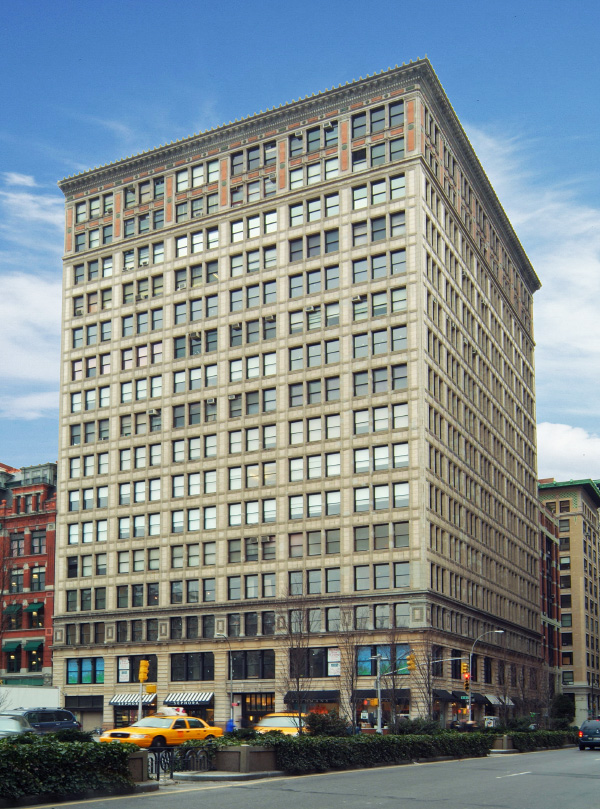
  • 817 Broadway: Taconic, Nuveen, and Squire’s 140,000-square-foot George B. Post building from 1895, fully leased, and effectively the venture capital clubhouse of New York.
  • 799 Broadway: Savanna and Anastacia’s 12-story 2022 ground-up build at East 11th, 100% occupied as of July 2026, with Lightspeed, Wellington Management, and SDC Capital Partners.
  • 838 Broadway: ZG Capital’s 1876 landmark, reopened after a SpectorGroup renovation and asking $100 to $130, with Legora, Hilton, and GlossGenius on full furnished floors.
  • 841 Broadway (Roosevelt Building): Feil’s eight-story, 91,300-square-foot building, filled to 100% by Robin Hood’s 53,000-square-foot, 30-year lease, alongside Perplexity and Movable Ink.
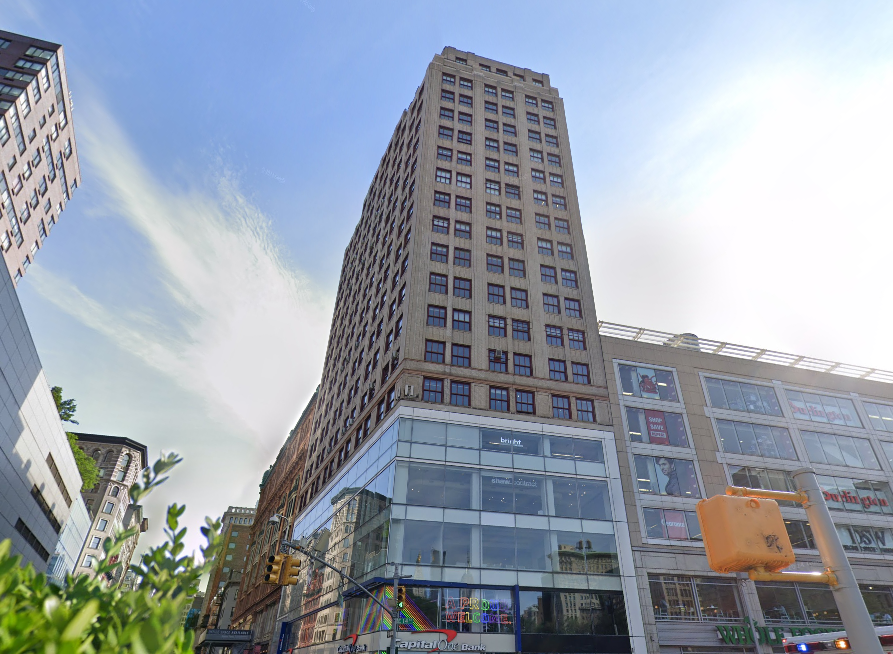
  • 853 Broadway (Union Building): Emery Roth’s 21-story, 157,000-square-foot Art Deco landmark at the foot of the park, rebuilt with a five-level glass entry and connected to 841 next door.
  • 44 Union Square East (Tammany Hall Building): the 1929 landmark BKSK crowned with a glass turtle-shell dome, offering up to 43,106 square feet, with Petco at the base.
  • 5-9 Union Square West (Spingler Building): GFP’s circa-1900 loft on the park’s west side, where Profound took two floors on a $75 ask.
  • 100 Fifth Avenue: Sovereign’s 277,000-square-foot Adobe-anchored building at 15th Street, 100% occupied after 170,000 square feet of new leasing and a $150 million refinancing.
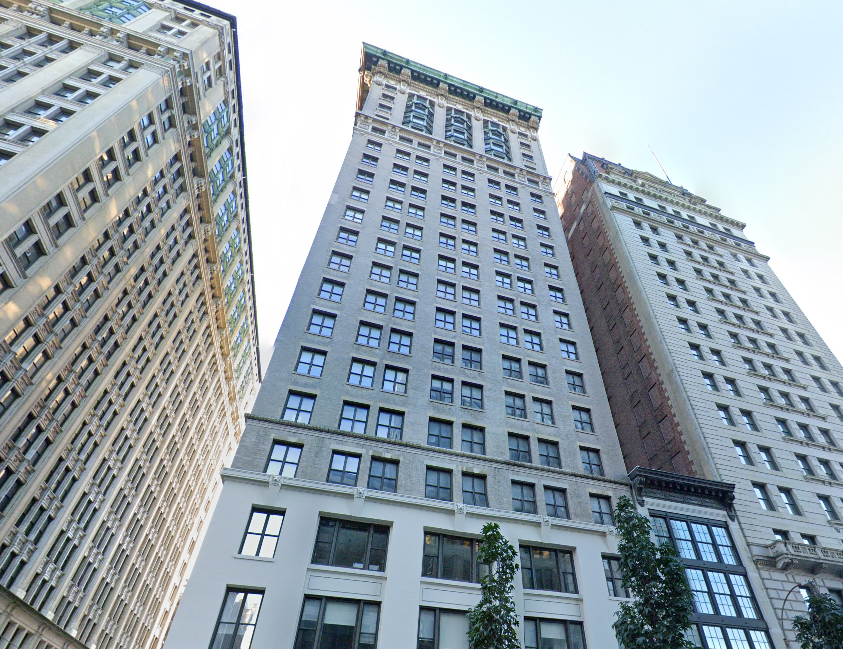
  • 37 East 18th Street: Zar Property’s 67,000-square-foot 1900 building, reborn in 2026 as boutique Class A with 15-foot ceilings, 8,900-square-foot floors, and a BKSK rooftop.
  • 200 Park Avenue South (Everett Building): the prewar corner loft looking down the length of the park from its north end.
  • 215 Park Avenue South: 346,216 square feet of 1910 Class B loft a block north of the station, with roughly $3.5 million of recent capital in the corridors and bathrooms.

See all Midtown South buildings, or filter live listings by size and price.

Who Owns These Buildings, and Why You Should Care

This isn’t REIT country, and that changes how a deal gets done. Union Square belongs to families and mid-sized shops holding two or three buildings apiece, and every one of them knows exactly what they’ve got.

Feil runs 841 and 853 Broadway as one 248,300-square-foot campus, and made the point by knocking down a wall between two separate buildings so Perplexity could have one continuous floor. No REIT does that. That’s an owner who wanted a tenant badly enough to pick up a sledgehammer.

Taconic, Nuveen, and Squire spent roughly $40 million turning 817 Broadway into the address venture firms fight over. Savanna built 799 from scratch and filled it. RAL built Zero Irving out of a city RFP and a lot of patience. These are people who think in decades.

Which cuts both ways for you. They’re reachable, they answer their own phones, and they’ll move fast when a deal makes sense to them. They’re also under zero pressure to fill anything, and you’ll feel that across the table on a Tuesday afternoon.

Knowing which ones deal straight and which one grinds you on the last dollar beats any listing site, and honestly it’s most of what a good tenant broker is selling. Our rundown of the biggest landlords in NYC covers the wider field.

Landlord Notable Properties Here Approx. Portfolio Typical Lease Profile
The Feil Organization 841 and 853 Broadway (248,300 SF combined) Large national office and retail book Class A and B loft, 4,000+ SF, 5 to 30 yr
Taconic Partners (with Nuveen and Squire) 817 Broadway ~140K SF here; much larger citywide Boutique Class A, full floors near 10,000 SF
Savanna (with Anastacia) 799 Broadway Large Manhattan book Class A, full floors, 10+ yr
RAL Development Services / JRE Partners Zero Irving (124 East 14th Street) ~270K SF here Class A and flexible floors, 5,000+ SF
GFP Real Estate 5-9 Union Square West (Spingler Building) Large NYC loft portfolio Class B loft, 2,500+ SF
Sovereign Partners 100 Fifth Avenue ~277K SF here Class A and B, 5,000+ SF
ZG Capital Partners 838 Broadway ~90K SF here Boutique Class A, furnished full floors
Zar Property NY 37 East 18th Street ~67K SF here; larger citywide Boutique Class A, 8,900 SF floors
Reading International 44 Union Square East (Tammany Hall) ~74K SF here Class A and retail, full building or floors

Portfolio figures are approximate; several of these owners hold much larger books across Manhattan and nationally. Ownership and management change, and Taconic listed 817 Broadway for sale or recapitalization in January 2025 while Newmark has marketed the Zero Irving leasehold, so confirm at lease time. Metro Manhattan internal research (July 2026), with ownership and deal details from Commercial Observer, The Real Deal, JLL, and CoStar (2024 to 2026).

Getting There

This is the part that sells the lease. Eight subway lines meet under the park at 14th Street-Union Square, the fourth busiest station in the system with 22.9 million riders in 2024, and nothing else in Manhattan reaches this much of the city this fast.

The Lexington line drops you at Grand Central in about ten minutes. The 1, 2, and 3 are a five-minute walk west at Seventh Avenue if your people come through Penn. PATH runs to Hoboken, Jersey City, and Newark out of 14th and 9th.

The L is the one that quietly wins hiring arguments. Bedford Avenue is one stop away, so the Williamsburg engineer you’ve been chasing for a month is at her desk in fifteen minutes, door to door. Try making that pitch from Hudson Yards.

One honest catch, and it’s the only one: no commuter rail. Your Metro-North and Long Island people transfer at Grand Central or Penn, and it costs them ten minutes each way. Before that turns into an office-wide argument, settle it with our commute calculator and everybody’s home address.

14th Street-Union Square (4, 5, 6, L, N, Q, R, W)
Eight lines under one station, express and local, East Side and West Side and Brooklyn. That's the whole pitch, and it's a good one.
14th Street (1, 2, 3) and 14th Street / Sixth Avenue (F, M)
A five-minute walk west, with PATH trains to New Jersey at both Sixth Avenue and Christopher Street.
Astor Place (6) and 8th Street-NYU (N, R, W)
A few blocks south into NoHo and Greenwich Village, where your team will end up after work anyway.
23rd Street (6, R, W)
A few blocks north toward Park Avenue South and Madison Square, close enough that you can shop both neighborhoods at once.
Third Avenue and Sixth Avenue (L)
Crosstown on 14th, east to Stuyvesant Town and west to the Meatpacking District, with Brooklyn in the other direction.
Buses and bikes
The M14A and M14D crosstown, the M1, M2, and M3 up Broadway and Fifth, Citi Bike docks on most corners, and the Broadway plazas if you'd rather walk it.
From To Union Square (14th St) Mode
Flatiron / Madison Square 3 to 6 min 6, R, W, or walk
Greenwich Village 5 min Walk, or N, R, W from 8th Street
Grand Central 8 to 12 min 4, 5, or 6
Penn Station 8 to 12 min 1, 2, 3 to 14th Street, then walk
Herald Square 6 to 10 min N, Q, R, W
Financial District 10 to 15 min 4 or 5
Williamsburg, Brooklyn 10 to 15 min L, one stop from Bedford Avenue
Downtown Brooklyn 20 to 30 min 4, 5, or R
Long Island City, Queens 20 to 30 min N, Q to Queensboro Plaza, or 6 plus transfer
Hoboken / Jersey City 15 to 25 min PATH to 14th or 9th Street
Newark, NJ 35 to 45 min PATH to 14th Street, or NJ Transit to Penn
Hicksville, NY (Long Island) 60 to 75 min LIRR to Penn or Grand Central plus subway
Stamford, CT 65 to 80 min Metro-North to Grand Central plus 4, 5, 6

Union Square Office Space: FAQs

  • How much does office space in Union Square cost?

    There’s no single number, and anybody who gives you one is selling something. The published average is $86.96 a foot, a few bucks over Midtown South. In practice, Zero Irving and the rebuilt Broadway buildings clear $100, the park-front lofts ask in the seventies and eighties, and 14th Street still starts at $52.

  • Why did the AI companies choose Union Square?

    The trains and the timing lined up. AI tenants took about a third of Manhattan’s tech demand in early 2026, and Park Avenue South had already repriced past what most of them wanted to pay. Union Square sat six blocks south with renovated full floors and eight trains, so Perplexity, Legora, Profound, Phia, and Ledger landed here.

  • Is there real Class A office space in Union Square?

    Yes, but there isn’t much and almost none of it’s available. Zero Irving at 124 East 14th Street is the anchor, 270,000 square feet delivered in 2022 and fully leased by 2024. The rest is new-build or boutique conversion: 799, 817, and 838 Broadway, 37 East 18th, and 100 Fifth. Most of those are full too.

  • What is Zero Irving?

    A 21-story, 270,000-square-foot tower the city commissioned. RAL and JRE won an NYCEDC competition to build a tech hub at 124 East 14th Street, and the market-rate floors upstairs pay for Civic Hall’s 85,000-square-foot training center downstairs. Melio, Sigma Computing, Sequoia, and Senator Investment Group are inside, most of them above $100 a foot.

  • Why is Union Square so hard to lease in?

    Supply, plainly. The Union Square Partnership put district office availability at 10.9% in 2025, the lowest in Manhattan when the borough sat near 17%, and it’s only tightened since.

    817 Broadway, 799 Broadway, 841 Broadway, 100 Fifth Avenue, and Zero Irving all report 100% leased, so a lot of what trades here is a floor somebody gave back. Which makes the sublease and assignment clauses in your lease worth reading closely.

  • Where should a startup or small business look here?

    West of the park on 14th Street and along the numbered side streets, where quotes still run in the fifties and sixties and plenty of landlords keep prebuilt suites you can sign and move into fast.

    If you need to go cheaper than that, Downtown and the Financial District run well below this submarket. You’re giving up the L and half the transit map to get there, which is a real trade.

  • What subway lines serve Union Square?

    Eight: the 4, 5, 6, L, N, Q, R, and W all stop at 14th Street-Union Square, the fourth busiest station in the city with 22.9 million riders in 2024. The 1, 2, 3, F, and M are a five-minute walk west, and PATH runs to New Jersey from 14th and 9th. The one gap is commuter rail.

  • Who are the biggest landlords in Union Square?

    Nobody dominates, which is unusual for Manhattan. Feil holds 841 and 853 Broadway, Taconic and Nuveen hold 817, Savanna built and owns 799, RAL and JRE built Zero Irving, GFP owns the Spingler Building, Sovereign owns 100 Fifth, ZG Capital owns 838 Broadway, and Reading International owns Tammany Hall. Most are private, holding a building or two.

  • How does Union Square compare to Park Avenue South and Flatiron?

    They overlap on the map and you shop them differently. Park Avenue South is the AI trophy corridor, where the Madison Square towers ask $90 to $180. Flatiron splits between a pricey eastern edge and cheaper loft toward Sixth. Union Square sits under both with better trains and tighter availability, as our Class A, B, and C guide explains.

  • Is there medical or retail space in Union Square?

    Both, and the retail matters even if you only lease offices, because it’s what makes the neighborhood worth showing up to. Storefront occupancy hit 91.4% in early 2026 with four vacant corners left out of 42, and Uniqlo’s opening lifted district foot traffic 33% on day one. Medical clusters east toward Irving Place and Third Avenue.

  • What concessions can I expect?

    Less than three blocks north, and less than two years ago. Figure six to ten months free on renovated Class A, eight to twelve on park-front boutique, twelve to eighteen in the value stock, where improvement dollars run richer too. Push the allowance and the free rent, not the face rate, and get the key terms in your offer early.

  • Do you need a broker, and what does it cost?

    In a market this tight, yes. The good space here rarely makes it to a listing site, and when a floor does come back in a full building it goes to whoever the landlord’s broker calls first. A tenant broker gets you that call, and the landlord pays the commission, so it costs you nothing.

Before you tour, read our notes on the essentials to ask before leasing and the savvy approach to lease clauses, then put together a real tenant proposal package so you read like the low-risk tenant you probably are.