Market data: Q2 2026 (Manhattan) · Metro Manhattan July 2026 (Harlem) · Last reviewed July 2026
$30 to $55/SF Typical asking rent
$78.03/SF Manhattan average (Q2 2026)
13.0% Manhattan availability
298,800 SF Coworking inventory (Harlem / North Manhattan)
1 Active listings
Harlem asking range is Metro Manhattan internal research (July 2026), built from live listings and building-level asks. No approved research firm publishes a standalone Harlem office submarket. Manhattan average asking rent ($78.03/SF) and availability (13.0%) from Colliers, Q2 2026 Manhattan Office Market Report (July 2026). Harlem and North Manhattan coworking inventory (298,800 SF) from Hubble, Q1 2026 New York City Office Report (May 2026).

You’ve seen the rents and you’re hunting for the catch. There is one, and it has nothing to do with the neighborhood. Harlem is cheap because almost nobody has ever treated it as an office market, and that includes the research firms everyone else quotes.

The same neglect explains why there’s so little to lease. Trackable stock up here runs to maybe 2 million SF. Manhattan has around 400 million. So you aren’t shopping a market, you’re shopping about a dozen buildings, and most of them sit on one street.

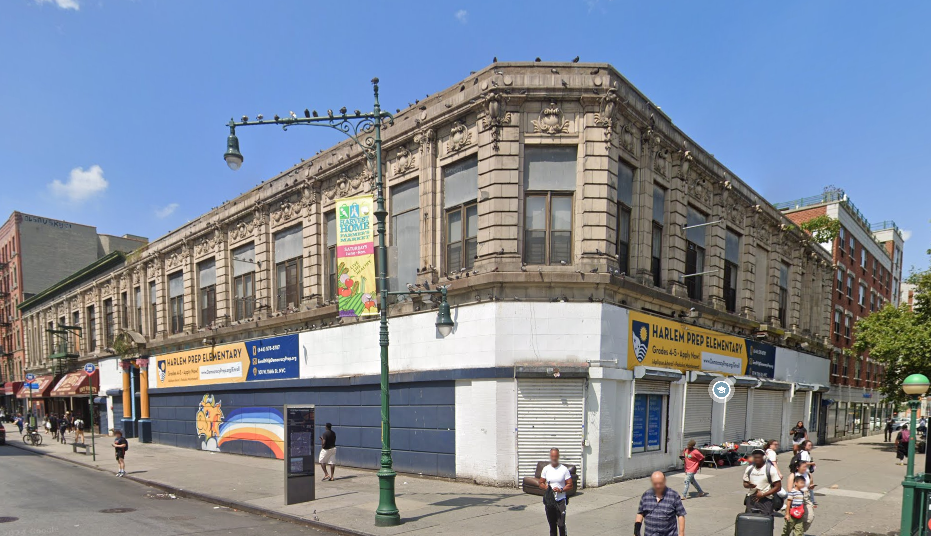
That street just had its biggest 18 months in 50 years. The Urban League opened a $242 million building on it, the Studio Museum opened a block west, and the MTA finally started digging the subway East Harlem has been promised since the Ford administration.

None of it moved asking rents, mostly because there are no published Harlem asking rents to move. CBRE, Colliers, Cushman, Newmark: every one of them folds this place into Manhattan totals. What’s left is a building-by-building read, and it lands between $30 and $55/SF.

So the search is narrow, and it punishes vagueness. Get your size right first. In a market this thin an extra 1,000 SF can cut your list in half, so run the headcount through the Office Space Calculator before you tour anything.

Harlem Office Market Overview

This market ran on a promise for 20 years. The 2008 rezoning was supposed to put 1.8 million SF of commercial space on 125th Street. The corridor got renderings instead, which is part of why nobody bothered to start counting it.

Then it all arrived at once. Four projects opened or wrapped within a few blocks of each other between November 2025 and this summer. Together they did more for the corridor in 18 months than the rezoning managed in 15 years.

The Urban League led. It opened at 117 West 125th in November with 414,000 SF of housing, retail, and office on what had been a parking lot. Four days earlier the Studio Museum opened its 82,000 SF home a block west, seven years after closing to rebuild.

A few doors east, the Apollo has been dark since 2025 for its biggest renovation in 90 years. The work finishes this summer. Programming moved meanwhile into the restored Victoria, which also carries the first full-service hotel Harlem has seen in about a century.

All of that landed while the rest of Manhattan ran hot. Availability tightened to 13.0% in Q2 and the borough average hit $78.03/SF, up 5.7% on the year (Colliers, Q2 2026). Harlem barely moved on either count, which tells you it’s still priced off its old reputation.

Four Forces to Monitor

  • The subway is finally being built. Phase 2 broke ground at East 120th on June 8, 2026, carrying the Q up to 125th with new stops at 106th and 116th (Governor’s Office, June 2026). Boring starts in 2027, trains in 2032. A 10-year East Harlem lease takes you through the scaffolding and into the payoff.
  • Your neighbors will be institutions, not startups. The Urban League building alone pulled in One Hundred Black Men of New York, the United Negro College Fund, Jazzmobile, and the Studio Museum’s back office (Amsterdam News, November 2025). Tenants like those take forever to sign and much longer to leave.
  • West Harlem became a lab market while nobody was watching. Janus Property’s Manhattanville Factory District now runs about 1.4 million RSF built and building, anchored by the 350,000 SF Taystee Lab Building. Add Columbia and City College next door and that’s the only real Class A demand north of 96th.
  • Flex space nearly doubled in three months. Harlem and North Manhattan added 132,500 SF of coworking in Q1 to reach 298,800, passing Hudson Square (Hubble, Q1 2026). Four locations opened, wet labs among them. Small tenants usually find a market before the conventional space does.

How Much Does Harlem Office Space Cost?

Which brings up the number you came for, and the awkward fact that nobody publishes it. Any Harlem figure you find, this one included, got built from listings rather than tracked inventory. Hold them loosely and check the buildings underneath.

The working range is $30 to $55/SF. Elevator buildings on 125th cluster in the $40s and low $50s, while the walk-ups on Lenox and out in East Harlem land well below that. Manhattan averaged $78.03 last quarter.

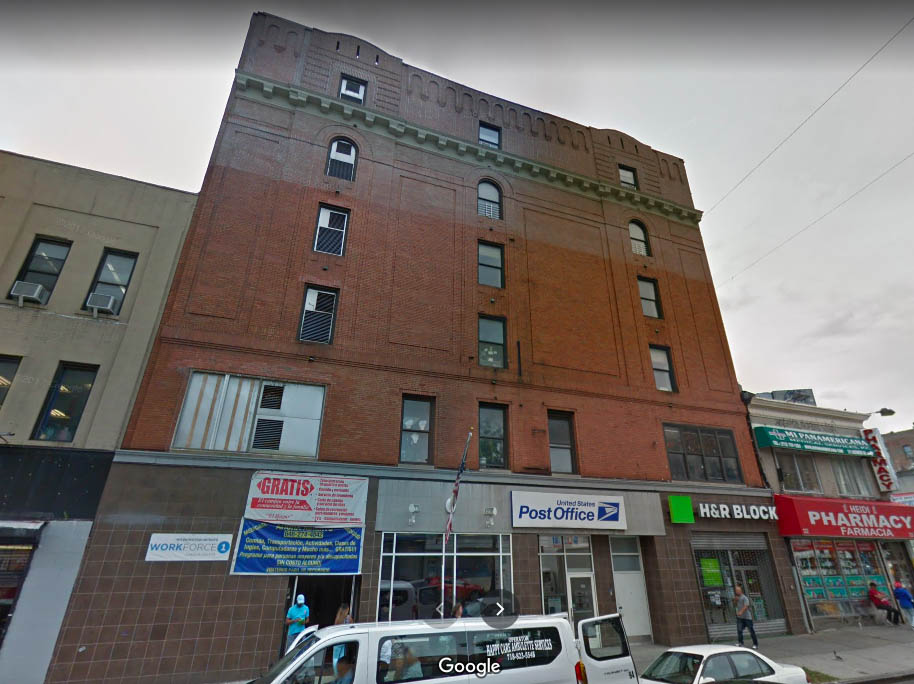
Three of those numbers you can check yourself. The listing at 1677 Lexington asks $6,625 a month for 2,650 SF, which works out to $30. A built-out floor at 20 East 125th quoted $44 gross this year. Asking rents at 215 West 125th start near $50.

That last one is worth sitting with, because 215 West 125th is a Class C building. When Class C on the main drag can ask $50, the address is carrying the space, not the other way around.

Area Typical Asking Range Class Profile Typical SF for New Leases Tier
The 125th Street spine $40 to $55/SF Renovated Class B and C elevator buildings, plus one new Class A office podium 1,000 to 25,000 SF Class B
Manhattanville / Factory District $65 to $95/SF (lab and lab-ready) Class A lab, creative office in converted industrial 5,000 to 50,000+ SF Class A / Lab
East Harlem / Lexington corridor $30 to $45/SF Class C and mixed-use, some medical build-outs 800 to 10,000 SF Value
Mount Morris Park / Lenox Avenue $35 to $50/SF Class C upper floors over ground-floor retail 500 to 5,000 SF Value
Hamilton Heights / Sugar Hill $30 to $42/SF Class C, small floor plates 500 to 5,000 SF Value
Harlem overall (context) $30 to $55/SF Predominantly Class B and C Varies Mixed
Manhattan overall (Q2 2026) $78.03/SF All classes Varies Context

Harlem area ranges, class profiles, and typical sizes are Metro Manhattan internal research (July 2026), built from live listings, building-level asks, and recent deals. Approved research firms don't publish Harlem office submarket figures. Manhattan overall average asking rent from Colliers, Q2 2026 Manhattan Office Market Report (July 2026). The Manhattanville range covers lab and lab-ready space, which prices on a different basis than conventional office and often quotes before base-building and fit-out costs. Treat it as directional and confirm building by building. Rents are asking rents and don't reflect concessions.

Class A Space, and Why There’s Almost None

Class C can ask that because there’s almost nothing above it setting a ceiling. Harlem’s only real Class A pocket isn’t even on 125th Street. It’s in Manhattanville, where Janus Property spent 20 years turning a bakery, a brewery, and a fur warehouse into a life sciences campus.

The Taystee Lab Building at 450 West 126th anchors it: 11 stories, 350,000 SF, roughly $700 million. High-capacity power, acid waste neutralization, and floors that step from 36,000 SF at the base to 15,000 in the penthouse.

Around it sit the Mink Building on Amsterdam, the Sweets Building, and the Malt House. Between them they carry Harlem Biospace’s wet lab incubators and the City Innovations Collaborative that Janus runs with City College. Call the district 1.4 million RSF built and building.

The only other new Class A is the office podium over the Target and Trader Joe’s at the Urban League building, about 70,000 SF. Most of it went to nonprofits at below-market rents under the state deal, so treat it as institutional space rather than inventory you can chase.

Want to know what separates the tiers before you book tours? The piece on how trophy buildings set themselves apart covers the ceiling you’ll never hit up here.

Class B Space, Which Is What You’re Actually Renting

Unless you need a lab, neither pocket is where you’ll land. What’s left is the working Harlem market: a handful of Class B and renovated Class C elevator buildings on 125th, all of them better than the letter grade suggests.

55 West 125th sets the tone. It runs 14 floors and 232,000 SF, gutted in 1998, and it’s held the Clinton Foundation since 2001 alongside CUNY, Mount Sinai, and a stack of agencies.

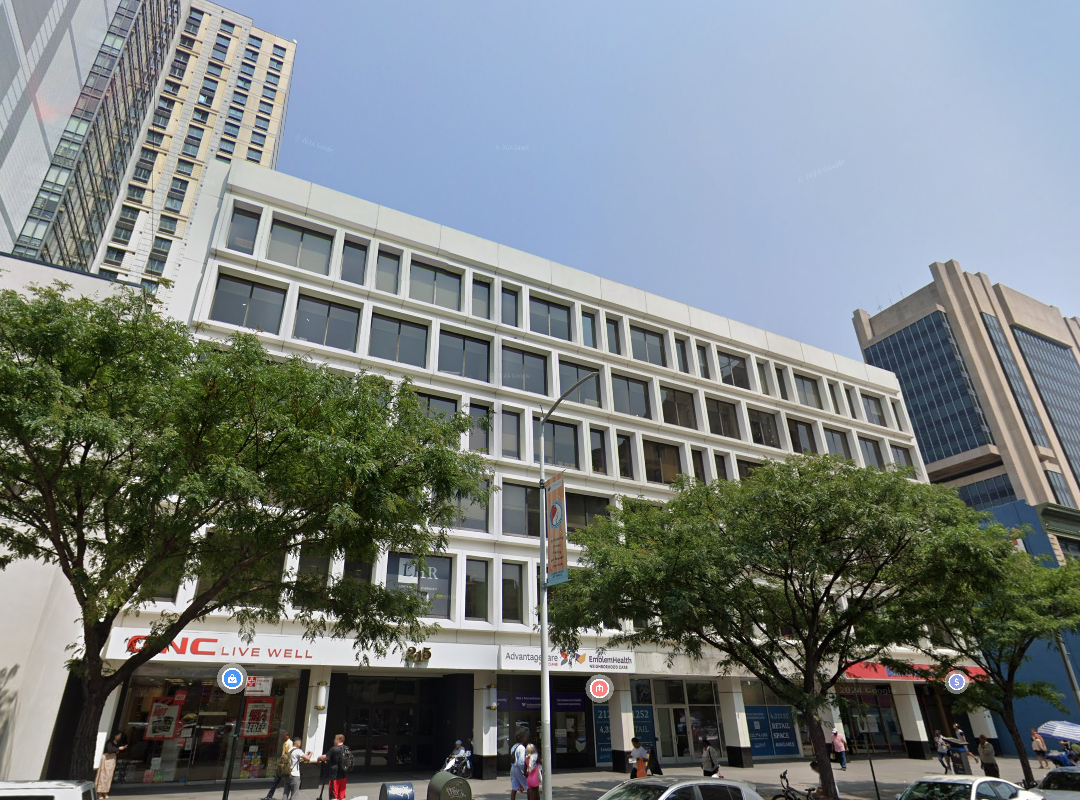
Two blocks west, Cogswell Realty’s 215 West 125th offers 171,000 SF over 6 floors. Look at who’s already inside: EmblemHealth, AdvantageCare Physicians, Lenox Hill Radiology, CUNY Workforce1, Community Board 10. The city’s housing agency filed for 22,217 SF of the third floor in 2025 (Commercial Observer, February 2025).

Harlem Center at 125 West 125th is the newest of the group, built in 2001 and LEED Gold. That puts it ahead of most Class B south of here on the sustainability questions your board eventually asks.

Pricing across all three lands in the $40s and low $50s. It moves on the landlord’s vacancy more than the building, which is why two towers on the same block will quote you different numbers on the same afternoon. Walk all of them first.

Class C and Value Space

Step off 125th and almost everything turns into value space. That’s where most small Harlem tenants end up anyway: walk-up and low-rise, 2,000 to 5,000 SF over a storefront, along Lenox, Frederick Douglass, Adam Clayton Powell, and the East Harlem avenues.

What makes those buildings interesting is who owns them. A lot are local families three generations into the same address, and they still write true gross leases. Heat, electric, and water included, with no tax escalations and no common area charges.

So the number you’re quoted sits closer to what you’ll actually pay than anywhere else in the borough. A $44 gross deal on 125th can beat a $38 net deal downtown once the electric and the escalations land. The office space electricity costs guide is 10 minutes well spent.

The trade is that space comes as-is. Small landlords don’t fund build-outs, the freight is often a single cab, and the HVAC becomes your problem. Read who pays for an office build-out before a low face rent on a raw floor talks you into anything.

Lease Concessions and Effective Rent

Whichever tier you land in, asking rent is half the conversation. The concession package is where the rest of your money hides. Across Manhattan those packages are thinning: free rent on new deals averaged 12.4 months in H1, with improvement money flat near $140.02/SF (Colliers, July 2026).

Harlem runs on its own clock, and the split in ownership shows up in how deals get done. Institutional buildings on 125th negotiate close to Manhattan norms, because they’ve got credit tenants and a steady rent roll. Small buildings offer less structure and far less construction money.

The ranges below come off recent 5- and 10-year deals (Metro Manhattan internal research, July 2026). Shorter terms get less on both counts. If term length is still an open argument on your side, the breakdown of 3-year, 5-year, or 10-year lease terms does that math.

Building class Free rent (typical) TI allowance (typical) Notes
125th Street institutional buildings 8 to 14 months free TI $50 to $90/SF The most conventional deals up here, and the ones where a tenant rep earns the fee.
Manhattanville lab and Class A Negotiated deal by deal Lab fit-outs cost enough that the allowance fight dwarfs the free-rent fight Expect base-building delivery and a long argument over who pays for what.
Class C and value buildings 3 to 8 months free TI anywhere from nothing to $40/SF The owner would usually rather cut the rent than write a check, so take the rent cut if the space works as-is.
Second-generation and sublease space Thin but occasionally excellent Usually furnished and wired Check the sublets inventory, then read the sublease and assignment clauses before you fall in love with one.

Whatever you’re offered, work out what you’ll actually pay before you get excited about the face rent. Those concessions amortize across the term, and the concessions explainer runs the numbers on how far they really go.

Then get the clauses right. Lease language is where small-building deals come apart, and up here you’re often handed a document the owner’s attorney wrote in 1994 and has been reusing ever since.

Which Businesses Lease in Harlem?

None of that explains why anyone comes up here in the first place. You’ll hear the cynical answer soon enough, which is that Harlem’s cheap because nobody wants it. Look at who’s been signing instead.

Nonprofits, foundations, city and state agencies, hospitals, universities, cultural groups, plus the lab cluster out west. Plenty of people want this market. Almost nobody writes about it, which is a different problem entirely.

What that tenant mix buys you is neighbors who are stable, locally rooted, and slow to move, in buildings set up to serve exactly those organizations. Find your row below and the search narrows fast.

Industry Best-Fit Areas Class Fit Example Buildings
Nonprofits, foundations, advocacy 125th Street spine Class B / C Urban League Empowerment Center (117 W 125th), 55 W 125th, 215 W 125th
Government and public agencies 125th Street spine Class B / C Adam Clayton Powell Jr. State Office Building (163 W 125th), 215 W 125th
Healthcare and medical practices 125th Street, East Harlem Class B / C 55 W 125th, 215 W 125th, 2212-2224 Third Avenue
Life sciences, labs, research Manhattanville Class A / Lab Taystee Lab Building (450 W 126th), Mink Building (1361 Amsterdam), Sweets Building
Education and workforce training 125th Street, Hamilton Heights Class B / C 215 W 125th (CUNY Workforce1), City College-adjacent buildings
Professional services, accounting, insurance 125th Street, Mount Morris Park Class B / C Harlem Center (125 W 125th), 20 E 125th, 55 W 125th
Law firms (solo, boutique, and small) Mount Morris Park, 125th Street Class C 20 E 125th, Lenox Avenue upper floors, 215 W 125th
Media, arts, and creative studios Mount Morris Park, Manhattanville Class C / Loft Malt House, Mink Building, Lenox Avenue lofts
Startups and small business (under 20 people) East Harlem, Hamilton Heights Class C 2212-2224 Third Avenue, 101-111 W 116th (Bernheimer Building)
Coworking and flex 125th Street Class B Regus at 1 W 125th and 310 Lenox, WeWork at 8 W 126th
Retail and showroom 125th Street Ground floor Urban League podium (Target, Trader Joe's, Sephora), Harlem Center, 215 W 125th base

Vertical landing pages: Financial Services, Law Firm Offices, Medical & Healthcare Offices, Startup & Tech Space, Retail/Stores, Commercial Loft Space, Commercial Office Space for Rent. Industry and class fits are Metro Manhattan internal research (July 2026).

Small firms do well in that mix. You can take a real floor with your own front door up here, instead of a suite off somebody else’s corridor, and that trade barely exists south of the park. The top neighborhoods for small businesses rundown weighs it against the rest of the borough.

Smaller still? Look at flex first. Desks on 125th run $219 to $339 a month all-in against a Manhattan median closer to $400, and a 4-person room starts under $900 (Wezoo, July 2026). When you outgrow it, moving from coworking into your own office is the playbook.

One redirect, worth making now rather than after you’ve spent an afternoon on it. If what you want is exposed brick, timber columns, and a creative-agency address, that’s a Midtown South conversation. Start in Chelsea or SoHo.

Harlem’s loft stock is real, but it’s small and it lives in Manhattanville, not on 125th Street. Come up expecting SoHo at a discount and you’ll leave disappointed.

Top Office Buildings and Amenities in Harlem

The buildings serving those tenants don’t compete on lobbies, and any broker telling you otherwise hasn’t walked them. What they have instead is a street most Manhattan submarkets would trade their tenant lounge for.

Within four blocks of 125th and Lenox: Whole Foods, Trader Joe’s, Target, Sephora, the Apollo, the Studio Museum, the Schomburg, Red Rooster, Sylvia’s, Marcus Garvey Park. Nobody installed any of that as a perk. It grew there over a century, which is why it doesn’t feel like a lobby coffee bar.

The stock comes in three tiers, and the gap is wide enough that you’ll want to know which one you’re shopping before the tours start.

New Class A (the Urban League podium, Taystee Lab): modern systems, real floor plates, LEED credentials, and the only elevator banks in Harlem that would pass for Midtown. Little is available in either, and the lab product only works if you genuinely need lab.

Renovated Class B (55 West 125th, Harlem Center, 215 West 125th): the working core. Attended lobbies, freight that runs, floors from 8,000 to 20,000 SF, and rosters heavy on hospitals, agencies, and nonprofits.

Class C and value (Lenox, Frederick Douglass, the East Harlem avenues): upper floors over retail, gross leases, good ceilings in the older stock, and the lowest cost per seat in Manhattan. You bring the build-out and the patience.

Featured Buildings

  • Urban League Empowerment Center (117 West 125th Street): the $242 million, 414,000 SF complex that opened in November 2025. Roughly 70,000 SF of office over 110,000 SF of retail, 170 affordable and supportive apartments, and a civil rights museum still to come. Built by L+M, BRP, Taconic, and the Prusik Group on an Empire State Development ground lease.
  • 55 West 125th Street: 14 stories, 232,000 SF of Class B, renovated in 1998. Home to the Clinton Foundation since 2001 alongside CUNY, Mount Sinai, and a stack of agencies. See the building profile.
  • 215 West 125th Street: Cogswell Realty’s 6-story, 171,000 SF building steps from the Apollo, holding EmblemHealth, AdvantageCare Physicians, Lenox Hill Radiology, CUNY Workforce1, and Community Board 10, plus 15,000 SF of ground-floor retail. See the building profile.
  • Taystee Lab Building (450 West 126th Street): 11 stories and 350,000 SF of Class A life sciences space anchoring the Manhattanville Factory District. Developed by Janus Property with J.P. Morgan Asset Management for around $700 million, with 20,000 SF of outdoor amenity space.
  • Adam Clayton Powell Jr. State Office Building (163 West 125th Street): 19 stories and 260,000 SF, the tallest building in Harlem, designed by Ifill Johnson Hanchard in the shape of an African mask and renovated between 2014 and 2016. State-occupied, but it anchors the corridor and sets the plaza.
  • Harlem Center (125 West 125th Street): LEED Gold Class B, finished in 2001 at Lenox and 125th, with about the best transit access of any office address in Upper Manhattan.
  • Mink Building (1361 Amsterdam Avenue): the converted fur warehouse carrying Harlem Biospace’s second wet lab incubator, alongside a mix of creative and academic tenants. Part of the Janus campus.
  • 101-111 West 116th Street (Bernheimer Building): a Class B option south of the main corridor that suits small professional and community tenants. See the building profile.
  • 2212-2224 Third Avenue: a 6-story East Harlem building with smaller, cheaper floors and straightforward ownership. See the building profile.
  • 2108-2118 Adam Clayton Powell Jr. Boulevard: value space a few blocks south of 125th, typical of the small-floor stock along the avenue. See the building profile.

See all Uptown buildings or filter active listings by size and price.

Major Office Landlords in Harlem

Which building you pick matters less up here than who owns it. Harlem ownership runs from the State of New York to a family three generations into the same corner, and your deal depends almost entirely on which one’s across the table.

Institutional developers and the state hold nearly every large floor plate on 125th. Those deals run long, move slowly, and arrive with real paper. Cogswell Realty sits just under them, running 215 West 125th as a working multi-tenant building, which makes it a category of one up here.

Everybody else is the rest of the neighborhood: local families, churches, small partnerships, plenty of them holding the same corner since the sixties. Those deals move faster and looser, which is why it pays to bring somebody who already knows the owner. Here’s the rundown on the biggest landlords in NYC.

Owner Notable Harlem Properties Approx. Harlem Footprint Typical Lease Profile
Janus Property Company Taystee Lab Building (450 W 126th), Mink Building, Sweets Building, Malt House ~1.4M RSF developed and under development Lab and creative office, 5,000+ SF, long term
State of New York (ESD and OGS) Adam Clayton Powell Jr. State Office Building (163 W 125th); ground lease under the Urban League site ~260,000 SF owned, plus ground-leased parcels Public agency and institutional
L+M, BRP, Taconic, Prusik Group (joint venture) Urban League Empowerment Center (117 W 125th) ~414,000 SF total, ~70,000 SF office Below-market nonprofit office, national retail
Cogswell Realty 215 West 125th Street ~171,000 SF Class C multi-tenant, 1,000+ SF, government and healthcare
Columbia University Manhattanville campus, 125th to 133rd between Broadway and 12th Avenue 17 acres, 6.8M SF planned build-out Owner-occupier, minimal third-party leasing
Local and family ownership Most of Lenox, Frederick Douglass, Adam Clayton Powell, and the East Harlem avenues Fragmented across hundreds of buildings Small floors, gross leases, direct negotiation

Portfolio figures are approximate and reflect Metro Manhattan internal research (July 2026), with square footages drawn from public reporting and developer disclosures. Several owners listed hold much larger portfolios outside Harlem.

Transportation and Commuting to Harlem

Whoever the landlord turns out to be, the argument you’ll have to win is internal, and it’s about the commute. That one’s more winnable than people expect. If your team lives in Westchester or Connecticut, Harlem is a shorter ride than Midtown.

The reason gets missed because it’s so simple. Metro-North stops at 125th Street before it reaches Grand Central. Harlem-125th sits on all three lines, which puts White Plains, Yonkers, New Rochelle, and Stamford closer to a 125th Street office than to a Park Avenue one.

That’s real money in a hiring market, and almost nobody raises it on a tour. Settle the rest with the Commute Calculator and everyone’s home address, because half your team will have an opinion about coming uptown before they’ve ever tried it.

The subway holds up just as well. It gets overlooked because the neighborhood reads remote on a map. Four trunk lines cross 125th, more than most Midtown submarkets can claim, and the M60 runs straight to LaGuardia with no transfer.

Harlem-125th Street (Metro-North)
The Hudson, Harlem, and New Haven lines all stop here at Park Avenue, about 10 to 12 minutes north of Grand Central.
125th and Lexington
The 4, 5, and 6 on the East Side trunk, and the future terminus of the Second Avenue Subway extension.
125th and Lenox
The 2 and 3, running express down the West Side to Times Square and the Financial District.
125th and St. Nicholas
The A, B, C, and D, with the A reaching Columbus Circle in about 12 minutes.
125th and Broadway
The 1, elevated on the Manhattanville viaduct, serving the Factory District and Columbia.
Buses and bikes
The M60 Select runs crosstown and straight to LaGuardia, joined by the M100, M101, M102, M103, M2, M3, M4, M7, and several Bronx routes. Citi Bike coverage is dense and both river greenways are close.
Second Avenue Subway Phase 2
New stations at 106th, 116th, and Harlem-125th, with boring starting in 2027 and trains targeted for 2032. A fourth phase running west along 125th to Broadway has engineering money budgeted for fiscal 2027.
From To Harlem (125th Street) Mode
Upper East Side (86th St) 8 to 12 min 4, 5, or 6
Grand Central 10 to 12 min Metro-North, or 4/5/6
Upper West Side (72nd St) 10 to 15 min 1, 2, 3, B, or C
Columbus Circle 12 to 18 min A, B, C, or D
Times Square / Midtown core 15 to 20 min 2/3 express or A express
Penn Station 20 to 25 min 2/3 or A/C/E with transfer
White Plains, NY 35 to 45 min Metro-North direct to Harlem-125th
LaGuardia Airport 30 to 40 min M60 Select Bus, direct
Financial District 30 to 40 min 2/3 or 4/5 express
Long Island City, Queens 30 to 40 min 6 plus transfer, or M60
Downtown Brooklyn 40 to 50 min 2/3 or 4/5
Hoboken / Jersey City 40 to 50 min PATH to 33rd plus subway
Stamford, CT 55 to 65 min Metro-North direct to Harlem-125th

Frequently Asked Questions About Harlem Office Space

  • How much does it cost to rent office space in Harlem?

    Figure $30 to $55/SF across most of Harlem. Elevator buildings on 125th cluster in the $40s and low $50s, while the walk-ups on Lenox and in East Harlem come in under that (Metro Manhattan internal research, July 2026).

    Manhattan averaged $78.03 last quarter (Colliers, July 2026), so Harlem runs at roughly half to two-thirds of the borough. Nobody publishes a Harlem average, so be skeptical of any single number you see quoted, this page included.

  • Why doesn’t anybody publish a Harlem office rent average?

    Harlem’s trackable inventory is small enough that the big houses fold it into Manhattan totals instead of reporting it separately. CBRE, Colliers, Cushman & Wakefield, Newmark, and Savills all handle it that way.

    So Harlem pricing has to be built from live listings and building-level asks. That’s how the ranges here came together, and it’s why the buildings underneath them get named rather than averaged away.

  • What’s the difference between Class A, B, and C office space in Harlem?

    Class A means two things up here: the lab and creative space in Manhattanville’s Factory District, and the new office podium at the Urban League building. Class B covers the renovated elevator buildings on 125th, like 55 West 125th and Harlem Center. Class C is everything else, mostly upper floors over retail.

    The explainer on what makes a building Class A, B, or C covers the criteria. The top Class A buildings in Midtown rundown shows what the top of a market looks like when a submarket actually has one.

  • Is Harlem cheaper than Downtown or Midtown?

    By a wide margin. Harlem’s $30 to $55 sits under almost every submarket in Downtown Manhattan, and well under Midtown Manhattan, where Class A averaged $84.79/SF last quarter (Cushman & Wakefield, July 2026).

    The Financial District comes closest on price, though it arrives with far more inventory and far more competition for it. Harlem gives you the reverse: less to choose from, cheaper per seat.

  • What’s actually driving demand for Harlem office space right now?

    Institutions, mostly. Nonprofits, foundations, city and state agencies, hospitals, universities, and cultural organizations make up the bulk of it, joined by the lab cluster that Taystee and Harlem Biospace anchor out west.

    The Urban League building shows the pattern. When it opened in November 2025 it brought One Hundred Black Men of New York, the United Negro College Fund, Jazzmobile, Virginia Union University, and the Studio Museum’s administrative offices onto the corridor.

  • How does the Second Avenue Subway extension affect Harlem office space?

    Phase 2 broke ground at East 120th on June 8, 2026, carrying the Q from 96th up to Harlem-125th with new stops at 106th and 116th (Governor’s Office, June 2026). Boring starts in early 2027 and trains are targeted for 2032.

    For a tenant, that sequence means East Harlem gets years of street work before it gets the payoff, which is part of why pricing there hasn’t moved. A fourth phase heading west along 125th to Broadway has engineering money budgeted for fiscal 2027.

  • What are the best Harlem options for small businesses and startups?

    East Harlem along Third and Lexington, the Lenox and Mount Morris Park upper floors, and Hamilton Heights near City College. Asking rents run $30 to $45/SF on floors of 500 to 5,000 SF.

    Coworking is unusually well priced too. Desks on 125th run $219 to $339 a month all-in against a Manhattan median closer to $400 (Wezoo, July 2026), and Harlem and North Manhattan added 132,500 SF of flex in Q1 alone (Hubble, Q1 2026).

  • Is Harlem good for medical and healthcare practices?

    It’s one of the better medical submarkets in Upper Manhattan, and the tenant rosters make the case. EmblemHealth, AdvantageCare Physicians, and Lenox Hill Radiology all sit at 215 West 125th, and 55 West 125th has carried Mount Sinai.

    Referral networks are close by rather than a cab ride away. NYC Health + Hospitals runs Harlem Hospital on Lenox at 135th, and Mount Sinai Morningside anchors the west side. The medical listings linked in the industry guide above show what’s open.

  • What concessions can I expect on a Harlem lease?

    The institutional buildings on 125th negotiate close to Manhattan norms. Call it 8 to 14 months free and $50 to $90/SF in improvement money on a 5- or 10-year term.

    Smaller buildings give you much less structure. Usually 3 to 8 months free with little or no construction allowance, from an owner who’d rather cut the rent than write a check (Metro Manhattan internal research, July 2026). Manhattan-wide, free rent averaged 12.4 months in H1 against allowances near $140.02/SF (Colliers, July 2026).

  • How do I get to Harlem by public transportation?

    Four subway trunk lines cross 125th Street: the 4, 5, and 6 at Lexington, the 2 and 3 at Lenox, the A, B, C, and D at St. Nicholas, and the 1 at Broadway.

    Metro-North’s Harlem-125th station on Park Avenue serves the Hudson, Harlem, and New Haven lines, about 10 to 12 minutes north of Grand Central. Westchester and Connecticut commuters reach Harlem before they’d reach Midtown, and the M60 runs straight to LaGuardia.

  • Do I need a broker to find Harlem office space, and what does it cost?

    Up here more than almost anywhere in Manhattan, yes. So much of the inventory belongs to local families and small partnerships who never list publicly, so the good small floors move on relationships rather than listing sites.

The landlord pays the commission, so representation costs you nothing. Before you tour, read the essentials to ask before leasing NYC office space and the six lease negotiation mistakes that cost tenants the most money.