


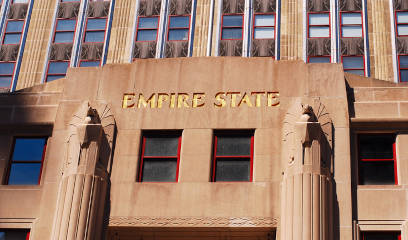
The Empire State Building – Pricing, Layouts and Tenant Benefits
Lease Your Office in NYC’s Most Famous Skyscraper Do you want to lease office space in a famous New York City office building?



Most people who rent office space on the Upper West Side already live here. That isn’t a coincidence, and it’s pretty much the whole story of this market.
You’re leasing in a residential neighborhood. The buildings are small, the floors are smaller, and your neighbors will mostly be doctors, therapists, nonprofits, and whatever grew up around Lincoln Center.
Class A runs about $55 to $68 a foot up here. Class B runs $45 to $58. Manhattan’s average sits at $78.03 (Colliers, Q2 2026), so for a six-person firm that spread covers a salary.
Size is the trade. There’s no 40,000-foot floor plate on Amsterdam Avenue and there never will be, so plan on 1,000 to 6,000 square feet. Plan on fewer choices every year, too, since landlords keep turning offices into apartments.
It comes down to a simple test. If your team lives on the West Side and you can work in a few thousand feet, this is one of the better deals in Manhattan. If you need room to grow into, Columbus Circle and Midtown start a few blocks south.
The Upper West Side is running out of office buildings, and it’s happening on purpose. A building up here is worth more full of apartments than full of tenants, so owners keep converting them or knocking them down. All of Uptown Manhattan holds maybe 3 to 4 million square feet of office space, total.
Meanwhile the rest of Manhattan is having its best run in twenty years. Tenants signed 22.8 million square feet in the first half of 2026, the most since 2002, and availability dropped to 13.0%, the lowest since October 2020 (Colliers, Q2 2026).
None of that shows up in an Upper West Side market report, because nobody writes one. It shows up when you start looking. Fewer buildings, fewer suites, and landlords who haven’t had to chase a tenant in a while.
The New York Historical opened its $175 million Tang Wing in June 2026, and the natural history museum’s Gilder Center tied ten campus buildings together. Industrious took 22,000 square feet at 1900 Broadway that same spring, which finally gives the area a real flex option.
Anyone who quotes one number for the Upper West Side is guessing, and there’s a reason for that. No major brokerage publishes a rate for this neighborhood. What exists instead are ranges pulled from actual deals, and they spread wider than you’d expect for a market this small.
Class A here means the better Lincoln Square buildings, not a tower. Call it $55 to $68 a foot. Class B, the prewar and postwar stock through the 70s, 80s, and 90s, runs $45 to $58. Class C has basically vanished.
Both bands sit under Manhattan’s $78.03 average and way under the borough’s $92.19 Class A rate (Colliers and Savills, Q2 2026).
Which raises a better question than price. Does a therapy practice, a foundation, or a six-person consulting shop whose clients all live nearby actually need a business address? Usually no. Run your real headcount through the office space calculator before you tour anything, so you’re at least shopping the right size.
| Area | Class A Profile | Class B / C Coverage | Availability | Typical SF for New Leases | Tier |
|---|---|---|---|---|---|
| Lincoln Square / Columbus Circle edge (59th to 66th) | The Class A core up here, $58 to $68 | Some renovated Class B, $50 to $58 | ~8 to 12% | 1,500 to 6,000 SF | Class A |
| Lincoln Center to 72nd Street | Thin, and small when you find it, $55 to $65 | Deep Class B, $48 to $58 | ~8 to 12% | 1,000 to 5,000 SF | Class A / B |
| Broadway, Amsterdam, Columbus (70s and 80s) | Almost none | Class B dominant, $45 to $56 | ~10 to 14% | 800 to 4,000 SF | Class B |
| The 90s to 110th Street (Manhattan Valley edge) | None to speak of | Class B and older stock, $42 to $52 | ~12 to 16% | 500 to 3,000 SF | Value |
| Central Park West and West End side streets | None | Professional and medical suites in apartment buildings, $45 to $60 | ~8 to 12% | 500 to 2,500 SF | Boutique |
| Upper West Side average (context) | $55 to $68 Class A | $45 to $58 Class B | Not published separately | Varies | Mixed |
Area profiles, class coverage, rent bands, availability ranges, and tiers are Metro Manhattan internal research, July 2026, and line up with the Uptown Manhattan parent page. The major firms publish Manhattan and Midtown figures but nothing per-area for the Upper West Side. Asking rents, before concessions.
Class A on the Upper West Side is maybe half a dozen buildings between Columbus Circle and West 68th Street. 1995 Broadway explains the tier better than any of them.
It went up in 1973 at the corner of 68th. Eighteen stories of glass and steel with the elevator core pushed off to one side, which gives you column-free full floors of roughly 5,000 feet, windows on three sides, and a concierge in the lobby around the clock.
A whole floor with your name on it at 5,000 feet is close to impossible to find anywhere else in Manhattan. That’s why professional firms and medical practices keep landing there, and why the family that’s owned it for years will fund a build-out to get the right tenant in.
A block down, 1900 Broadway houses Industrious on a renovated seventh floor. 1841 Broadway still leases prewar Class B space while its redevelopment grinds through the pipeline.
If none of this sounds like Midtown Class A, that’s because it isn’t. The explainer on what makes a building Class A, B, or C sorts out the labels, and the piece on what separates a real trophy building covers what you’re giving up by staying north.
Past Lincoln Square this turns into a Class B market, which is good news, because the stock is better than the letter grade suggests. 246 West 80th Street is a fair example. Small prewar elevator building off Broadway, full of professional and medical tenants who wanted the neighborhood more than the address.
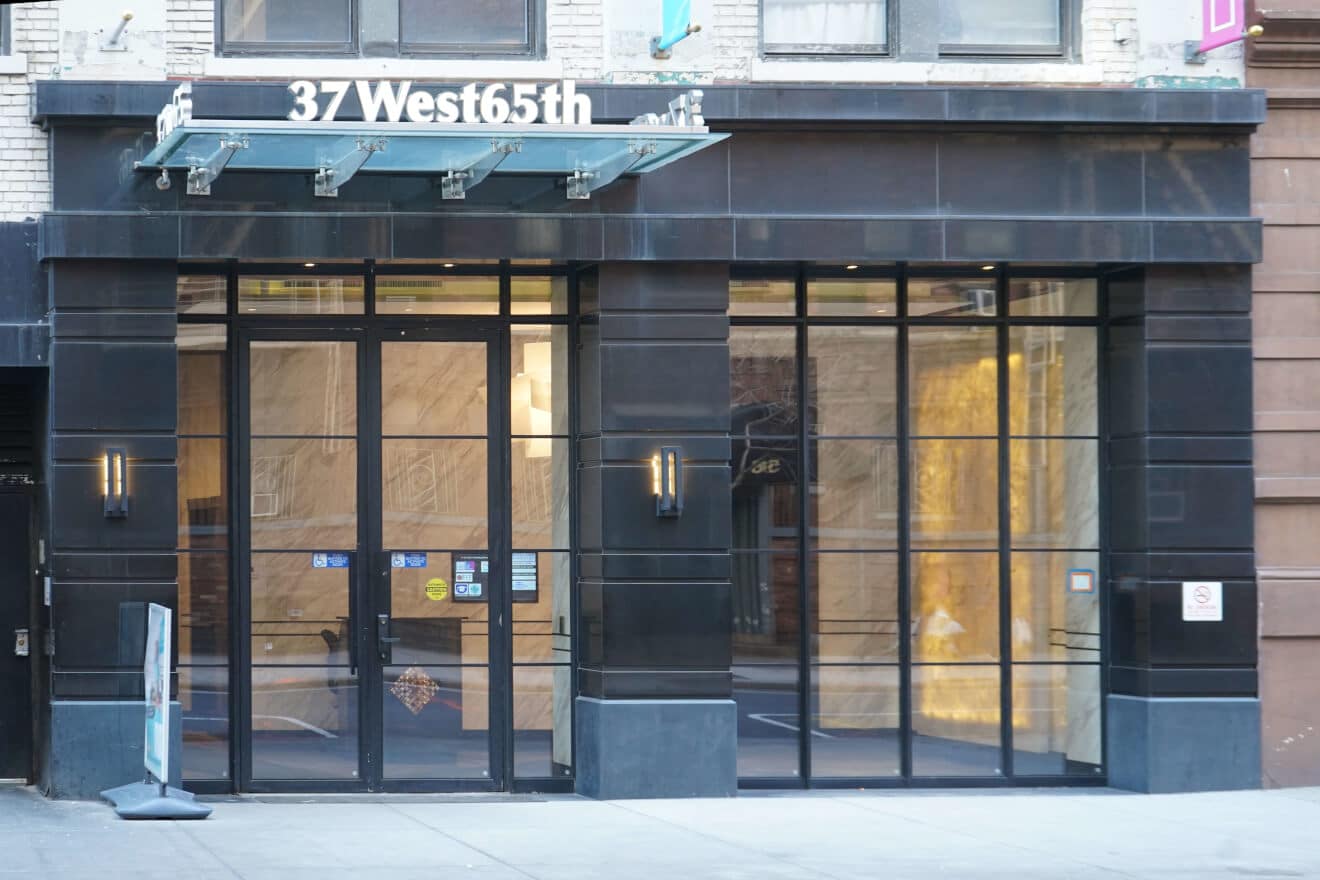
Same story at 37 West 65th Street, seven stories steps from Central Park West, and in dozens of similar buildings up Amsterdam and Columbus. Big windows, high ceilings, HVAC you control, and prebuilt suites from 1,000 to 4,000 feet you can move into without hiring a contractor.
One tip beats the class designation on the door. Two Class B buildings on the same block will quote wildly different numbers depending on how empty the landlord is and how they read your credit. So go see them yourself.
Plenty of these floors feel like loft space once you’re inside. That pulls in a few tenants who’d otherwise be shopping Chelsea or SoHo and paying more for the privilege.
The cheap tier that still exists in Harlem and Washington Heights is gone from the Upper West Side. Old walk-ups got renovated into Class B, converted to apartments, or absorbed by institutions, and whatever’s left rarely reaches the open market.
So if you’re chasing the bottom of the range, it moved north to 125th Street in Harlem. That’s where startups and small teams watching burn should start looking. The Upper West Side is cheap next to Midtown. It isn’t cheap.
This is where tenants leave money behind. They grind on the asking rent, win back a couple of dollars, and never touch the two things that actually move the math: free rent and build-out money. Up here both run thinner than the Manhattan headline suggests.
Manhattan’s average free rent fell to 12.4 months in the first half of 2026, the lowest since 2019, with improvement allowances holding near $140 a foot (Colliers, Q2 2026). Uptown landlords sit tighter than that, since demand is steady and their buildings are small.
Recent deals on a five or ten-year term have looked roughly like this.
| Building class | Free rent (typical) | TI allowance (typical) | Notes |
|---|---|---|---|
| Lincoln Square Class A | 8 to 12 months free | TI $60 to $100/SF | Thinnest package in the neighborhood, and a full floor with your name on it is what you're really paying for. |
| Class B in the 70s and 80s | 10 to 14 months free | TI $45 to $75/SF | Prebuilt suites are common here, and a longer term is your only real lever. |
| Medical and clinical space | 10 to 16 months free | TI $70 to $120/SF | Plumbing, power, and ADA work push the number up, and landlords who already court doctors will fund it. |
| Value floors, 90s to 110th | 10 to 14 months free | TI $35 to $60/SF | Usually already built out and ready to move into. |
Concession ranges are typical-market figures from Metro Manhattan broker data, July 2026, and they move around a lot by credit, term, and building. For context, Manhattan’s H1 2026 average free-rent period was 12.4 months and the average TI allowance about $140/SF (Colliers, Q2 2026).
Something to know going in: Uptown packages stop improving somewhere around seven years. Landlord leverage is strong and demand doesn’t budge, so a longer term won’t buy what it buys downtown. The breakdown of rising landlord concessions runs the net effective math, and the guide to three, five, and ten-year leases covers the trade-offs.
Two more line items belong in the budget. Settle who pays for the build-out before anybody talks real numbers, because an allowance is only worth what it actually builds. Then figure out how much security deposit to carry, since small buildings often want more, and read the lease clauses that quietly set your costs for the next decade.
Healthcare runs this neighborhood. Doctors, dentists, therapists, and specialty practices fill more square footage up here than anybody else, mostly because their patients live within ten blocks and walk to appointments.
Around them you’ll find the arts and media world that grew up around Lincoln Center, a deep bench of nonprofits and foundations, small professional firms, and a handful of creative shops that wanted a quiet street.
On these blocks the building tends to pick the tenant as much as the tenant picks the building. Find the row below that matches what you do and the search narrows before you tour a thing.
| Industry | Best-Fit Areas | Class Fit | Example Buildings |
|---|---|---|---|
| Medical, Dental & Specialty Practices | Broadway and Amsterdam in the 70s to 90s; Central Park West suites | Class A / B | 1995 Broadway, 246 West 80th Street, 348 Amsterdam Avenue |
| Therapy, Psychiatry & Wellness | Central Park West and West End side streets, the 70s and 80s | Class B / boutique | Professional suites in apartment buildings, small Broadway walk-ups |
| Nonprofits, Foundations & Advocacy | Lincoln Square, the 70s and 80s | Class B | 1841 Broadway, 37 West 65th Street |
| Arts, Music, Media & Production | Lincoln Center to 72nd Street | Class A / B | 1841 Broadway, 1900 Broadway, Lincoln Square stock |
| Professional Services, Accounting & Wealth | Lincoln Square, Broadway in the 70s | Class A / B | 1995 Broadway, 1900 Broadway |
| Law Firms (boutique, family, trusts and estates) | Lincoln Square, the 70s | Class A / B | 1995 Broadway, 1841 Broadway |
| Architecture, Design & Creative Studios | The 70s and 80s, Amsterdam and Columbus | Class B | 246 West 80th Street, Amsterdam and Columbus stock |
| Education, Academic & Test Prep | Lincoln Square, the 90s to 110th | Class B | Fordham-adjacent buildings, Broadway stock in the 90s |
| Technology & Startups (under 20 people) | Lincoln Square, the 80s and 90s | Class B / flex | 1900 Broadway (Industrious), Broadway value floors |
| Coworking & Flex | Lincoln Square | Class A / B | 1900 Broadway (Industrious), Lincoln Square operators |
| Retail, Showroom & Studio | Broadway, Columbus, Amsterdam | Ground floor | Broadway and Columbus corridors, 60s through 90s |
Landing pages by use type: Medical & Healthcare Offices, Law Firm Offices, Financial Services Offices, Startup & Tech Space, and Commercial Office Space for Rent. Storefront space is linked from the FAQ below. Industry and class fits are Metro Manhattan internal research, July 2026.
Running a small team? The Upper West Side isn’t the cheapest corner of Manhattan and pretending otherwise would be insulting. But the small floors and the value blocks above 96th make it more reachable than a Central Park zip code has any business being. Weigh it against the shortlist of the five best NYC neighborhoods for small businesses.
Still at a shared desk? The flex options finally caught up. Industrious at 1900 Broadway is the first stop, with 50 private offices and seven conference rooms on a single floor.
Nobody’s pitching sky lobbies here. What the Upper West Side sells is a walk from your apartment, a lobby your clients can find without calling, and a neighborhood that got noticeably better over the past three years while the office market sat still.
That last part isn’t filler. The Gilder Center reorganized the natural history museum around a new Columbus Avenue entrance, the New York Historical opened a 71,000-square-foot wing in June 2026, and Lincoln Center is spending $335 million on its Amsterdam Avenue side. Your ground floor is getting upgraded whether you asked or not.
The buildings themselves sort into three tiers.
Lincoln Square Class A: column-free full floors around 5,000 feet, glass curtain walls, attended lobbies with 24/7 concierge, modern elevators, and trains two minutes away.
Renovated prewar and postwar Class B: restored lobbies, HVAC you control, oversized windows, high ceilings, and a growing supply of prebuilt suites from 1,000 to 4,000 feet.
Boutique and apartment-building suites: ground-floor and low-floor space with its own entrance, which is what most practices want when patients walk in off the street.
See all Uptown buildings, or filter live listings by size and price.
Ownership up here is scattered in a way Midtown never is, and it changes how you negotiate. There’s no SL Green equivalent on the Upper West Side.
You’re dealing with family companies that have held the same building for forty years, a couple of active developers, and institutions that occupy their own space and never list it. The rundown of the biggest landlords in NYC covers the wider field.
So one owner might hand you a build-out and the next won’t move a dollar, and no listing site tells you which is which. Sorting that out is most of what a broker actually does on these blocks.
| Owner | Notable Upper West Side Holdings | Approx. Local Footprint | Typical Lease Profile |
|---|---|---|---|
| Global Holdings Management Group | 1841 Broadway, plus nearby holdings at 1845, 1865, and 1880 | Several hundred thousand SF around Lincoln Square | Class B, 1,500+ SF, redevelopment-minded |
| Cammeby's International | 1995 Broadway | ~200K SF here; much larger nationally | Boutique Class A, 2,500 to 6,000 SF, custom build-outs |
| Extell Development Company | The old ABC and Disney campus, 50 West 66th Street | Roughly 2.5 acres of redevelopment | Residential; takes office space off the market |
| Institutional owner-occupiers | Lincoln Center, the American Museum of Natural History, Fordham at Lincoln Center | Millions of SF, almost none leasable | Owner-occupied, rarely available |
| Long-term family owners | Boutique elevator buildings across the 70s, 80s, and 90s | The bulk of leasable Class B stock | Class B, 800 to 4,000 SF, you deal direct |
| Residential owners with professional floors | Ground and low floors along Central Park West, West End, and Broadway | Hundreds of small suites | Medical and professional, 500 to 2,500 SF |
Groupings and footprint estimates are approximate and cover Upper West Side holdings only; several of these owners hold much larger books elsewhere in Manhattan. Ownership and management change, so confirm at lease time. Metro Manhattan internal research, July 2026.
Two subway spines run north and south, and there’s no commuter rail. That tells you most of what you need to know about who this works for. If your team lives in Manhattan, it’s great. If half of them ride the LIRR, they won’t thank you.
Settle it with the commute calculator and everybody’s home address before it turns into an office-wide argument.
| From | To the Upper West Side | Mode |
|---|---|---|
| Columbus Circle | 4 to 6 min | 1, A, B, C, or D |
| Times Square / Midtown West | 8 to 12 min | 1, 2, or 3 |
| Penn Station | 12 to 16 min | 1, 2, or 3 |
| Grand Central | 20 to 25 min | Shuttle to Times Square, then 1, 2, or 3 |
| Harlem (125th Street) | 10 to 15 min | 1, 2, 3 or A, B, C, D |
| Financial District | 30 to 40 min | 2 or 3 |
| Downtown Brooklyn | 35 to 45 min | 2 or 3 |
| Long Island City, Queens | 30 to 40 min | B or C plus a transfer |
| Hoboken / Jersey City | 35 to 45 min | 1 to 34th Street, then PATH |
| Newark, NJ | 45 to 55 min | NJ Transit to Penn, then 1, 2, or 3 |
| Hicksville, NY (Long Island) | 65 to 80 min | LIRR to Penn, then 1, 2, or 3 |
| Stamford, CT | 70 to 85 min | Metro-North to Grand Central, then crosstown |
Figure $55 to $68 a foot for the Class A buildings around Lincoln Square and $45 to $58 for the Class B stock through the 70s, 80s, and 90s. Manhattan’s average is $78.03 (Colliers, Q2 2026), so both come in under it. Where you land depends on the building, the block, and how hard you push.
Cheaper than both, though not by the same margin. Midtown Class A ran $85.28 a foot in early 2026 (Cushman & Wakefield). Upper East Side Class A asks roughly $70 to $88, Class B $55 to $70 (Metro Manhattan internal research).
The Upper West Side undercuts both, which is why practices and small firms cross the park. If you want the lowest Class A rent in the borough though, Downtown Manhattan and the Financial District go a lot lower.
The market’s too small to be a submarket. All of Uptown holds about 3 to 4 million square feet across four neighborhoods, so the big brokerages fold it into their Manhattan numbers instead of breaking it out. Anybody handing you one precise Upper West Side average made it up.
Small ones. The working range is 500 to 6,000 square feet, and 1995 Broadway’s column-free 5,000-foot floors are about as big as full-floor identity gets here. Anything over 10,000 contiguous feet is rare enough that you shouldn’t build a plan around finding it.
One of the better ones in the city. Patients live within walking distance, Mount Sinai West sits at the southern edge, and buildings along Broadway, Amsterdam, and Central Park West have leased to practices for decades.
Mount Sinai moved its OB-GYN groups into 7,000 square feet at 348 Amsterdam Avenue in 2026. Ask about plumbing, power, and ADA access early, since those drive the build-out cost more than the rent does.
It’s becoming apartments. Extell bought the West 66th and 67th Street campus for $931 million in 2022, Disney finished its move to Hudson Square in 2025, and demolition at 77 West 66th was set to finish around July 2026. An 86-story, 430-unit tower is filed for the site, with two smaller buildings planned nearby.
Barely, and that’s been true for years. Metro Manhattan’s August 2025 study found no recorded Class A sublease inventory on either the Upper West or Upper East Side, which is unusual for Manhattan. If something does surface, move fast and read the sublease and assignment terms closely, since your rights run through the original tenant.
Healthcare leads by a wide margin: medical, dental, therapy, and specialty practices. After that it’s arts and media groups tied to Lincoln Center, nonprofits and foundations, boutique law and accounting firms, wealth managers, architects and designers, and small tech teams that wanted a neighborhood office.
There is now, which wasn’t true two years ago. Industrious opened its first Upper West Side location at 1900 Broadway in spring 2026 with 22,000 square feet, 50 private offices, and seven conference rooms. The Yard runs a Lincoln Square location nearby.
When you’re ready for your own lease, the guide to scaling from coworking to an office walks through what changes.
Great inside Manhattan, weaker from the suburbs. The 1, 2, and 3 run under Broadway and the A, B, C, and D under Central Park West, so Columbus Circle is five minutes and Harlem is under fifteen. No commuter rail in the neighborhood, so Metro-North riders transfer at 125th and LIRR riders come through Penn.
In a market this small and this scattered, a broker matters more than usual. Plenty of the good space never hits a public listing site, and the owners are family companies you have to already know. The landlord pays the commission, so it costs a tenant nothing.
Before you tour, skim the essentials to ask before leasing NYC office space and get familiar with the Good Guy Guarantee that most New York landlords want smaller tenants to sign.
Looking for a storefront instead? Broadway, Columbus, and Amsterdam are on a good run. REBNY’s H1 2026 report called out the Upper West Side as one of the neighborhoods pulling demand away from the marquee corridors. Start on the retail and storefront page.
Accessibility Tools