
From Pain to Productivity: The Tangible Impact of Ergonomic Office Furniture
Succeeding in the workplace doesn’t just require mental agility; your physical environment plays a pivotal role, too.



Two blocks south of the courthouses and one bridge ramp from Brooklyn, Lower Manhattan runs out of expensive. That’s Chinatown, the last genuinely affordable office market below Midtown, and for the right tenant the price isn’t a compromise you settle for. It’s the whole reason you’re here.
So let’s start with the rent. Most of what you can actually lease in Chinatown, the walk-up lofts and small elevator buildings between the Bowery and the East River, asks somewhere in the $30s to the low $50s a foot (Metro Manhattan internal research, July 2026). Downtown as a whole just crossed $61 (Colliers, Q1 2026), and Manhattan sits at $78 (Colliers, Q2 2026). You’re looking at the floor of the Lower Manhattan market here, not the middle.
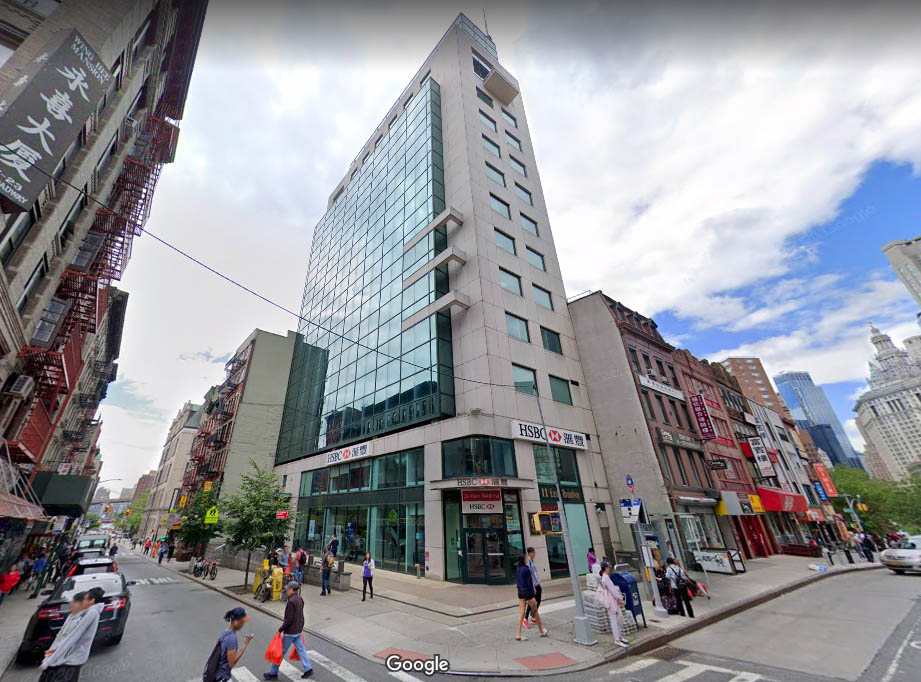
And that gap isn’t an accident. Chinatown never got the trophy towers, the glass lobbies, or the big institutional landlords. What it’s got instead is generational, family-owned buildings, an immigrant business base that’s kept these blocks humming for a century, and floor plates sized for a ten-person firm instead of a bank. If your company runs on payroll and not on a marble lobby, that trade goes straight to your bottom line.
You should know the catches before the price talks you into anything. There’s almost no Class A here, the buildings are older and a lot of them are walk-ups, and the southwest corner by the courts is about to spend years next to major jail construction. None of that’s a dealbreaker for the right tenant. If you need a polished address to close clients, go look at the Financial District or the World Trade Center and pay for it. If you don’t, keep reading.
Chinatown doesn’t get its own line in the CBRE or Colliers reports. It gets folded into Downtown Manhattan, which covers about 90 million square feet across five very different submarkets. So when you read that Downtown asking rents averaged $61.70/SF in Q1 2026 (Colliers), remember that number’s getting pulled up by the trophy towers at the World Trade Center on one end and dragged down by Chinatown walk-ups on the other. Chinatown’s the floor of that range, not the middle.
The number that actually matters to you is the Downtown Class B and C figure: $57.81/SF at 20.2% availability outside the WTC and Brookfield Place complexes (Savills, Q4 2025). Chinatown sits below even that, because the stock here is older, smaller, and a lot less polished than the renovated Class B towers over on Water Street. Tracked Chinatown buildings averaged roughly $44/SF in early 2026 (CommercialCafe, 2026), and the smaller walk-ups and lofts that make up most of the leasable space run anywhere from the $30s into the $50s depending on the building, the floor, and the block.
The whole island’s tightening, and Downtown’s the release valve. Manhattan just posted its strongest first half of leasing since 2002 (Colliers, Q2 2026), and Downtown leasing hit 4.75 million square feet in 2025, the best year since 2019, with January 2026 up 69.3% year over year. The tenants getting priced out of Midtown and Midtown South spill down here, and plenty of them already live in Brooklyn, the East Village, and SoHo, which makes Chinatown a natural landing spot. Translation: the cheap space here is getting discovered. Not gone. But discovered.
The flight to quality cuts both ways. Class A grabbed 73% of all Downtown leasing since 2020, and the Class A rent premium over Class B widened to 25.5% by Q1 2026, the biggest gap in two years (Cushman & Wakefield, April 2026). Here’s what that means for you: landlords sitting on older Class B and C buildings, which is most of Chinatown, are looking at softer demand and they’ve got more reason to deal. That’s leverage, if you know how to use it. Our breakdown of what makes a building Class A, B, or C is worth five minutes before you tour.
The jail is the elephant on White Street. In February 2026 the city broke ground on a 295-foot, 1,040-bed jail at 124-125 White Street, the old Manhattan Detention Complex, better known as The Tombs. The contractor’s said it’ll run close to 100-hour weeks to hit a 2032 finish (City & State, March 2026). So if you’re touring space in the southwest corner near White, Centre, and Baxter, you’re signing up for years of heavy construction next door. That’s a real negative, and it’s also real ammunition on rent and free rent for buildings in that zone. Know which side of Canal you’re on before you sign.
This is a 24/7 neighborhood, not a 9-to-5 one. Downtown’s residential population grew from 32,000 in 2001 to more than 70,000 today (CoStar, February 2026), and Chinatown’s been residential and commercial at the same time for more than a century. Your team won’t be walking through a ghost town at 6 p.m. The food alone, from the dumpling counters on Mott to the old-school dim sum on Doyers, is a retention perk you can’t buy in a suburban office park. For the bigger picture, take a look at our post on the largest Manhattan office leases of 2025.
Anyone who answers that with one number is selling you something. The tracked average for Chinatown office buildings ran about $44/SF in early 2026 (CommercialCafe, 2026), but that average is doing a lot of quiet lying, because it leans on the few elevatored Class B buildings and skips right over the walk-up lofts that make up most of what’s actually for lease. What you’ll really pay comes down to three things: whether the building’s got an elevator, whether it’s been renovated in the last decade, and which block it’s on.
Here’s how I read the Chinatown range as of July 2026. And before you tour a single floor, run your headcount through our office space calculator so you’re chasing the right footprint instead of falling for the prettiest loft.
| Space Type | Asking $/SF | What You Get | Typical Size | Best For |
|---|---|---|---|---|
| Renovated Class B (elevator) | $45 to $55 | Elevator, attended or buzzer lobby, updated systems | 2,000 to 8,000 SF | Law, medical, established firms |
| Standard Class B | $38 to $48 | Elevator, older systems, functional finishes | 1,500 to 6,000 SF | Nonprofits, back office, services |
| Class C / walk-up loft | $30 to $45 | Loft floors, high ceilings, tenant-controlled HVAC, often walk-up | 500 to 5,000 SF | Startups, studios, creatives, SMBs |
| Ground-floor retail | Highly variable | Storefront, heavy foot traffic on Canal, Bowery, East Broadway | Varies | Retail, showroom, food |
Metro Manhattan internal research (July 2026), anchored to CommercialCafe (2026) Chinatown tracking and Savills (Q4 2025) Downtown Class B and C figures. Rents are asking rents before concessions. Retail's a different animal and gets quoted deal by deal.
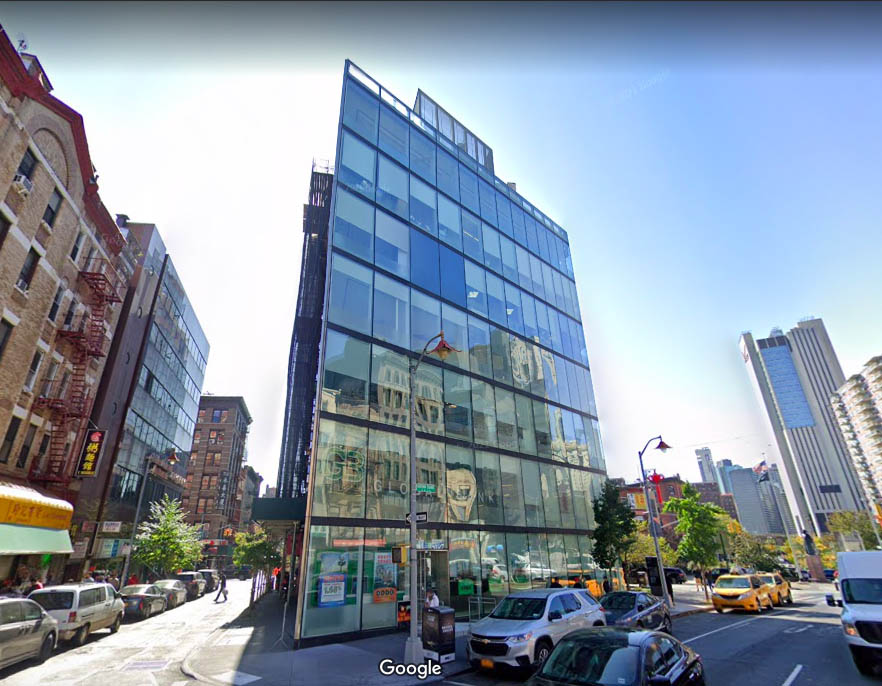
Let me save you the search: there’s basically no Class A in Chinatown. No glass towers, no trophy floors, no 27-foot ceilings with a $200 asking rent. The land’s covered in prewar and postwar low-rise stock, and nobody’s building new office space on these blocks. If a marble lobby and a trophy address are what your business needs, that’s a Financial District or World Trade Center conversation, where Downtown Class A outside the top complexes still asks around $67/SF and the WTC towers run past $110 (Savills, Q4 2025). In Chinatown, the ceiling is a well-run, renovated Class B floor with a working elevator, and for most tenants who look here, that’s plenty.
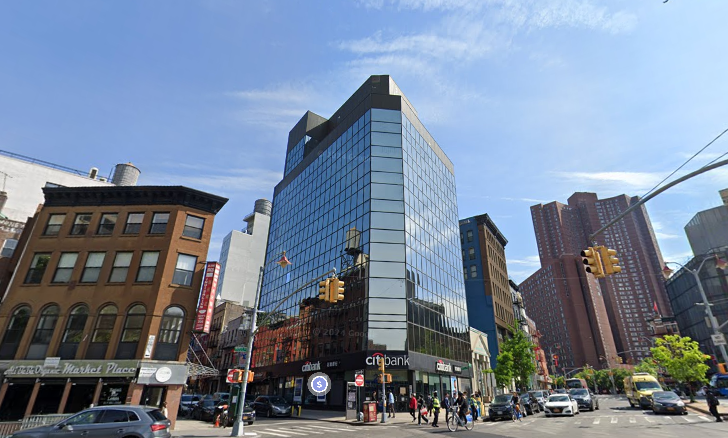
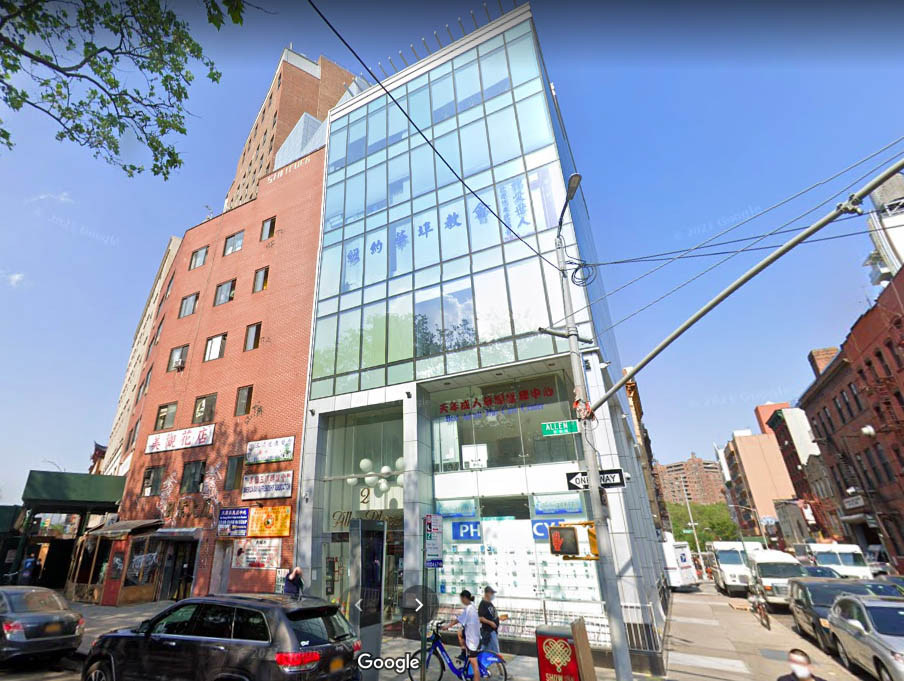
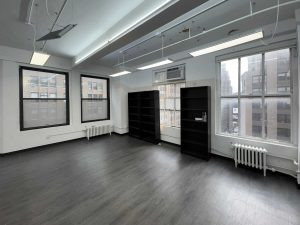
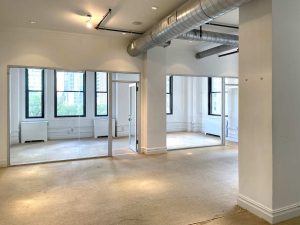
Most of the actual office space in Chinatown is Class B, and most of it clusters along East Broadway, Allen Street, the Bowery, and the Centre Street corridor toward the courts. The split that matters is renovated versus standard. A renovated Class B floor with a working elevator, an updated lobby, and modern mechanicals asks in the high $40s to mid $50s, and it’s a genuinely good home for a law firm, a medical practice, or an established small business. Standard Class B, meaning an elevator building with older systems and honest but plain finishes, runs closer to the low $40s. Buildings worth knowing here include 2 Allen Street, the Braveman Building at 2-6 East Broadway, and the office condo units at 11 East Broadway. If you’re weighing Chinatown Class B against pricier options a few blocks west, go tour Tribeca and the Financial District too, so you can feel the difference in your gut and not just on a spreadsheet.
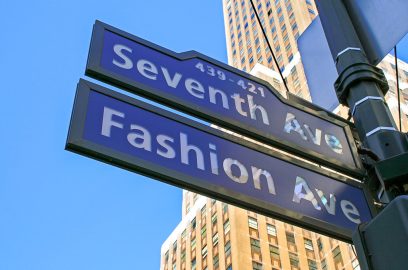
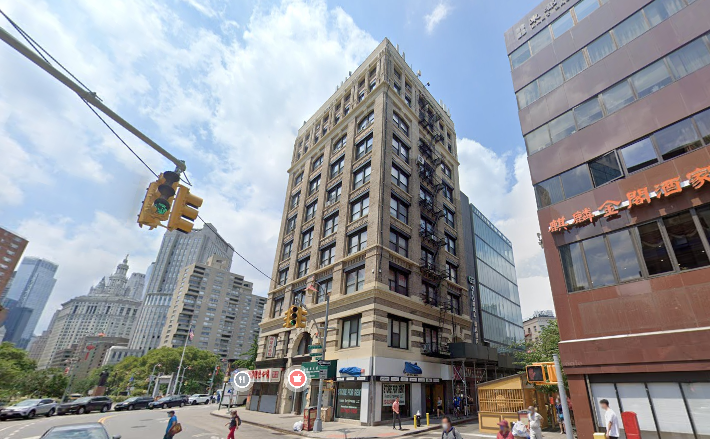
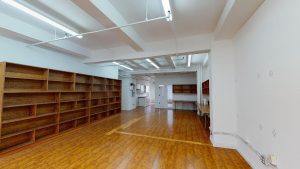
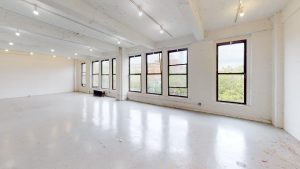
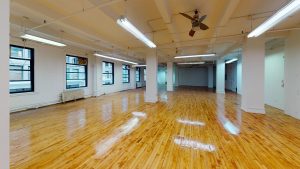
This is the soul of the Chinatown market. A lot of the neighborhood’s buildings are low-rise brick walk-ups that started life as tenement housing or garment lofts, and the proximity to the Garment District trade once fueled a fashion economy here that employed tens of thousands. Most of that manufacturing left decades ago, and the upper floors it left behind are the cheapest real square footage in Lower Manhattan: high ceilings, big windows, heat and AC you control yourself, and character you just can’t fake. Expect the $30s to mid $40s, and expect stairs in a lot of these buildings. This is prime territory for a startup or small tech team, a design studio, or any creative shop that wants a raw floor it can make its own. 8 Catherine Street, an eight-story loft building, and the older stock along Elizabeth, Mott, and Eldridge are the kind of addresses to chase.
Canal Street, which runs the north edge of the neighborhood, is one of the most heavily trafficked corridors in the city, packed with open storefronts, street vendors, banks, and jewelry shops. Retail pricing on Canal, Bowery, and East Broadway lives in its own universe, quoted deal by deal on frontage and foot traffic, not on any office average. If you’re chasing a storefront or showroom in the middle of that flow, the numbers look nothing like the office table above, and you’ll want someone pulling comps block by block.
This is the part most tenants under-negotiate. The asking rent’s the headline, sure, but the free rent, the tenant improvement dollars, the security deposit, and the term are where the real money’s hiding, and in Chinatown they work differently than they do in a corporate tower. Family-owned and smaller buildings tend to trade fewer build-out dollars for more give on structure, deposit, and term. You’ll rarely see a $100/SF turnkey install here. What you’ll often see is an owner who’ll do a plain, sensible deal with a tenant they trust.
| Lease term | Free rent (Class B) | Free rent (Class C/loft) | TI allowance (Class B) | TI allowance (Class C/loft) |
|---|---|---|---|---|
| 3 to 5 years | 1 to 3 months | 0 to 2 months | $15 to $35/SF | $0 to $15/SF |
| 5 to 7 years | 3 to 5 months | 2 to 4 months | $30 to $50/SF | $15 to $30/SF |
| 7 to 10 years | 4 to 8 months | 3 to 6 months | $40 to $65/SF | $25 to $45/SF |
Source: Metro Manhattan broker data (July 2026), typical ranges for direct Chinatown leases. Your actual terms depend on your credit, your term, the building, and how the negotiation goes. Security deposits usually run 2 to 4 months and they’re negotiable on tenant credit. A Good Guy Guarantee is common on smaller Chinatown deals and can bring down the deposit an owner asks for.
Two rules I give every tenant who leases here. First, negotiate the net effective rent, not the face rent. A quarter of free rent and a modest TI allowance can move your real cost more than shaving a dollar or two off the asking number ever will, and our guide on the savvy approach to office lease clauses walks through how that math actually works. Second, if you’re near the White Street jail site, use it. Construction next door is a legitimate reason to push for more free rent and a break on the deposit, and any owner worth dealing with knows it. Still deciding how long to commit? Our rundown on 3-year, 5-year, or 10-year lease terms lays out the tradeoffs.
Chinatown’s never been a one-industry neighborhood. It runs on restaurants, retail, and tourism, but the office floors above the storefronts have long housed accountants, attorneys, doctors, importers, social-service nonprofits, and a growing crowd of small tech and creative shops. The neighborhood also wraps around the New York County courts and the DA’s office, which makes it a natural home for anyone whose work touches the legal system. Find your business type below, see which blocks fit, and you’ve narrowed the search before you’ve toured a thing.
| Business Type | Best-Fit Blocks | Class Fit | Where to Look |
|---|---|---|---|
| Law / legal services (court-adjacent) | Centre, Baxter, White, Lafayette | Class B | Blocks near Foley Square and the courts |
| Medical / dental / clinics | East Broadway, Bowery, Canal | Class B / C | East Broadway corridor, 11 East Broadway |
| Creative / design / studios | Elizabeth, Mott, Bayard, Eldridge | Class C / loft | 8 Catherine St and older loft stock |
| Nonprofits / social services | East Broadway, Bowery, Forsyth | Class B / C | Community-serving blocks east of Bowery |
| Accounting / small finance / banks | Canal, Bowery, Mott | Class B | Bank-heavy Canal and Bowery frontage |
| Startups / small business (<20) | Elizabeth, Allen, Chrystie, Eldridge | Class C / loft | Loft inventory throughout the core |
| Import / wholesale / showroom | Canal, Walker, Lispenard | Class C / ground | Canal corridor and the blocks off it |
Vertical landing pages: Law Firm Offices, Medical & Healthcare, Startup & Tech Space, Financial Services (linked in the copy above and below). Industry and class fits are Metro Manhattan internal research (July 2026).
A few things worth calling out. If you’re a law firm or a legal-services shop, the walk to the courthouses is the whole pitch, and the Centre Street side of the neighborhood earns its rent. If you run a medical or dental practice, the East Broadway and Bowery corridors have served a dense, loyal, immigrant client base for decades, and the space is priced so a practice can actually breathe. And if you’re an accountant, a small financial-services firm, or a bank branch, you already know Canal and Bowery are lined with the kind of institutions that have served this neighborhood’s famously high savings rate for generations.
Running a small team? This is one of the most affordable serious office neighborhoods left in Manhattan, and the loft stock makes it genuinely attainable. If you’re still deciding between areas, our guide to the best NYC neighborhoods for small businesses runs the comparison, and if you’re finally trading a coworking membership for a place of your own, we walked through how to make that leap without regretting it. One honest caveat: if what you really want is a polished, amenity-loaded floor, this isn’t it. That’s a Financial District conversation.
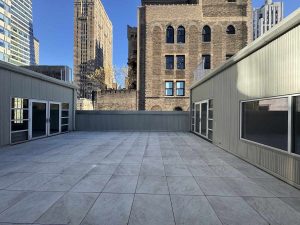
Let me set expectations, because this is where tenants coming from Midtown get caught off guard. Chinatown isn’t an amenity market. There are no tenant lounges, no golf simulators, no rooftop conference terraces. What you get instead is location, square footage, and character, at a price that reflects the trade. It breaks down into three tiers.
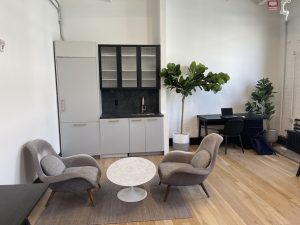
Renovated Class B. Elevator, attended or buzzer-entry lobby, updated HVAC and electrical, sometimes a modernized common corridor. That’s the ceiling in Chinatown, and for most tenants it’s plenty.
Standard Class B. Elevator, functional systems, no frills. You’re paying for location and usable square footage, not for a lobby you’ll set foot in twice a week.
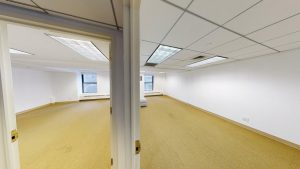
Class C and loft. High ceilings, big windows, heat and AC you control in former manufacturing buildings, freight access, and often a walk-up. Character over polish, and the lowest rent in the neighborhood.
See all Downtown buildings, or filter live listings by size and price.
Here’s the honest truth that changes how you negotiate in Chinatown: there’s no SL Green here. There’s no single institutional landlord sitting on 20 million square feet and setting the market. Ownership’s a patchwork of generational family owners, local investors, owner-occupiers, and a few small institutional players out at the edges toward Civic Center and the Bowery. That fragmentation is your advantage and your homework at the same time. There’s no standardized corporate lease form and no take-it-or-leave-it rent sheet, which means deals here run on relationships and plain terms, and a broker who knows which families own what is worth more than any listing site. Our rundown of the biggest landlords in NYC covers the players you won’t find on these blocks.
| Owner Profile | Where You See It | Portfolio | How They Deal |
|---|---|---|---|
| Generational family owners | Walk-ups and small buildings across East Broadway, Mott, Elizabeth | Fragmented, often single-building | Relationship-driven, flexible on terms, plain leases |
| Owner-occupiers / office condos | 11 East Broadway and similar | Small floors owned outright | Owner-occupied, long horizon, condo dynamics |
| Local investors and associations | Mixed small buildings throughout the core | Small local portfolios | Varies, hands-on, deal by deal |
| Small institutional owners (edges) | Larger buildings toward Civic Center and the Bowery | Part of larger Downtown books | Class B, larger floors, more standardized |
Ownership in Chinatown is fragmented and it changes hands quietly. There's no dominant institutional landlord, so confirm building-level ownership before you make an offer. Metro Manhattan internal research (July 2026).
Here’s a big part of why the rent-to-access math in Chinatown is so good: this is one of the best-connected office neighborhoods in the city. You’re sitting on top of nine-plus subway lines, and Walk Score has ranked the neighborhood among the ten most walkable in New York. Your people can get here from just about anywhere without a car, and a lot of them can do it without even transferring.
Brooklyn commuters have a real edge here. They can walk or bike across the Manhattan Bridge, and the East River Greenway along the FDR gives runners and cyclists a clean route in from the north and south. The neighborhood’s also a hub for the intercity Chinatown buses that run cheap service to Philadelphia, Boston, and D.C. Run a few real addresses through our commute calculator to see what your team’s actually in for.
| From | To Chinatown (Canal St) | Mode |
|---|---|---|
| Financial District | 5 to 8 min | 4/6 or a short walk |
| Downtown Brooklyn | 10 to 15 min | 4/6 or J to Canal |
| Williamsburg, Brooklyn | 12 to 18 min | J / M / Z to Canal |
| DUMBO, Brooklyn | ~10 min by bike | Manhattan Bridge |
| Midtown (Grand Central) | 15 to 20 min | 6 to Canal |
| Long Island City, Queens | 20 to 30 min | 7 + transfer to 6 or J |
| Jersey City / Hoboken | 20 to 30 min | PATH to WTC + 4/6 or walk |
Estimates are typical door-to-station commute times and vary by time of day (Metro Manhattan internal research, July 2026).
Chinatown’s among the most affordable office submarkets in Manhattan. Tracked office buildings averaged about $44/SF in early 2026 (CommercialCafe, 2026), against a Manhattan-wide average of $78.03/SF (Colliers, Q2 2026). Most of what you can lease runs from the $30s per SF for Class C and walk-up loft floors up to the low $50s for renovated Class B (Metro Manhattan internal research, July 2026).
Basically, Chinatown sits at the bottom of the Downtown Manhattan price range, below the Financial District, Civic Center, and the World Trade Center campus. Downtown Class B and C space averaged $57.81/SF outside the WTC and Brookfield Place complexes (Savills, Q4 2025), and Chinatown’s older, smaller stock prices below that. There’s almost no Class A here, no trophy towers, and no institutional landlords bidding the market up.
Mostly Class B and Class C. Class B makes up roughly 77% of the listed office space in the neighborhood and Class C the rest (CommercialCafe, 2026). The stock’s dominated by low-rise brick walk-ups and small elevator buildings, a lot of them former tenement or garment lofts with high ceilings and big windows.
It’s one of the best value plays in Manhattan for them. The neighborhood’s loft and Class C floors give you raw, characterful space with systems you control, at the lowest rents in Lower Manhattan, and the location pulls easily from Brooklyn, the East Village, and SoHo. Recent creative and tech tenants in the area have run from design agencies to consumer-brand startups.
In February 2026 the city broke ground on a 295-foot, 1,040-bed jail at 124-125 White Street, with a 2032 target and a contractor working long weeks to get there (City & State, March 2026). If you’re near White, Centre, or Baxter, expect years of heavy construction, and use that fact to negotiate lower rent, more free rent, and a smaller deposit. Buildings a few blocks north and east of the site are largely unaffected.
Chinatown isn’t broken out on its own in the major brokerage reports, but the benchmark that matters is Downtown Class B and C availability, which ran 20.2% outside the WTC and Brookfield Place complexes (Savills, Q4 2025). Chinatown typically tracks in the high teens to low twenties (Metro Manhattan internal research, July 2026), which means real choice if you know where to look.
The Centre Street, Baxter Street, and White Street blocks near Foley Square and the New York County courts. Legal, bail, and court-related tenants cluster there for the short walk to the courthouses and the DA’s office. Just know that the same corner is home to the multi-year jail build at 124-125 White Street, which you can use in a rent negotiation.
Ownership’s a patchwork of generational family owners, local investors, and a few larger institutional owners at the district’s edges. A lot of these buildings have been held by the same families for decades, so deals here run on relationships and plain terms instead of standardized corporate lease forms (Metro Manhattan internal research, July 2026).
Chinatown sits on nine-plus subway lines. The Canal Street complex carries the 4, 6, J, N, Q, R, W, and Z; the B and D stop at Grand Street; the F stops at East Broadway; and the J and Z stop at Bowery. Brooklyn commuters can also walk or bike across the Manhattan Bridge.
In a market this fragmented, yeah. A lot of the good space, especially in family-owned buildings, never makes it to the public listing sites, and a tenant broker gets you through the door and tells you which owners actually deal. The landlord pays the commission, so it costs you effectively nothing. Before you tour, read our notes on the essentials to ask before leasing NYC office space.
Accessibility Tools