












8 NYC Art Deco Buildings Where You Can Rent Office Space
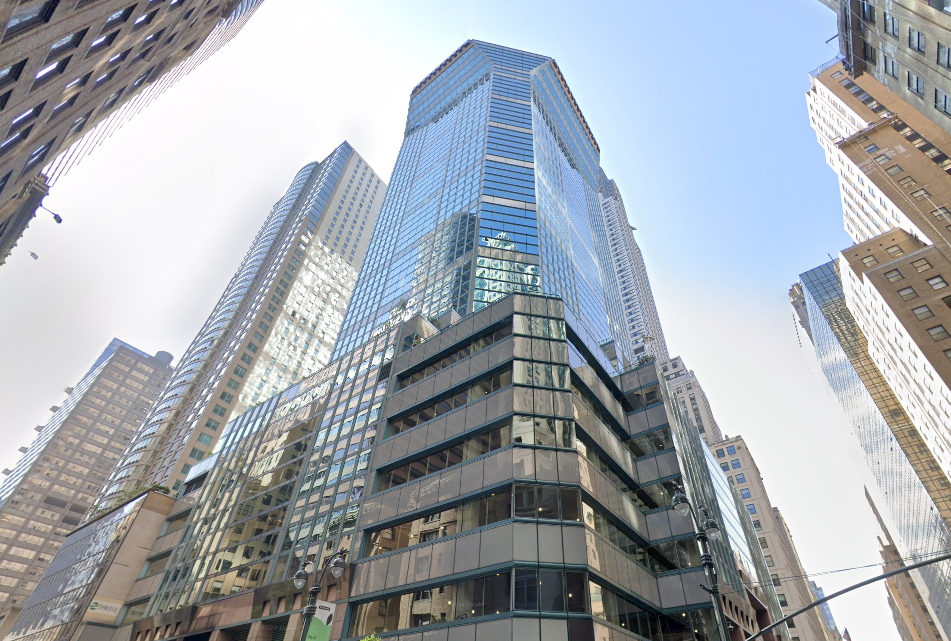
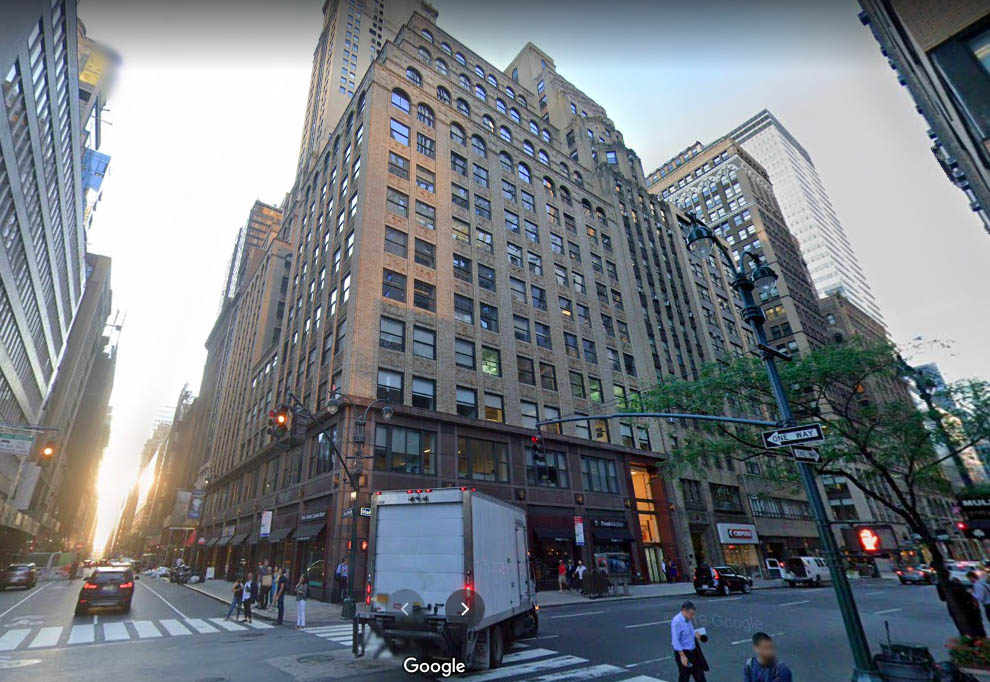
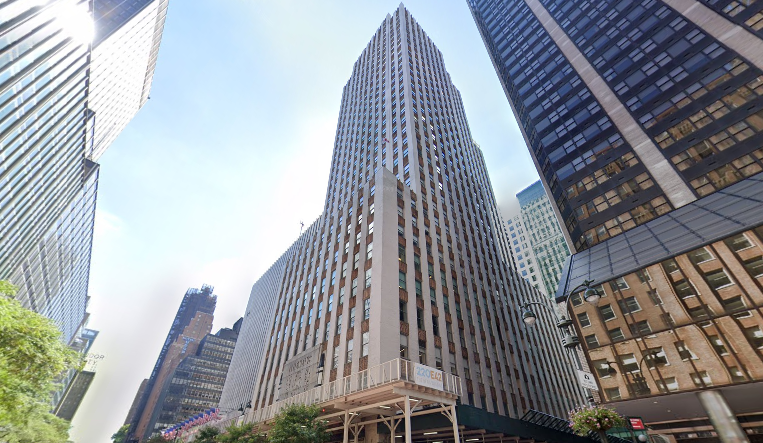
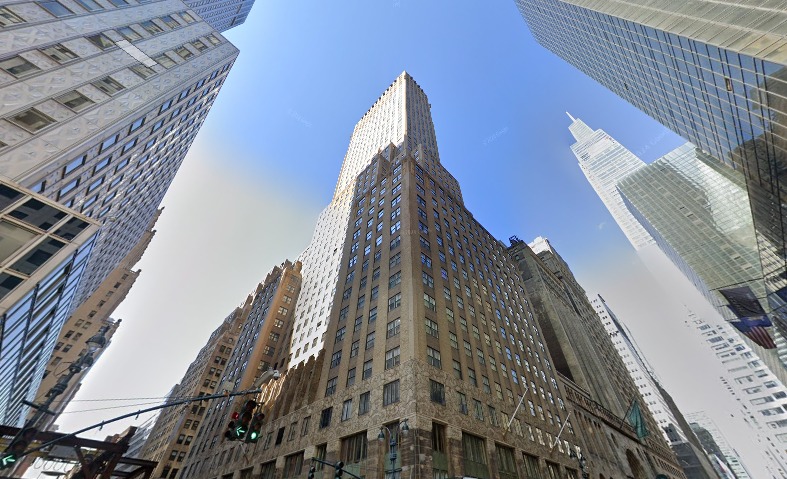
Art Deco, the pairing of exquisite craftsmanship with rich materials, and a clear statement of luxury, glamour, exuberance and overall progress, has a strong presence in New York City.



Most people pick Grand Central for one reason: the commute. Then they sign a lease and discover everything else. This is the most connected patch of office space in the country, the place where Metro-North, the Long Island Rail Road, four subway lines, and a supertall full of hedge funds all stack on top of the same train hall. If half your team rides in from Connecticut, Westchester, or Long Island, the search basically starts and ends here.
But here is the part the headline rent hides. Grand Central is really two markets wearing one name. Up top, One Vanderbilt set the all-time New York office record this year. Down in the older Class B and C towers along Third and Lexington, vacancy is sitting at 18.5% and landlords are dealing. The submarket overall asking rent is $69.93/SF, with Class A at $74.18/SF (Cushman & Wakefield, April 2026), and that blended number hides a spread bigger than almost anywhere in Midtown. Where you land in these few blocks matters far more than the fact that you landed here.
Here is the mistake almost everyone makes with Grand Central: they shop it like one market. It is not. It is a trophy market and a value market sharing a train station. The deal at One Vanderbilt has nothing to do with the deal in a 1960s tower on Third Avenue, and if you do not figure out which one you are shopping, you will burn a month touring buildings that were never going to work.
The wider backdrop is strong. Manhattan leasing hit 11.78 million SF in Q1 2026, the strongest first quarter since 2014, and availability tightened to 13.7%, the eighth straight quarter of holding or falling (Colliers, Q1 2026 Manhattan Office Market Report, April 8, 2026). Midtown overall asking rent was $78.23/SF, with Class A at $85.28/SF (Cushman & Wakefield, April 2026), and CBRE’s May 2026 read put the Midtown average at $84.77/SF as the market kept climbing (CBRE, May 2026). Grand Central is moving with that tide, just at two very different speeds depending on the block.
Short version: it depends entirely on which side of the terminal you are standing on. The submarket overall asking rent was $69.93/SF in Q1 2026, with Class A at $74.18/SF (Cushman & Wakefield, April 2026). But that blended figure is close to meaningless on its own, because Grand Central runs from a $320/SF record at One Vanderbilt down to value office space in the $50s along Third Avenue. Savills, using a different inventory mix, pegs the submarket higher at $81.21/SF (Savills, Q1 2026). Both numbers are real. They are just counting different buildings.
Start with the only question that actually moves your budget: do you need a trophy address? If hedge-fund LPs or Am Law 100 clients walk through your lobby every week, yes. For most everyone else, no. The bulk of Grand Central’s leasable space is Class B and older Class A in the towers ringing the terminal, and it prices well below the trophy line for the same five-minute walk to your train. Not sure how much space you actually need? Run your headcount through our Office Space Calculator before you tour anything.A Quick Note on Building Classifications
| Corridor | Class A Profile | Class B / C Coverage | Availability | Typical SF for New Leases | Tier |
|---|---|---|---|---|---|
| Vanderbilt trophy core | Trophy supertall (One Vanderbilt) | None | ~0 to 5% | 7,000 to 100,000+ SF | Trophy |
| Park Avenue frontage | Premium Class A / trophy | Limited Class B | ~7 to 12% | 10,000 to 50,000+ SF | Trophy / A |
| 42nd Street spine | Class A core | Class B available | ~14 to 18% | 2,500 to 40,000 SF | Class A / B |
| Madison side streets | Class A / boutique | Class B available | ~14 to 18% | 2,000 to 20,000 SF | Class A / B |
| Lexington & Third value | Limited Class A | Class B and C dominate | ~18 to 24% | 1,500 to 25,000 SF | Value |
| Grand Central average | $74.18 Class A | $69.93 overall asking | 18.5% vacancy | Varies | Mixed |
Grand Central overall asking rent of $69.93/SF, Class A asking rent of $74.18/SF, and 18.5% vacancy from Cushman & Wakefield, Q1 2026 New York City MarketBeat (April 2026). For Park Avenue frontage, CBRE reported a Park Avenue average of $105.33/SF and 7.4% availability in Q1 2026, the tightest corridor in Manhattan (CBRE, Q1 2026). Corridor-level profiles, coverage descriptors, and availability ranges are Metro Manhattan internal research (May 2026); approved firms publish the Grand Central submarket figures but do not publish per-corridor breakouts. Vacancy and availability are different measures: vacancy counts empty space, availability counts space being marketed, including occupied space offered for sublease.
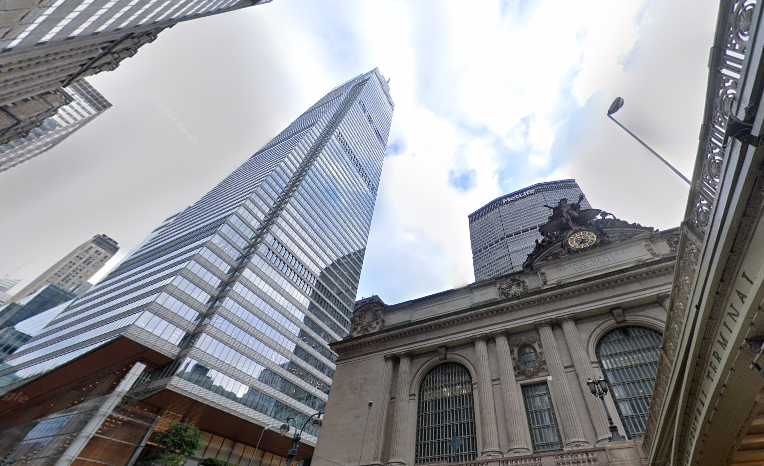
Trophy in Grand Central means one building above all others: One Vanderbilt. SL Green’s 1,401-foot, 1.6M SF supertall sits directly on top of the terminal, opened in 2020, and has been effectively fully leased since the end of 2025. It is the building that reset the market — Nscale’s $320/SF deal in Q1 2026 was the most expensive office lease in New York history at the time it was signed (JLL via Commercial Observer, April 2026), and a 73rd-floor sublease is now asking $350/SF. Tenants include TD Bank and TD Securities, the Carlyle Group, and McDermott Will & Emery. A 30,000 SF amenity floor, Michelin-starred dining from Daniel Boulud, the Summit observation deck, and a private entrance straight into Grand Central. See the One Vanderbilt profile.
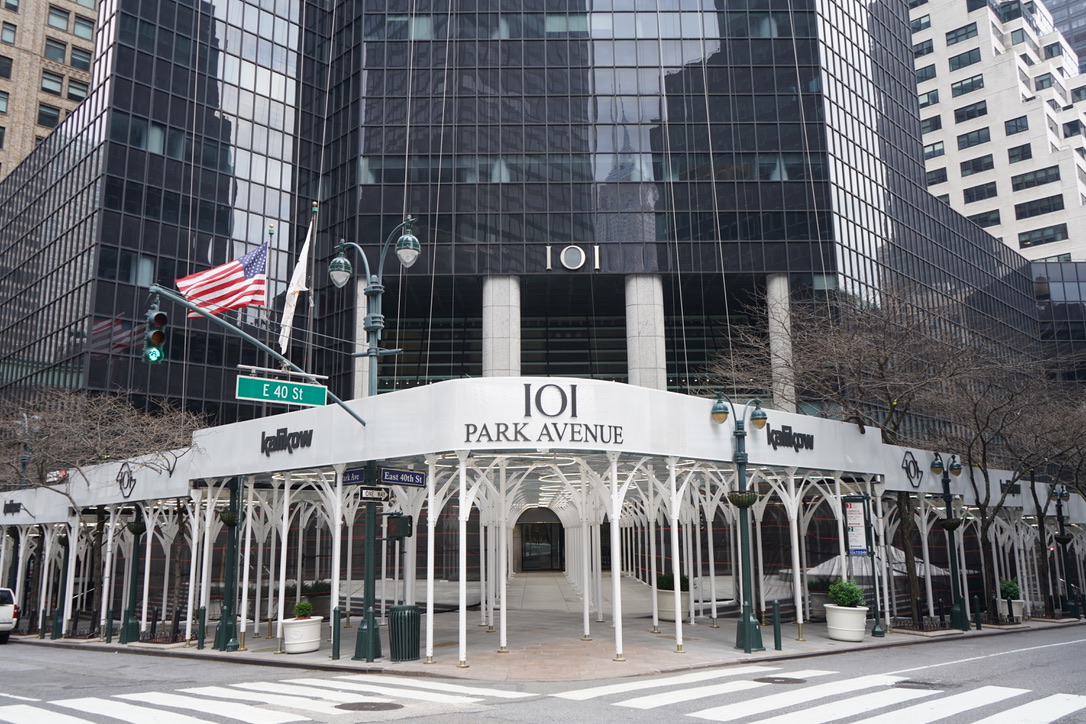
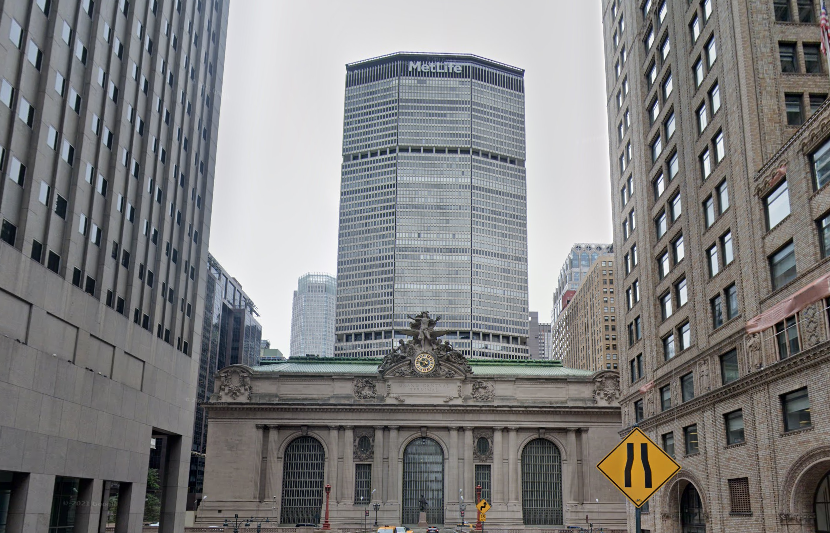
The rest of the trophy and premium Class A lives on the Park Avenue frontage wrapping the terminal — 200 Park (the MetLife Building), 230 Park (the Helmsley Building), and 245 Park, with 90, 100, and 101 Park a block north. CBRE put the broader Park Avenue average at $105.33/SF in Q1 2026 with just 7.4% availability, the tightest corridor in Manhattan (CBRE, Q1 2026). Supply is shrinking and prices are climbing. If you genuinely need a trophy address on these blocks, you move now or you wait for 175 Park Avenue to deliver. For what actually separates trophy from regular Class A, see our piece on how trophy buildings set themselves apart in NYC, and our rundown of the top 10 Class A buildings in Midtown.
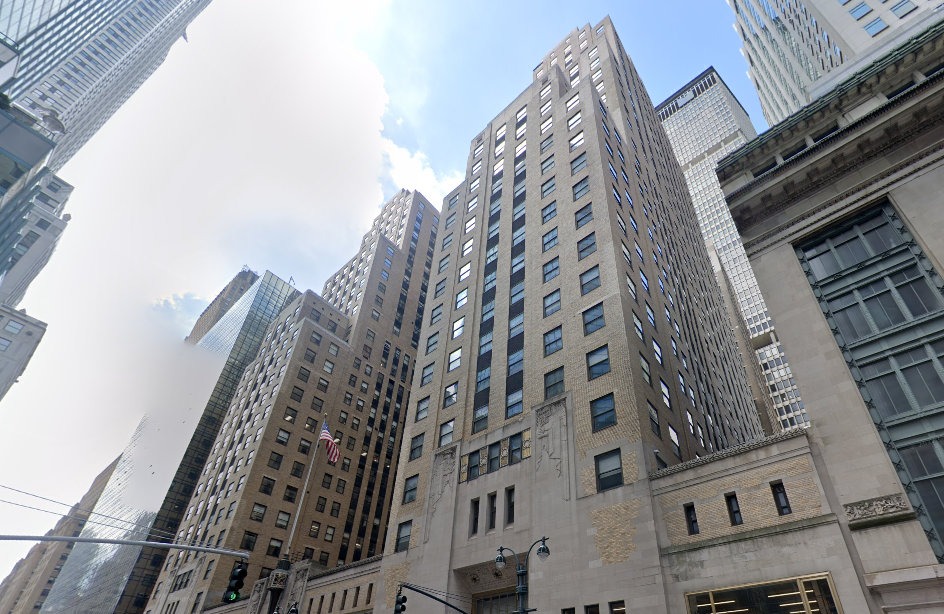
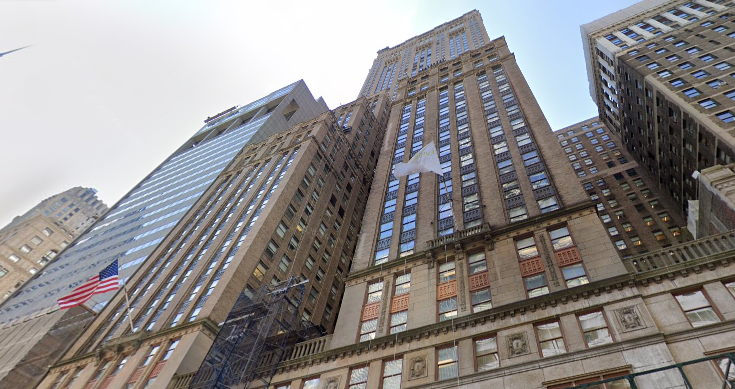
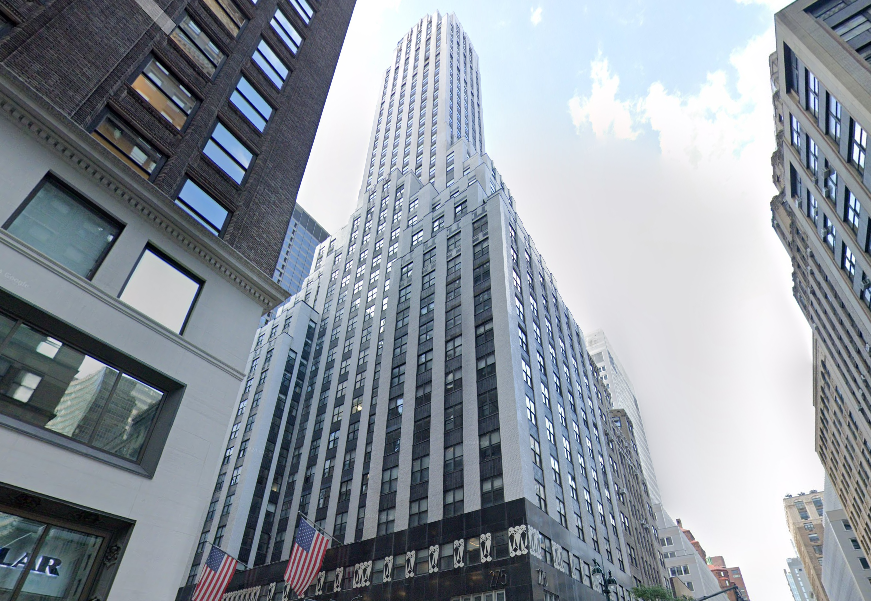
This is where most Grand Central leases actually get signed. Midsize firm, growing steadily, does not need to impress a hedge fund every Tuesday — this is your tier, and the inventory is deep. The good Class B clusters along the 42nd Street spine and the Madison side streets in buildings most people would still call beautiful: One Grand Central Place, the Chanin Building, the Graybar Building. A lot of these landlords spent real money on lobbies and prebuilt spec suites over the last five years, so a 2026 Class B floor here often shows like a 2018 Class A. Big difference for your team, small difference for your bill.
On pricing, the submarket overall asking rent was $69.93/SF in Q1 2026 (Cushman & Wakefield, April 2026), and Class B typically prices below that — how far below depends entirely on the building and the block (Metro Manhattan internal research, May 2026). Two Class B towers a block apart can quote you very different numbers on the same afternoon, depending on the landlord’s current vacancy and whether they like your credit. This is the tier where touring beats averages and negotiation actually pays. A canonical example facing the terminal is the Chanin Building at 122 East 42nd Street.
East of the terminal, along Lexington and Third, is where Grand Central gets genuinely affordable. Mostly older prewar and postwar elevator buildings that have not been renovated in a while — honest space, no pretense — and with submarket vacancy at 18.5% (Cushman & Wakefield, April 2026), this is where the leverage lives. It works for small businesses, early-stage startups, medical and dental practices, nonprofits, and back-office operations that want the commute without the trophy bill.
Two things worth knowing before you sign down here. First, a lot of this space comes as a sublease, and sublets can be the fastest, cheapest way into the neighborhood if the term fits. Second, almost every NYC landlord will want a security deposit and, for smaller or newer companies, a Good Guy Guarantee — understand both before you negotiate, because that is where a lot of the real risk and cost sit. And the approved brokerages do not publish a standalone Class C average for Grand Central, so if anyone quotes you a single Class C number, they are guessing; the tier description here is Metro Manhattan internal research (May 2026).
Here is where most tenants leave the most money on the table: they negotiate the asking rent, win a few dollars, and sign — and never push hard on free rent or the build-out allowance, which is where the real value lives. Who pays for the build-out is negotiable, and in an 18.5%-vacancy submarket you have more room than you think (our explainer on who pays for an office build-out walks through it). The ranges below are typical-market figures from our recent deals (Metro Manhattan internal research, May 2026), assuming a 5- or 10-year term. Shorter terms get smaller packages; longer terms pull richer ones — our breakdown of 3-year, 5-year, or 10-year lease terms covers the trade-offs.
| Building class | Free rent (typical) | TI allowance (typical) | Notes |
|---|---|---|---|
| Trophy and premium Class A | 8 to 12 months free | $100 to $160/SF | The tightest concessions in the submarket, because there is a tenant lined up behind you. |
| Standard Class A | 12 to 16 months free | $80 to $120/SF | The best balance of a real Grand Central address and real concessions. |
| Class B | 14 to 18 months free | $60 to $90/SF | Spec suites widely available. Take a 10-year term and this tier still has serious leverage. |
| Class C and value | 12 to 18 months free | $40 to $70/SF | Many landlords will hand you a turnkey, fully built-out suite — sign one month, move in the next. |
Source: Metro Manhattan internal research (May 2026), based on recent Grand Central and Midtown lease transactions. Ranges assume a 5- or 10-year term; shorter terms get smaller packages and longer terms can pull richer ones. Deal-specific concessions vary materially by building, landlord, tenant credit, lease term, and negotiating posture.
One more thing: net effective rent typically lands well below the face rent your broker first quotes. The math takes ten minutes to learn and it is the difference between a fine deal and a great one. Our concessions explainer walks through how it works.
Tenants cluster around the terminal by industry, and not by accident — finance wants the Park Avenue frontage, law wants the 42nd Street towers, and commuter-heavy headquarters want to sit as close to the trains as the budget allows. Match your industry, headcount, and budget to the right corridor and most of the search narrows itself. The table is the cheat sheet.
| Industry | Best-Fit Corridors | Inventory / Class | Rent Tier | Example Buildings |
|---|---|---|---|---|
| Hedge Funds / PE / Asset Management | Vanderbilt core, Park Avenue frontage | Trophy supertall and premium prewar | Trophy | One Vanderbilt, 245 Park, 280 Park |
| Large Banks / Financial Services | Park Avenue frontage, Vanderbilt core | Trophy and premium Class A | Trophy / A | One Vanderbilt, 200 Park (MetLife), 245 Park |
| Big Law / International Law | Park Avenue frontage, 42nd Street spine | Trophy and renovated Class A | Trophy / A | One Vanderbilt, 230 Park (Helmsley), 245 Park |
| Mid-Market & Boutique Law | 42nd Street spine, Madison side streets | Renovated Class A and B | Class A / B | One Grand Central Place, Chanin (122 E 42nd), Graybar (420 Lex) |
| Finance / Trading (midsize) | 42nd Street spine, Park Avenue frontage | Class A and renovated B | Class A / B | 100 Park, 101 Park, 90 Park |
| Technology / SaaS / AI | Vanderbilt core (flagships), Madison side streets | Trophy floors and renovated Class B | Mixed | One Vanderbilt, 335 Madison, 275 Madison |
| Healthcare / Medical Offices | Lexington & Third value, Madison side streets | Class B and C | Class B / C | 370 Lexington, 150 E 42nd, 10 Grand Central (155 E 44th) |
| Professional Services / Consulting | 42nd Street spine, Madison side streets | Class A and B | Class A / B | One Grand Central Place, 270 Madison, 425 Lexington |
| Nonprofits / Associations | Lexington & Third value | Class B and C | Value | 370 Lexington, 750 Third, 630 Third |
| Startups / Small Business (<20 ppl) | Lexington & Third value, Madison side streets | Class B and C side-street inventory | Value | 370 Lexington, 750 Third, 140 E 45th (2 Grand Central) |
Corridor and class fits are Metro Manhattan internal research (May 2026).
Running a small team? Grand Central is not the obvious budget pick — the cheapest rents in Manhattan are elsewhere — but the value corridor east of the terminal is genuinely competitive once you factor in what you save on everyone’s commute. If you want to compare, our guide to the 5 top neighborhoods for small businesses lays out the trade-offs, and if you are coming out of a coworking space, scaling from coworking to your own office is the playbook. And if what you really want is exposed-brick loft space, that is a Midtown South story — start in Chelsea or SoHo, not here.
If your last Grand Central tour was pre-2020, the picture in your head is wrong. One Vanderbilt opened and reset the ceiling, and the older Class A towers around the terminal started writing big checks because their neighbor did. Amenities are a recruiting tool now: if you want your team riding the train in three days a week, the building has to give them a reason. Three tiers to expect:
Trophy tier (One Vanderbilt): A 30,000 SF amenity floor, Michelin-starred dining from Daniel Boulud, the Summit observation deck, tenant lounges and fitness, smart-building infrastructure, and a private entrance directly into Grand Central. The top of the New York market, full stop.
Class A core (MetLife Building, Helmsley Building, 245 Park, One Grand Central Place, the Graybar Building): Renovated lobbies, tenant-only amenity floors added during the 2018–2024 capex cycle, on-site fitness and conferencing, ground-floor retail and dining, and in several cases direct interior access to the terminal.
Class B and value tier (370 Lexington, 750 Third, the Chanin Building, side-street Madison stock): Prewar character, big windows, attended lobbies, tenant-controlled HVAC, and a growing number of fully built-out spec suites with furniture and cabling already in place so you can move in fast.
Who owns your building matters as much as which building you pick, because every major Grand Central landlord negotiates differently. SL Green — the city’s largest office landlord, with more than 25 million SF — owns the trophy ceiling at One Vanderbilt and a wall of buildings around the terminal, and it moves fast and pushes hard. Tishman Speyer and RXR hold the Park Avenue frontage. Empire State Realty Trust will take a 2,500 SF tenant seriously where some names will not take the meeting. A good broker knows what you are walking into. Background reading: the biggest commercial real estate landlords in NYC. Several of these owners also hold much larger portfolios downtown, where the same dollar buys more space.
| Landlord | Notable Grand Central properties | Approx. portfolio | Typical lease profile |
|---|---|---|---|
| SL Green Realty | One Vanderbilt, the Graybar Building (420 Lexington), 245 Park (partial), 100 Park Avenue | ~25M SF (NYC’s largest office landlord) | 10,000+ SF, 10+ year |
| Tishman Speyer | 200 Park Avenue (the MetLife Building) | ~15M SF Midtown | 10,000+ SF |
| RXR Realty | 230 Park Avenue (the Helmsley Building), 175 Park Avenue (JV, under development) | ~7M SF Midtown | 5,000+ SF |
| Milstein Properties | 22 Vanderbilt (335 Madison Avenue) | Single-asset focus near the terminal | 5,000+ SF |
| Empire State Realty Trust | One Grand Central Place (60 East 42nd Street) | ~8M SF Midtown | 2,000+ SF |
| TF Cornerstone | 175 Park Avenue (JV, under development) | Mixed-use developer | Pre-development |
| JPMorgan Chase (owner-occupier) | 270 Park Avenue (global HQ, adjacent) | 2.5M SF owner-occupied | Owner-occupied |
Portfolio figures are approximate and weighted toward Midtown holdings. Several owners listed (SL Green, Tishman Speyer, RXR) hold substantially larger portfolios across Midtown, Midtown South, and Downtown. 270 Park Avenue is an adjacent Park Avenue address occupied by its owner, JPMorgan Chase, and is not available to lease; it is included for orientation. The Chrysler Building (405 Lexington) is omitted from this table because its ownership is currently in dispute. Metro Manhattan internal research (May 2026).
This is the whole point of Grand Central, and it is the strongest return-to-office argument in Manhattan. The terminal puts Metro-North’s Hudson, Harlem, and New Haven lines, the Long Island Rail Road via Grand Central Madison, and the 4, 5, 6, 7, and S subway lines under one roof, with the B, D, F, and M a short walk west. Most of your team can get here without a transfer. Send the skeptics our Commute Calculator with their home address — the numbers usually do the convincing.
| From | To Grand Central | Mode |
|---|---|---|
| Stamford, CT | 50 to 60 min | Metro-North New Haven Line |
| White Plains, NY | 35 to 45 min | Metro-North Harlem Line |
| Hicksville, NY (Long Island) | 30 to 40 min | LIRR to Grand Central Madison |
| Jamaica, Queens | 20 to 25 min | LIRR to Grand Central Madison |
| Newark, NJ | 25 to 35 min | NJ Transit to Penn + S or 4/5/6 |
| Hoboken, NJ | 20 to 30 min | PATH to 33rd St + 6 train |
| Long Island City, Queens | 8 to 15 min | 7 train |
| Downtown Brooklyn | 20 to 28 min | 4 or 5 train |
| Williamsburg, Brooklyn | 22 to 30 min | L + 4/5/6 |
| Financial District | 12 to 18 min | 4, 5, or 6 train |
The Grand Central submarket’s overall asking rent was $69.93/SF in Q1 2026, with Class A averaging $74.18/SF (Cushman & Wakefield, April 2026). Savills, using a different inventory mix, reported a higher average of $81.21/SF for the same period (Savills, Q1 2026). The range within the submarket is enormous: trophy floors at One Vanderbilt set a $320/SF record in Q1 2026, while older Class B and C space east of the terminal prices far below the district average (Metro Manhattan internal research, May 2026).
One Vanderbilt is a 2020-built, 1,401-foot supertall sitting directly on top of the terminal, with a private train-hall entrance, a 30,000 SF amenity floor, and Michelin-starred dining — a genuinely scarce product. In Q1 2026, Nscale signed there at $320/SF, the most expensive office lease in New York history at the time it was signed (JLL via Commercial Observer, April 2026), and a 73rd-floor sublease is now asking $350/SF. The surrounding Class B and C towers are a completely different vintage and price tier, which is why the blended submarket average looks moderate.
The value lane runs east of the terminal along Lexington and Third Avenues, where older Class B and C towers carry the submarket’s highest vacancy and most negotiable rents (Metro Manhattan internal research, May 2026). With overall submarket vacancy at 18.5% in Q1 2026 (Cushman & Wakefield, April 2026), tenants in these buildings have real leverage on free rent and build-out allowances.
The Vanderbilt trophy core and the Park Avenue frontage wrapping the terminal carry the highest rents (Metro Manhattan internal research, May 2026). CBRE reported a Park Avenue average of $105.33/SF with just 7.4% availability in Q1 2026, the tightest corridor in Manhattan (CBRE, Q1 2026), and One Vanderbilt set the citywide record at $320/SF the same quarter (JLL via Commercial Observer, April 2026).
Cushman & Wakefield reported a Grand Central submarket vacancy rate of 18.5% in Q1 2026 (Cushman & Wakefield, April 2026), above the 13.7% Manhattan-wide availability rate (Colliers, Q1 2026). The figure reflects a barbell: near-zero vacancy in trophy product at One Vanderbilt and the tight Park Avenue frontage, against much higher vacancy in older Class B and C stock east of the terminal.
In Q1 2026, Nscale signed 7,204 SF at One Vanderbilt at a record $320/SF (JLL via Commercial Observer, April 2026). SL Green’s Q1 2026 leasing report also recorded a global investment firm taking 150,036 SF on a 10-year expansion at 245 Park Avenue, and TD Securities expanding by 51,081 SF at 125 Park Avenue to a total of 181,447 SF (SL Green, Q1 2026). The submarket did roughly 824,000 SF of total leasing in the quarter, most of it in deals under 50,000 SF (Cushman & Wakefield, April 2026).
Class generally tracks a building’s age, systems, and prestige: trophy and Class A around Grand Central means One Vanderbilt and the renovated Park Avenue and 42nd Street towers, while Class B and C means the older, often prewar stock east of the terminal. The letter affects price, amenities, and how the space shows, but a well-renovated Class B floor here can rival Class A elsewhere. Our explainer on what makes a building Class A, B, or C breaks down the distinctions.
The district is being physically rebuilt around the station, enabled by the Midtown East rezoning. JPMorgan Chase’s new 2.5M SF global headquarters at 270 Park Avenue opened in October 2025 (New York YIMBY, 2025). Next up is 175 Park Avenue, RXR and TF Cornerstone’s roughly 2.9M SF Project Commodore tower (a mix of Class A office and a new Grand Hyatt), which is anticipated to begin construction in mid-2026 on the site of the former Grand Hyatt beside the terminal (NYC EDC, January 2026; New York YIMBY, April 2026).
Grand Central is served by Metro-North (Hudson, Harlem, and New Haven lines), the Long Island Rail Road via Grand Central Madison (opened January 2023), and the 4, 5, 6, 7, and S subway lines, with the B, D, F, and M a short walk west. Grand Central Madison carries roughly 70,000 LIRR riders on a typical weekday, about 40% of Manhattan-bound LIRR traffic (MTA, 2025). Several buildings connect directly into the terminal, including One Vanderbilt and the Graybar Building.
It is arguably the best in the region. The terminal is the single point where Metro-North and the LIRR meet the subway, so employees from Connecticut, Westchester, the Hudson Valley, and Long Island can often reach the office without a transfer. For return-to-office plans that depend on a tolerable commute, that reach is the entire argument.
Most Grand Central inventory never appears on public search platforms, and a broker provides access to it — plus knowledge of which landlords are dealing, which buildings have spec suites, and where asking rents have room to move. Brokerage commissions are paid by the landlord, so the cost to the tenant is effectively zero. Before you tour, it is worth reviewing the essentials to ask before leasing NYC office space and assembling a strong tenant proposal package so your offer competes on more than rent.
Accessibility Tools