





From Pain to Productivity: The Tangible Impact of Ergonomic Office Furniture
Succeeding in the workplace doesn’t just require mental agility; your physical environment plays a pivotal role, too.



By CBRE’s count, the Plaza District is the most expensive office market in New York. It covers Park Avenue’s Hedge Fund Alley, the Fifth Avenue flagships, the Seagram Building, and the GM Building with the Apple cube in front of it. At the end of September its average asking rent was $124.35/SF, the highest of any district CBRE tracks in Manhattan and about $39 a foot above its Midtown average of $85.53 (CBRE, Q3 2026). On a 3,000-square-foot office, that gap comes to about $116,000 a year. Companies pay it for the address.
There’s a second figure that matters more than the headline. Regular Class A asks around $73.97/SF direct. Once the trophy towers are included, the aggregate climbs to $103.14/SF (Metro Manhattan, August 2025), and the best Park and Fifth floors run higher than that. The submarket is really two markets sharing the same blocks: a trophy tier that’s almost fully leased, and a much larger Class A and B market beneath it where most tenants actually sign. Work out which one applies to you before you start touring.
The trophy tier has almost no space left. Manhattan’s trophy vacancy is down to a cycle-low 4.9% (JLL, Q3 2026), and CBRE says Midtown trophy asking rents are up 12% from a year ago (CBRE, Q3 2026). For a top Park Avenue floor, the limit is availability rather than budget: you take what comes back or you wait for the next one. To see what is listed at the moment, start with Plaza District office space.
Many of our clients are teams of 5 to 30 people, not funds taking full floors on Park Avenue. The Plaza District’s headlines are about record rents and towers that are almost full. Off Park Avenue, on 57th Street and the side streets toward Third Avenue, plenty of buildings lease suites of about 1,000 to 5,000 square feet.
Plan on about 150 to 250 square feet per person, depending on how many private offices you want. That works out to roughly 750 to 1,250 square feet for 5 people, 2,250 to 3,750 for 15, and 4,500 to 7,500 for 30. Our office space calculator will give you a closer number before you tour.
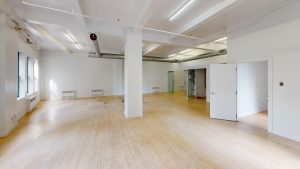
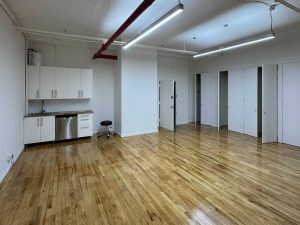
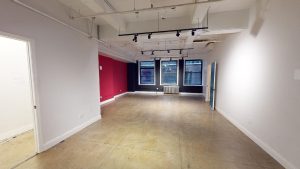
The older buildings off Park Avenue are where small teams get the most for their money. Suites we listed this past winter at 50 and 57 West 57th Street, 120 East 56th Street, and 805 Third Avenue asked about $51 to $62 a foot. At $60 a foot, a 2,500-square-foot office for about 12 people costs about $12,500 a month before electricity. Park Avenue towers ask about twice that: SL Green quoted $125 a foot at 280 Park Avenue in October 2025.
Ask about prebuilt suites. Landlords build them out ahead of time with offices, a conference room, and a kitchen, so you can sign and move in within weeks instead of waiting months for construction. Some suites in the buildings below came built out, like the corner suite at 805 Third Avenue with six private offices and a conference room.
Buildings to start with:
For two to five people, a private office in a coworking space can cost less than a lease of your own. Our coworking page covers the options nearby.
| Sub-Area | Profile | Best For | Tier |
|---|---|---|---|
| Park Avenue (“Hedge Fund Alley”) | The finance spine: 270 Park (JPMorgan’s new HQ), 345 Park (Blackstone), 375 Park (Seagram), 425 Park, 280 Park, 390 Park (Lever House) | Hedge funds, PE, asset management, big law | Trophy / A |
| Fifth Avenue & 57th Street | The flagship and Billionaires’ Row stretch: 767 Fifth (GM Building), 9 West 57th (Solow), 660 Fifth, the Crown Building, 57 West 57th | Flagship HQs, finance, luxury and retail brands, law | Trophy / A |
| Madison Avenue | Boutique towers and a few big names: 590 Madison (IBM), 550 Madison, 520 Madison, 540 to 595 Madison | Family offices, boutique finance, fashion and advertising, medical | Class A / B |
| Third Avenue & Lexington (eastern edge) | Bigger, older, cheaper floor plates: 805, 875, and 885 Third (Lipstick Building), 919 Third, 731 Lexington (Bloomberg) | Value tenants, professional services, medical, back office | Class A / B / value |
| Grand Army Plaza & Central Park South | The park-front trophy sliver around the Sherman statue and the Plaza Hotel | Flagship finance, family offices, boutique HQs | Trophy |
The Plaza District isn’t a single market. It breaks into five or six pockets that price very differently.
The difference between Park and Third is large. The right building can put you two minutes from a $150/SF trophy lobby for less than half the rent.
The Plaza District has been the top of the Manhattan office market for decades, and the gap is widening. It has the trophy buildings on Park and Fifth, a Central Park frontage, and the largest concentration of finance and law tenants in the city, while very little new space ever frees up. That’s what makes it both the most expensive submarket and the hardest one to get into at the high end.
The wider market is strong, which works against tenants here. Manhattan leased 32.86 million SF through September, its strongest first nine months since 2000, and availability fell to 12.4% (Colliers, Q3 2026). Midtown asking rents reached $78.83/SF overall and $90.57/SF for Class A, the highest Class A level since 2008 (Cushman & Wakefield, Q3 2026). The Plaza District leads all of it, and CBRE says it just had its strongest leasing quarter on record. What separates it is the address and the shortage of good available space.
Two numbers describe the Plaza District, and they’re far apart. Standard Class A asks about $73.97/SF direct. With the trophy towers included, the aggregate is $103.14/SF (Metro Manhattan, August 2025). CBRE put the Plaza district’s average asking rent at $124.35/SF in the third quarter of 2026, Savills had Plaza South at $128.00/SF, and the top Park and Fifth trophy floors run from $150/SF into the $200s. That’s the widest range inside any Midtown submarket, so a single average rent for the area isn’t very useful.
What you pay depends on three things: where in the district you are, the building class, and whether you need a trophy address or just a good one. Before touring, run your headcount through our Office Space Calculator so you’re looking at the right size range.
| Sub-Area | Class A Profile | Class B / C Coverage | Availability | Typical SF for New Leases | Tier |
|---|---|---|---|---|---|
| Park Avenue (high 40s to 59th) | Trophy and prime Class A (270 Park, 375 Park, 425 Park) | Very limited | ~7 to 11% | 5,000 to 100,000+ SF | Trophy / A |
| Fifth Avenue & 57th Street | Trophy and prime Class A (GM Building, 9 West 57th, 660 Fifth) | Limited; some renovated Class B | ~9 to 13% | 3,000 to 75,000 SF | Trophy / A |
| Madison Avenue | Renovated Class A (590 Madison, 550 Madison) | Boutique Class B | ~11 to 15% | 2,000 to 30,000 SF | Class A / B |
| Third Avenue & Lexington | Older Class A (Lipstick Building, 919 Third) | Deep Class B; some Class C | ~13 to 18% | 1,500 to 40,000 SF | Class A / B / value |
| Plaza District average (context) | $73.97 Class A direct ($103.14 aggregate); $124.35 average, all classes (CBRE, Q3 2026) | n/a | 13.4% (CBRE, Q3 2026) | Varies | Mixed |
Plaza District Class A direct ($73.97/SF) and aggregate ($103.14/SF) from Metro Manhattan, Class A Office Rents in New York City by Neighborhood (as of August 1, 2025). Submarket availability (13.4%) and average asking rent ($124.35/SF, all classes) from CBRE's Plaza district, Q3 2026; Savills puts Plaza South at 8.1% availability and $128.00/SF and Plaza North at 12.1% and $113.86/SF (Q3 2026, gross asking). Area-level Class A profiles, Class B and C coverage descriptors, and availability ranges are Metro Manhattan internal research (May 2026); approved firms publish the Midtown and Plaza District submarket figures but do not publish breakouts by area. Rents are asking rents and do not reflect concessions.
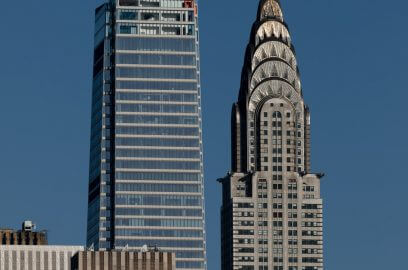
Trophy in this submarket means Park Avenue and Fifth. JPMorgan’s 270 Park set a new high and 350 Park will raise it again, but neither is available to lease. The trophy space a tenant can realistically pursue is in buildings like 9 West 57th (the Solow Building, 1.5 million SF, with some of the best park views in Midtown and a long history as a hedge fund and private equity address) and the GM Building at 767 Fifth (the white marble tower with the Apple cube in front). 425 Park (L&L’s Foster-designed tower, where Citadel holds the penthouse) and the Seagram Building at 375 Park (the Mies van der Rohe landmark) are in the same group. These floors start around $150/SF, they draw several tenants whenever one opens, and the owners screen carefully on credit.
For the difference between a true trophy tower and a strong Class A building, see our piece on how trophy buildings set themselves apart in NYC, and our top Class A buildings in Midtown for the specific addresses.
Most deals in the Plaza District happen outside the trophy towers, a block or two off Park, in the renovated Class A and Class B buildings: the Madison Avenue boutiques, the prewar towers on the side streets, and the larger floors to the east. A good Class B floor here, with an updated lobby, newer elevators, and a built-out suite ready to occupy, would qualify as Class A in much of the city, and the Plaza District address comes at a meaningful discount to the trophy rents.
Pricing falls well below the district average (CBRE had the Plaza district at $124.35/SF in the third quarter), and how far below depends on the building and the block (Metro Manhattan internal research, May 2026). Two Class B towers on the same block can quote very different numbers on the same day, depending on the landlord’s vacancy and how he reads your credit, so it pays to tour rather than rely on the average. These buildings suit financial services firms, law firms, and medical and healthcare practices, among many others.
There isn’t much true Class C in the Plaza District; the land is too valuable for buildings to sit unimproved. The closest thing to value is the eastern edge along Third and Lexington, in older boutique buildings and second-tier space that work for small firms, startups, nonprofits, and satellite offices that want the location at a lower rent.
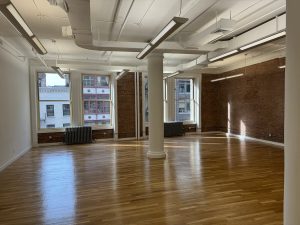
Two cautions. No firm publishes a reliable Class C average for the Plaza District, so treat any single figure with skepticism (the tier read here is Metro Manhattan internal research, May 2026). Tenants who want character space, exposed brick, timber, and large windows, won’t find much of it here. That search belongs in Midtown South, usually starting in Chelsea or SoHo, where there’s far more loft space at lower rents.
Concessions are where most tenants under-negotiate. They push on the asking rent, save a little, and sign without pressing on free rent or the build-out allowance, which is where much of the real value sits. Because the trophy towers here are close to full, concessions on those floors run smaller than in Downtown or Midtown South, though they’re still meaningful and grow as soon as you move off the trophy floors. For a benchmark, CBRE’s third-quarter Midtown report puts the average package on direct new leases of raw space (25,000 SF or more, terms of 10 years or longer) at about $151/SF in build-out money and 17 months of free rent.
The ranges below reflect recent deals (Metro Manhattan internal research, May 2026) on a 5- or 10-year term; shorter terms earn less and longer terms earn more. If you’re still deciding on length, our guide to 3-year, 5-year, or 10-year lease terms works through the tradeoffs.
| Tier | Free Rent | Tenant Improvement Allowance | Notes |
|---|---|---|---|
| Trophy and prime Class A (Park and Fifth) | 6 to 10 months free | TI $100 to $150/SF | The smallest packages in Midtown, since these landlords face little competition for the space. |
| Standard Class A (Madison, side streets) | 10 to 14 months free | TI $80 to $120/SF | The best balance, a Plaza District address with real movement on terms. |
| Class B and value (Third and Lexington) | 12 to 18 months free | TI $60 to $90/SF | Built-out suites are common, and a 10-year term gives a tenant real negotiating room. |
Ranges reflect recent deals on a 5- or 10-year term (Metro Manhattan internal research, May 2026); shorter terms earn less and longer terms earn more. For a benchmark, CBRE's Q3 2026 Midtown report puts the average package on direct new leases of raw space (25,000 SF or more, terms of 10 years or longer) at about $151/SF in build-out money and 17 months of free rent.
Two things are worth understanding before you sign. The net effective rent almost always comes in well below the face rent (our concessions explainer walks through it). A build-out allowance is only as useful as what it pays for, so it helps to know who pays for an office build-out in advance.
The Plaza District is built on finance, law, and corporate headquarters, and the building usually signals the tenant. Park Avenue is hedge funds, private equity, and asset managers (Blackstone at 345 Park, Citadel at 425 Park and soon 350 Park). Fifth Avenue holds the headquarters and the luxury brands. Madison leans toward boutique finance, family offices, and fashion. The eastern edge along Third and Lexington draws the more cost-conscious professional, medical, and back-office tenants who want the location at a lower rent (Bloomberg is at 731 Lexington, IBM anchors 590 Madison). The table below maps the common industries to where they tend to land.
| Industry | Best-Fit Sub-Areas | Class Fit | Example Buildings |
|---|---|---|---|
| Hedge Funds / PE / Asset Management | Park Avenue, Fifth Avenue | Trophy / A | 9 West 57th, 425 Park, 345 Park (Blackstone), 280 Park |
| Financial Services / Banks | Park Avenue, Madison, Fifth | Trophy / A | 270 Park (JPMorgan), 399 Park (Citi), 280 Park (Wells Fargo), 660 Fifth |
| Law Firms (large and boutique) | Park Avenue, Fifth Avenue | Trophy / A | 767 Fifth (GM Building), 375 Park (Seagram), 9 West 57th, 425 Park |
| Corporate HQ / Flagship | Fifth Avenue, Park Avenue | Trophy | 767 Fifth, 270 Park, 550 Madison, 590 Madison (IBM) |
| Family Offices / Wealth Management | Madison, Fifth, Park | Class A | 540 to 595 Madison, 510 Madison, Fifth Avenue boutiques |
| Fashion / Luxury / Advertising | Madison, Fifth Avenue | Class A / B | 550 Madison, 575 Madison, the Crown Building (730 Fifth) |
| Professional Services / Consulting | Third & Lexington, Madison | Class A / B | 805 Third, 875 Third, 919 Third |
| Technology / Creative | Madison, Third & Lexington | Class A / B | 731 Lexington (Bloomberg), 885 Third (Lipstick), 919 Third |
| Healthcare / Medical Offices | 57th Street, Third & Lexington | Class A / B | 57 West 57th (Medical Arts), 120 East 56th, 110 East 59th |
| Coworking / Flex | Park Avenue, Fifth, Madison | Class A / B | 57th Street flex, 110 East 59th, Madison Avenue flex |
| Retail / Showroom | Fifth Avenue, Madison, 57th | Ground-floor | GM Building (Apple), Fifth Avenue flagship blocks, the Crown Building |
Industry and class fits are Metro Manhattan internal research (May 2026).
For a small team, the Plaza District is rarely the obvious choice, since it’s the most expensive address in the city. The eastern edge and a few boutique Madison buildings are more attainable than the headline rent implies, though, and for a client-facing business the prestige can justify the cost. To compare it against less expensive areas, our 5 top neighborhoods for small businesses guide lays out the options, and a company moving out of shared space can read scaling from coworking to your own office for the transition. Tenants focused on value should look at Downtown Manhattan or the Financial District, where a Class A address costs a fraction of what it does on Park Avenue.
No part of New York has more recognizable office buildings, and the surrounding amenities match. You get Central Park at the north end, the Fifth Avenue flagships and the Billionaires’ Row towers nearby, five-star hotels and restaurants on most blocks, and subway access from several directions. With return-to-office still a priority for landlords, the Plaza District is an easy area to bring a team back to. The buildings fall into three tiers:
Trophy (270 Park, 9 West 57th, the GM Building, 375 Park, 425 Park): column-free floor plates, double-height lobbies, private amenity floors, conference space, fitness centers, restaurants at the base, and park and skyline views. 270 Park is the largest all-electric tower in the city, and the Solow and Seagram buildings are architectural landmarks.
Renovated Class A (550 Madison, 590 Madison, 660 Fifth, 280 Park, Lever House): updated lobbies and systems, amenity floors, ground-floor retail, and transit nearby. 550 Madison reopened with a public garden, and Lever House recently completed a full restoration.
Class B and value (the Lipstick Building, 919 Third, 875 Third, the Madison boutiques): prewar and postwar construction, staffed lobbies, large windows, and a growing number of built-out suites a short walk from Park and Fifth.
See all Midtown buildings or filter active listings by size and price.
Who owns the building matters as much as which building, because each Plaza District landlord negotiates differently. SL Green and Vornado, the two largest office owners in the city, both hold prime Park Avenue space and share ownership of 280 Park. BXP owns the GM Building and 399 Park. RFR holds the Seagram Building; Rudin owns 345 Park and is a partner on 350 Park; L&L developed 425 Park; Tishman Speyer built 270 Park and owns 300 Park; the Soloviev Group owns 9 West 57th; Olayan owns 550 Madison; and Brookfield owns 660 Fifth. A good broker will know which owners fund build-outs and which ones hold firm on terms. Our overview of the biggest commercial real estate landlords in NYC has more background.
| Landlord | Notable Plaza District Properties | Approx. Portfolio | Typical Lease Profile |
|---|---|---|---|
| SL Green Realty | 280 Park Avenue (JV), 919 Third Avenue, 750 Third Avenue | ~25M+ SF (NYC’s largest office landlord) | Class A, 5,000+ SF, 10+ yr |
| Vornado Realty Trust | 350 Park Avenue (developing), 280 Park Avenue (JV) | large Midtown portfolio | Trophy / Class A, 10,000+ SF |
| BXP (Boston Properties) | The GM Building (767 Fifth), 399 Park Avenue, 601 Lexington | large national portfolio | Class A / Trophy, 10,000+ SF |
| Tishman Speyer | 300 Park Avenue; developed 270 Park Avenue | large Midtown portfolio | Class A, 10,000+ SF |
| RFR Realty | 375 Park Avenue (Seagram Building) | several M SF across Midtown | Class A / Trophy, 5,000+ SF |
| Rudin Management | 345 Park Avenue, 350 Park Avenue (partner) | ~10M+ SF | Class A, 5,000+ SF |
| L&L Holding | 425 Park Avenue | several M SF | Trophy, 10,000+ SF |
| The Soloviev Group | 9 West 57th Street (Solow Building) | ~1.5M SF here | Class A / Trophy, 10,000+ SF |
Portfolio figures are approximate. Several landlords listed (SL Green, Vornado, BXP, Tishman Speyer) hold much larger portfolios across Midtown, Midtown South, and Downtown. Metro Manhattan internal research (May 2026).
Transit here is strong on the subway side, and on the south end it adds commuter rail, which Columbus Circle doesn’t have. The 4, 5, and 6 run along Lexington, the N, R, and W stop at Fifth and 59th, the E and M serve 53rd, and the F and Q reach 57th and 63rd. Near Park Avenue and the high 40s, Grand Central is a short walk away, which brings Metro-North and the LIRR’s Grand Central Madison within reach for suburban commuters. Our Commute Calculator and everyone’s home address will settle which areas work best.
| From | To the Plaza District | Mode |
|---|---|---|
| Upper East Side (72nd St) | 5 to 10 min | 4, 5, 6, or Q |
| Grand Central / Midtown core | 5 min | 4, 5, 6, or walk |
| Times Square | 8 to 12 min | N, Q, R, W, or shuttle + walk |
| Penn Station | 12 to 18 min | 1/2/3 to Times Sq + N/R/W, or bus |
| Downtown Brooklyn | 25 to 35 min | 4 or 5 |
| Long Island City, Queens | 15 to 25 min | E/M or N/W + transfer |
| Hoboken / Jersey City | 30 to 40 min | PATH to 33rd + subway |
| Newark, NJ | 35 to 45 min | NJ Transit to Penn + subway |
| Hicksville, NY (Long Island) | 50 to 60 min | LIRR to Grand Central + short walk |
| Stamford, CT | 60 to 70 min | Metro-North to Grand Central + short walk |
CBRE’s third-quarter figures put the average asking rent in its Plaza district at $124.35/SF, the highest of any Midtown district it tracks. Cushman & Wakefield doesn’t break out the Plaza District; its third-quarter Midtown averages were $78.83/SF overall and $90.57/SF for Class A. The older buildings on 57th Street and toward Third Avenue ask far less: suites we listed this past winter ran about $51 to $62/SF.
None of the firms we follow published a third-quarter Class A rent for the Plaza District alone. Cushman & Wakefield’s third-quarter Class A average for all of Midtown was $90.57/SF, its highest since 2008, and Savills put Midtown Class A at $102.36/SF. Our own study as of August 2025 put standard Class A here at $73.97/SF direct and $103.14/SF with the trophy towers included. Park Avenue and Fifth Avenue set the high end, while Madison and the Third and Lexington edge come in well below.
The Plaza District has the largest concentration of finance and law tenants in the city, the trophy towers on Park and Fifth, and Central Park at its north end. Very little good space frees up. CBRE says the district had its strongest leasing quarter on record in the third quarter, and JLL put Manhattan’s trophy vacancy at a cycle-low 4.9%. In October, Commercial Observer reported a city-record $375/SF for the penthouse at Related Companies’ upcoming 625 Madison Avenue, which Savills counts in its Plaza North submarket.
CBRE put availability in its Plaza district at 13.4% in the third quarter, with vacancy at 12.2%. Savills splits the area into two submarkets, with availability of 12.1% in Plaza North and 8.1% in Plaza South. The trophy towers are far tighter than those averages, while the older buildings toward Third Avenue carry the most space. For reference, Colliers put Manhattan’s availability at 12.4% in the third quarter, down from 13.0% in the second.
Finance and law both concentrate on Park Avenue and Fifth. On Park, 270 Park (JPMorgan), 345 Park (Blackstone), 425 Park (Citadel), and the Seagram Building anchor the avenue; on Fifth, the GM Building and 9 West 57th carry the marquee finance and law tenants (Metro Manhattan internal research, May 2026). Madison Avenue and the Third/Lexington edge handle the boutique and value-seeking firms in the same verticals.
Yes, by a wide margin. Savills’ third-quarter averages put Plaza South at $128.00/SF and Plaza North at $113.86/SF, against $87.57/SF for Grand Central and $75.21/SF for Columbus Circle. If you want a Midtown address for less, both of those come in cheaper, and Downtown Manhattan and the Financial District go lower still.
Look at 57th Street, the eastern edge along Third and Lexington Avenues, and a few boutique Madison Avenue towers, where older buildings price well below the trophy line. Suites we listed this past winter at 50 and 57 West 57th Street, 120 East 56th Street, and 805 Third Avenue asked about $51 to $62/SF. Flex and coworking operators run space across the submarket, and a thin pool of sublets occasionally opens up. The section for teams of 5 to 30 near the top of this page lists buildings to start with.
Class mostly tracks a building’s age, systems, and prestige. In this district, trophy and Class A means the Park and Fifth Avenue towers and the renovated buildings around them. Class B, and what little Class C there is, means the older prewar and postwar buildings on Madison, the side streets, and the Third/Lexington edge. A well-renovated Class B floor in the Plaza District can hold its own against Class A in most other neighborhoods, for less.
JPMorgan opened its 2.5-million-SF headquarters at 270 Park Avenue in October 2025, and Vornado, Rudin, and Citadel are developing 350 Park Avenue, a roughly 1.85-million-SF Foster + Partners tower anchored by Citadel and due around 2032 (The Real Deal, February 2026). On the district’s northern edge, Related Companies’ upcoming 625 Madison Avenue (858,500 SF) has preleased space to General Atlantic (152,000 SF) and Veritas (90,000 SF), according to JLL’s third-quarter research. Castle Hook Partners took its penthouse at a city-record $375/SF (Commercial Observer, October 2026). None of these adds much space for tenants searching now.
The big names are SL Green and Vornado (the two largest office owners in the city, jointly holding 280 Park), BXP (the GM Building and 399 Park), RFR (the Seagram Building), Rudin (345 Park and a partner on 350 Park), L&L Holding (425 Park), Tishman Speyer (300 Park, and the developer of 270 Park), and the Soloviev Group (9 West 57th) (Metro Manhattan internal research, May 2026).
The submarket has extensive subway service: the 4, 5, and 6 on Lexington, the N, R, and W at Fifth and 59th, the E and M at 53rd, and the F and Q at 57th and 63rd. Its southern end near Park Avenue is a short walk from Grand Central, so Metro-North and the LIRR’s Grand Central Madison serve suburban commuters as well. That combination of subway and commuter rail is an advantage over subway-only submarkets like Columbus Circle.
Much of the best Plaza District space, especially the rare trophy blocks and the quiet subleases, never hits the public listing sites, and a tenant broker gets you to it (and to who is actually dealing). The landlord pays the commission, so it costs a tenant effectively nothing. Before you tour, skim the essentials to ask before leasing NYC office space and get familiar with the Good Guy Guarantee most NYC landlords want smaller tenants to sign.
Accessibility Tools