Life Science/Lab Space for Rent in New York City
Find the right property, avoid hidden costs, and negotiate favorable terms.
Find the right property, avoid hidden costs, and negotiate favorable terms.

New York has plenty of empty lab space right now. Finding a lab you can move into and use is a different job entirely.
About a quarter of the city’s lab inventory is sitting open, rents are down 9% on the year to roughly $96 a foot, and landlords who wouldn’t take your call in 2022 will now throw in free rent and pay for a chunk of your build (CBRE, Q1 2026). Good time to be a tenant.
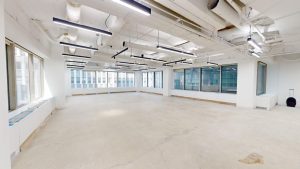
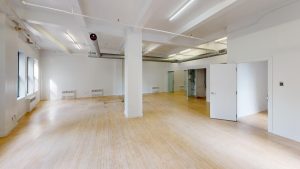
The problem is what’s inside that empty space. Only about one in nine available lab feet is finished. The rest is shell space with a rendering attached, and turning a Manhattan shell into a working wet lab runs $700 to $800 a foot and eats most of a year. That’s the reason built suites go in weeks while raw floors sit for years, and it’s the thing to keep in your head on every tour.
We put this page together to skip the brochure copy and get to the parts that cost money: what lab space goes for in 2026, which neighborhoods have what, what a build-out really runs, the building systems that decide whether a floor can even be a lab, and how the process goes once you pick one.
Two quick things before you start reading. A broker in your corner is free, because the landlord pays us the same way they would on any office deal. And the good prebuilt lab suites almost never show up online, so somebody who walks these buildings will beat a search bar every time.
Want the whole city, every use type? Start with our rundown of office space for rent in New York City.
| Metric | Where It Stands |
| Average lab asking rent | $96.43/SF, flat on the quarter, down 9% on the year (CBRE, Q1 2026) |
| Lab space available | 27.5% of lab-exclusive inventory (CBRE, Q1 2026) |
| How much of that is move-in ready | 11.6%, or about one foot in nine (CBRE, Q1 2026) |
| Leasing | 377,000 SF in 2025, up 138%. Then 27,000 SF in Q1 2026 (CBRE) |
| Tenants shopping right now | 319,000 SF of active requirements (CBRE, Q1 2026) |
| Local venture funding | $263.65M in Q1 2026, 22% under the five-year quarterly average (CBRE) |
| Lab inventory | Roughly 3.5M SF built, 4M+ SF in the pipeline (NYCEDC) |
| Cost to build a wet lab | $700 to $800/SF for BSL-1 and BSL-2 (Lab Design News, Labs USA, 2026) |
The city put more than a billion dollars into growing a life sciences industry here, and developers built to match. Then biotech funding tightened, and a lot of that space opened up without a tenant waiting for it. So you’re shopping a soft market where the thing you want is still hard to find. Five things worth understanding before you tour.
Sources: CBRE’s New York City Life Sciences Figures, Q1 2026 (published May 12, 2026) for rent, availability, leasing, requirements and venture funding; JLL’s 2026 U.S. Lab Property Report (June 9, 2026) for national supply, concessions, lease terms and the AI-tenant share; Bisnow (February 2026) for the NIH budget; NYCEDC for LifeSci NYC figures. This section gets refreshed every quarter, since it’s the one piece of dated market data on the page.
Labs went up next to hospitals, universities and freight elevators, which is why the lab map looks nothing like the office map. Pick the cluster before you pick the building. It sets your rent, your hiring pool, and how far you sit from the academic collaborators who make the science work, and it cuts a tour list from thirty buildings down to four. Still figuring out where to plant your flag? Our roundup of the best NYC neighborhoods for small businesses is a solid place to start.
| Cluster | Why It Works for Labs | Anchor Buildings | Typical Lab Rent | Best For |
| Kips Bay & the East Side Medical Corridor (Murray Hill) | The center of the whole thing. NYU Langone, Bellevue, and more academic medicine per block than anywhere else in the country. You pay for the neighbors. | Alexandria Center for Life Science (430 E 29th St); Innovation East at 455 First Ave (planned) | $100 to $135/SF | Funded therapeutics, pharma outposts, clinical-stage teams |
| Midtown West & Hell’s Kitchen | Where the prebuilt suites live. Some of the only wet lab in Manhattan you can occupy without hiring a contractor first. | Hudson Research Center (619 W 54th St) | $100 to $125/SF | Anybody who needs a working lab this year |
| Upper West Side | Big floor plates in a purpose-built conversion, near Lincoln Center and the West Side research crowd. | West End Labs (125 West End Ave) | $85 to $115/SF | Growth-stage companies taking full floors |
| Midtown South & Flatiron | Silicon Alley with benches. Wet lab, digital health and drug-discovery software riding the same elevator. | CURE at 345 Park Avenue South | $85 to $115/SF | Early-to-growth biotech, digital health, tech-enabled science |
| Harlem & Manhattanville | The value frontier and the incubator belt, wired straight into Columbia and City College. | Taystee Lab Building; Harlem Biospace; Harlem Biospace @ Mink | $55 to $85/SF | Early-stage teams and incubator graduates |
| Long Island City, Queens | Purpose-built lab at a Manhattan discount, one stop out. Full at the moment, which tells you something. | Innolabs (45-18 Court Square) | $65 to $95/SF | Teams who care about the build, not the zip code |
| Sunset Park, Brooklyn | Big cheap floor plates and the only realistic home in the city for manufacturing. | BioBAT at the Brooklyn Army Terminal | $40 to $70/SF | GMP, biomanufacturing, mid-stage scale-ups |
| Hudson Square & Tribeca | Incubator country next to the tech corridor, with real lab floors mixed in. | JLABS @ NYC; lab floors at 325 Hudson | $85 to $115/SF | Incubator residents and computational teams |
Not every company in this business needs benches. If your New York office is business development, clinical ops, biostats or regulatory, you’re shopping for regular office space and paying a lab premium is money in the trash. Downtown Manhattan is the value play at around $56.66/SF against a Manhattan average of $72.83/SF (Cushman & Wakefield, Q2 2026). The Financial District is the pick if your leadership commutes from the Jersey pharma corridor, since the PATH drops them at their desk without crossing Midtown. Chelsea is where digital health and medtech end up. Consumer health brands drift to SoHo for the address and the light.
“Lab space” covers about seven different products, and a shared bench has nothing in common with a GMP suite except a hazardous waste contract. Sort out which tier you’re shopping before you look at a single price, and be honest about the stage you’re at rather than the one on the pitch deck. Signing fifteen years on a round that hasn’t closed is how young companies end up subletting their own lab two years later.
| Space Type | What It Is | Typical Commitment | Best For |
| Shared incubator bench | A bench and a desk in a communal lab. Shared equipment, glasswash, gas and waste pickup come with it. | Month to month, or six-month terms | Pre-seed and seed, one to five people |
| Private incubator suite | Your own lockable lab and office inside an incubator, still sharing the building’s big equipment. | 1 to 3 years | Seed to Series A teams that want their own hoods |
| Prebuilt wet lab | Finished suite. Casework, fume hoods, lab support rooms and MEP already in. Bring your equipment and go. | 5 to 10 years | Series A and B companies that can’t wait on construction |
| Warm shell | Base systems sized for lab use. The lab itself is yours to design, permit and build. | 10 to 15 years | Funded companies with specific process needs |
| Dry lab / R&D office | Regular office with better power and cooling. Computers, no benches. | 3 to 10 years | AI drug discovery, bioinformatics, digital health, medtech |
| GMP / manufacturing | Cleanrooms, classified space, heavy utilities, validated systems. | 10 to 15 years | Cell and gene therapy, CDMOs, commercial manufacturing |
| Clinical / Article 28 | Patient-facing space built to New York State Department of Health standards. | 5 to 15 years | Trial sites, diagnostics, patient recruitment |
A finished wet lab in Manhattan runs about $95 to $135 a foot. A shell runs $70 to $110. A bench in an incubator runs $1,200 to $2,500 a month. Dry lab gets priced like office, because it is one. The citywide average was $96.43/SF in Q1 2026 (CBRE).
| Space Type | Typical NYC Cost (2026) | How It’s Priced | What You Get |
| Shared incubator bench | $1,200 to $2,500 per bench, per month | Membership | Bench, desk, shared equipment, waste, gas, glasswash, 24/7 access |
| Private incubator suite | $4,000 to $15,000+ per month | Membership | Private lab and office, plus the building’s shared equipment |
| Prebuilt wet lab | $95 to $135/SF/year | Triple net | Built lab, casework, hoods, lab support rooms, base MEP |
| Warm shell | $70 to $110/SF/year | Triple net | Lab-capable base systems. You build the lab |
| Dry lab / R&D office | $57 to $105/SF/year | Usually gross | A standard office deal with better power and cooling |
| GMP / manufacturing | $40 to $80/SF/year | Triple net | Big floor plates, heavy power, freight, loading |
Two things about that table that nobody puts on a flyer.
Lab rent is quoted triple net. Manhattan office rent is quoted gross. So a $96 lab and an $81 office are not the same number, and you’ll want another $15 to $30 a foot for operating expenses, taxes and utilities before you judge either one. Push toward the high end on utilities, because a lab burns 30 to 100 kilowatt-hours per square foot a year against a small fraction of that for an office. Our breakdown of office electricity costs explains how the billing works, and whatever number it gives you, budget over it.
The letter grades barely matter here either. A 1930s Class B loft with 16-foot slab heights, a freight elevator that swallows an autoclave and a dedicated exhaust shaft will beat a glass Class A tower with nine-foot ceilings. Hard to believe until you watch a gorgeous building flunk a feasibility study. Our explainer on what makes a building Class A, B, or C is useful for the rest of your search. For labs, shop the systems.
This is the number that kills deals, and first-timers usually guess about half of it. U.S. fit-out costs averaged $741 a foot in 2026, down 2.9% on cheaper fuel and hungrier contractors (Cushman & Wakefield). New York sits at the top of every national range, the way New York does.
| Lab Type | Cost per SF (2026) | What Drives It |
| Office to dry lab | $300 to $450 | Power and cooling, not much else |
| BSL-1 / BSL-2 wet lab | $700 to $800 | 100% outside air, exhaust, casework, hoods, lab gas |
| Chemistry lab | Around $800 | Hood count, solvent storage, acid neutralization |
| BSL-3 or vivarium | $1,000 to $1,300 | Containment, pressure cascades, redundancy, validation |
| Cell and gene therapy / GMP | $1,100 to $1,400 | Cleanroom classification, validated systems, commissioning |
So the tenant improvement allowance is the deal. A landlord sitting on an empty shell in a 6-to-1 market will fund a real chunk of your build to land a tenant who can pay rent for a decade, and winning that fight is worth more than anything you’ll claw back on the rent line. Our guides to who pays for the build-out and how build-out agreements get structured are worth an hour before you sit down, since the difference between a decent allowance and a great one usually comes down to how the work gets scoped.
Run the term math too, because a prebuilt suite at $120 often beats a shell at $85. Nine months of paying rent on a construction site while you spend $700 a foot of your own money hurts a lot more than $35 of extra rent, and you don’t get the nine months back.
One more thing to put in the model: getting out. Most lab leases make you decommission the space and hand it back certified clean, which runs into six figures and shows up in almost nobody’s budget. Nail down that scope while you still have leverage.
Two buildings can quote the same rent and only one of them can house your science. Bring a lab planner or an MEP engineer on the tour, and be suspicious of anyone who tells you a floor “can be converted” without a feasibility study behind it. The list below is what separates a conversion that works from one that dies in schematic design.
| What to Check | Why It Matters | What to Ask For |
| Floor load | Autoclaves, freezer farms and equipment racks are heavy. Old office floors weren’t built for them. | A structural letter with the live load. Most wet lab wants 100 psf minimum, more where equipment gets dense. |
| Slab-to-slab height | Lab mechanicals live above the ceiling. No height, no design. | 14 to 16 feet slab to slab. Under 12 and you’ll fight the building for a year. |
| Power | Wet lab pulls two to three times what an office pulls per foot. | Available amperage at the panel in writing, plus a real price to upgrade the service if it’s short. |
| HVAC and air changes | Labs run 100% outside air with no recirculation, which is a different animal from office HVAC. | Air change rates, dedicated AHU capacity, and who owns the equipment. |
| Exhaust and shafts | Fume hoods need dedicated risers to the roof. No shaft means running duct through somebody else’s floor. | Existing dedicated exhaust shafts and roof rights for equipment. |
| Vibration and columns | Imaging and sensitive instruments fail in a building that moves. | Vibration testing and open bays instead of a forest of columns. |
| Freight and loading | An autoclave doesn’t fit in a passenger elevator. Neither does a walk-in cold room panel. | Freight dimensions, capacity, hours and dock access. Measure it yourself. |
| Chemical and gas storage | FDNY permitting, control areas and cylinder storage are real limits in a high-rise. | Permitted control areas per floor and a gas storage plan that passes. |
| Waste | Medical and chemical waste needs staging space and a clean path out of the building. | Dedicated waste staging and a landlord who’s done this before. |
| Zoning and CO | Lab use isn’t automatic. The 2023 reforms helped, but they didn’t make it a formality. | Zoning and use group confirmed, plus a certificate of occupancy that covers what you’re doing. |
| Backup power | A freezer alarm at 2 a.m. with no generator behind it can end a company. | Generator capacity, your share of it, and UPS provisions in writing. |
| Water and plumbing | RODI loops, safety showers, acid neutralization tanks and lab waste lines aren’t standard office plumbing. | Existing lab plumbing, or a price to add it. |
Plenty of companies are choosing among all three without ever framing it that way. Side by side, the choice usually makes itself.
| Factor | Incubator / Shared Lab | Direct Lab Lease | Dry-Lab Office |
| Commitment | Month to month up to 3 years | 5 to 15 years | 3 to 10 years |
| Speed to move in | Days to weeks | Weeks if prebuilt, 9 to 18 months if you build | Weeks to a couple of months |
| Cost | $1,200 to $2,500 per bench, per month | $70 to $135/SF triple net, plus the build | $57 to $105/SF, usually gross |
| Capital needed | Almost none | Serious, even with a TI allowance | Standard office fit-out |
| Equipment | Shared equipment included | Yours to buy, house and maintain | Not applicable |
| Control | Limited. Shared floor, shared rules | Total. Your name, your layout, your protocols | Total |
| Best fit | Pre-seed through Series A, one to fifteen people | Funded companies with defined process needs | Computational, clinical ops, commercial and BD |
Companies tend to outgrow the shared model at roughly the same point: fifteen or so people on the bench, equipment nobody wants to share, or a process that needs controls an incubator can’t give you. After that the per-head math flips and a direct lease wins. Same arc as outgrowing coworking space, and our guide to scaling up out of shared space walks through the move.
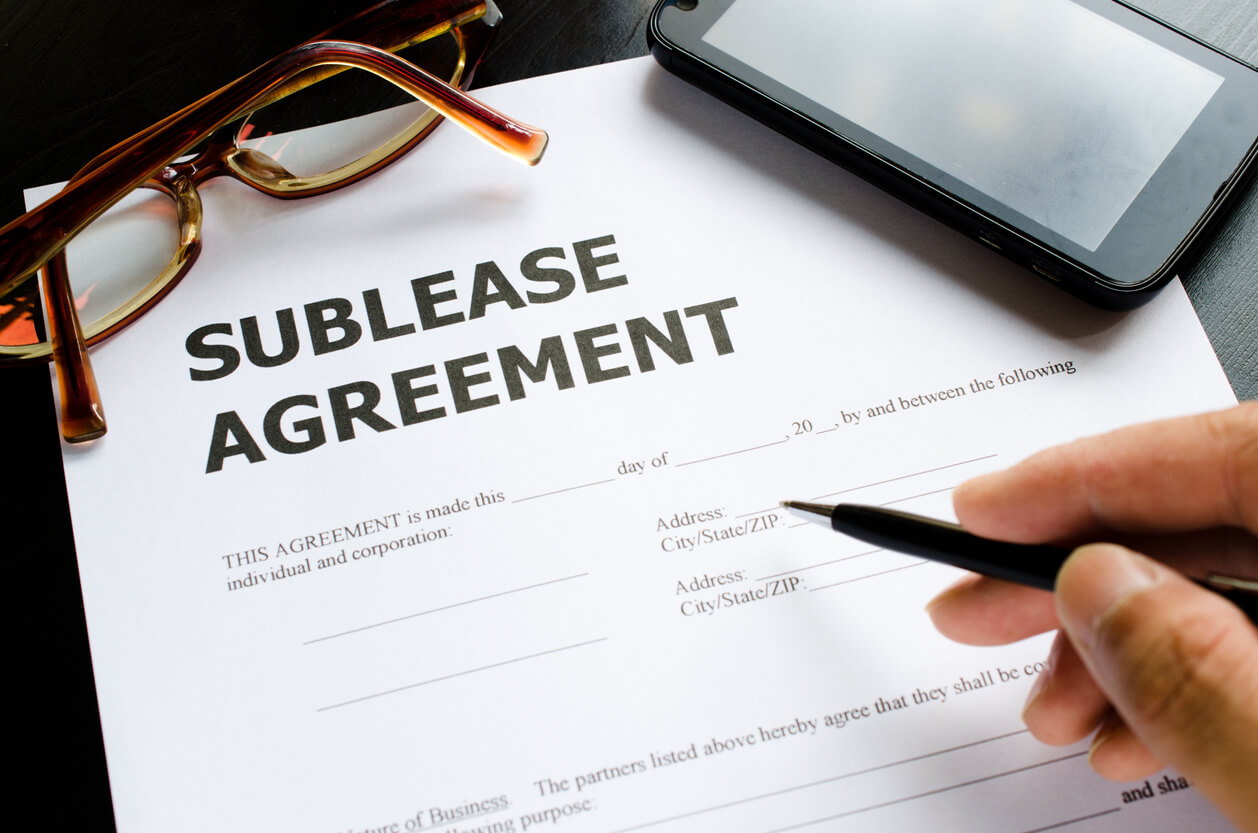
Don’t forget the fourth option. A sublease of built lab space from a company that shrank or pivoted is often the best value going, since you’re inheriting a finished lab instead of paying to build one. The trade is that you’re stepping into somebody else’s deal, so read the sublease and assignment clauses closely and find out who owns the decommissioning obligation before you sign.
Lab deals run longer than office deals and go sideways in more places, mostly because construction and permitting sit in the middle. A tenant rep broker works for you, gets paid by the landlord, and knows which buildings can take your systems. From “we need a lab” to first experiment, the run looks like this.
Lab real estate here never spread out the way office ownership did. A short list of specialists owns most of it, and who you sign with shapes your build schedule, your service, and how much of the fit-out lands on you. A landlord who’s delivered twenty labs will get you open faster than a generalist learning the trade on your project.
| Owner / Operator | What They Run | NYC Properties | Best For |
| Alexandria Real Estate Equities | The biggest life sciences landlord in the country and the anchor of Kips Bay, with 50-plus tenants across two towers. | Alexandria Center for Life Science, 430 E 29th St (728,000 SF; a North Tower would take it toward 1.3M SF) | Funded, later-stage and pharma tenants |
| Taconic Partners / Elevate Research Properties | Taconic’s life sciences arm, with Silverstein and Nuveen behind it. Deepest prebuilt inventory in Manhattan. | Hudson Research Center, 619 W 54th St (322,000 SF); West End Labs, 125 West End Ave | Teams that need a finished lab now |
| Deerfield Management (CURE) | A healthcare investor that built its own campus, with an in-house incubator next to leasable labs. | CURE at 345 Park Avenue South, 300,000+ SF over 12 floors | Early-to-growth biotech and digital health |
| King Street Properties + GFP Real Estate | A Boston lab specialist’s first New York building, anchored by NYU Langone. Fully committed as of April 2026. | Innolabs, 45-18 Court Square, Long Island City (267,000 SF) | Purpose-built lab outside Manhattan pricing |
| Janus Property Company | Built the Manhattanville Factory District, the academic-adjacent campus in West Harlem. | Taystee Lab Building (350,000 SF); Harlem Biospace @ Mink | Value-conscious and university-linked companies |
| BioBAT | Large-format lab and manufacturing space, backed by a $50M LifeSci NYC investment. | Brooklyn Army Terminal, Sunset Park | GMP, manufacturing, mid-stage scale-ups |
| Incubators | Harlem Biospace, BioLabs@NYU Langone at Innolabs, JLABS @ NYC, ACLS LaunchLabs at the Alexandria Center. | Citywide | Pre-seed through Series A |
A lot of these buildings run mixed tenancy, so you might share an elevator with a hedge fund or a law firm. That’s a good sign rather than a bad one. Owners with diversified rent rolls tend to have the balance sheet to fund your build, and that money is what you’re really shopping for. If the New York side of your business is the money rather than the science, see our pages on financial services offices and law firm offices.
One last place to look: the older conversion buildings in Manhattanville, Long Island City and Sunset Park. High ceilings, heavy floors, freight elevators built for machinery. Same stock we cover on the commercial loft space page, and some of the best lab candidates in the city are hiding in it.
NYC lab asking rents averaged $96.43 a foot in Q1 2026, down 9% on the year (CBRE). Finished, move-in-ready wet lab runs $95 to $135, a warm shell runs $70 to $110, and Brooklyn or Queens comes in well under Manhattan. Lab space is usually quoted triple net, so add $15 to $30 a foot for operating expenses, taxes and utilities before you compare it to a gross office rent.
Wet lab handles liquids, chemicals and biological material, so it needs fume hoods, 100% outside air, lab plumbing, gas and regulated waste handling. Dry lab is computational or instrument work that needs power and cooling but no benches or hoods, which means it fits in normal office space with a few upgrades. The cost gap is enormous: roughly $700 to $800 a foot to build wet lab against $300 to $450 for a dry lab conversion.
U.S. fit-out costs averaged $741 a foot in 2026 (Cushman & Wakefield), and New York sits at the top of every range. BSL-1 and BSL-2 wet lab runs $700 to $800, chemistry labs land around $800, and BSL-3, vivarium or cell and gene therapy space runs $1,000 to $1,400. Mechanical systems alone eat 25% to 35% of that, and none of it covers your scientific equipment.
Kips Bay and the East Side Medical Corridor anchor the market around the Alexandria Center and NYU Langone. Midtown West has the best prebuilt suites at the Hudson Research Center, Midtown South and Flatiron center on CURE at 345 Park Avenue South, and West Harlem’s Manhattanville Factory District is the value and incubator belt. Outside Manhattan, Long Island City and Sunset Park offer purpose-built and large-format space at noticeably lower rents.
Yes, through an incubator. Harlem Biospace rents benches at $1,195 per desk per month on a six-month term, and BioLabs bench fees start around $2,200, both including shared equipment, waste handling and gas. JLABS @ NYC and ACLS LaunchLabs at the Alexandria Center run similar models. Most incubators are application-based and selective, so start earlier than you think you need to.
Longer than office leases, usually 5 to 15 years, because the build is expensive and landlords amortize their contribution across the term. Prebuilt suites sometimes trade at 5 to 10 years, while shells that need a full build push toward 10 to 15. The national market has softened a lot though, with average lease terms on direct relocations down to 62 months, about 30% shorter than at peak (JLL, June 2026), so there’s more room to negotiate than there was two years ago.
Floor loads that carry heavy equipment, 14 to 16 feet slab to slab for the mechanicals, and two to three times an office building’s power. Then 100% outside air HVAC with no recirculation, dedicated exhaust risers to the roof for fume hoods, freight that fits an autoclave, and backup power for cold storage. Zoning, certificate of occupancy, FDNY chemical control areas and waste staging finish the list, and any one of them can kill a deal.
Usually yes. Lab and research use typically needs the right zoning plus a certificate of occupancy that permits it, and manufacturing or GMP work generally needs M-district zoning. The city passed zoning and permitting reforms in December 2023 to make office and industrial conversions easier, which has sped up projects in Long Island City, the Brooklyn Navy Yard corridor and Hudson Square. Get zoning, use group and CO confirmed in writing anyway before you sign.
LifeSci NYC is the city’s $1 billion-plus push to build the sector, and it’s already backed the Alexandria Center expansion, a $50 million investment in BioBAT, Harlem Biospace @ Mink, and the planned 460,000 SF Innovation East project at 455 First Avenue. The NYCIDA also runs a Life Sciences Ecosystem Activation Program with property tax abatement, partial mortgage recording tax exemption and sales tax exemption for qualifying lab renovations. Most of it flows to the building owner rather than to you, which is exactly why it belongs in your rent and TI negotiation.
Representation costs you nothing, since the landlord pays the commission the same way they do on an office deal. It matters more here than in any other product type, because the best prebuilt suites rarely reach public listing sites and the gap between a building that can take your systems and one that says it can is worth millions. Metro Manhattan has represented New York tenants since 2004, and we bring lab planners and MEP consultants in before you sign rather than after.










Accessibility Tools